Possum in Roof Melbourne: Why Older Homes Attract Possums
TLDR: Older Melbourne homes often have small roof gaps that make it easy for possums to enter and settle in roof spaces. Identifying entry points early and properly sealing them is key to preventing ongoing noise, damage, and repeat infestations.
Key Takeaways:
- Older homes naturally develop small gaps that possums can use as entry points into roof spaces
- Heavier, slower roof noises at night often indicate possum activity rather than rodents
- Blocking entry points too early can trap possums inside and worsen the problem
- Proper proofing and sealing of all access points is essential to prevent repeat issues
If you live in an older Melbourne home and hear heavy thumps or scratching above the ceiling, it can feel unsettling at night. In most cases, it is not something mysterious, but a possum settling into your roof space.
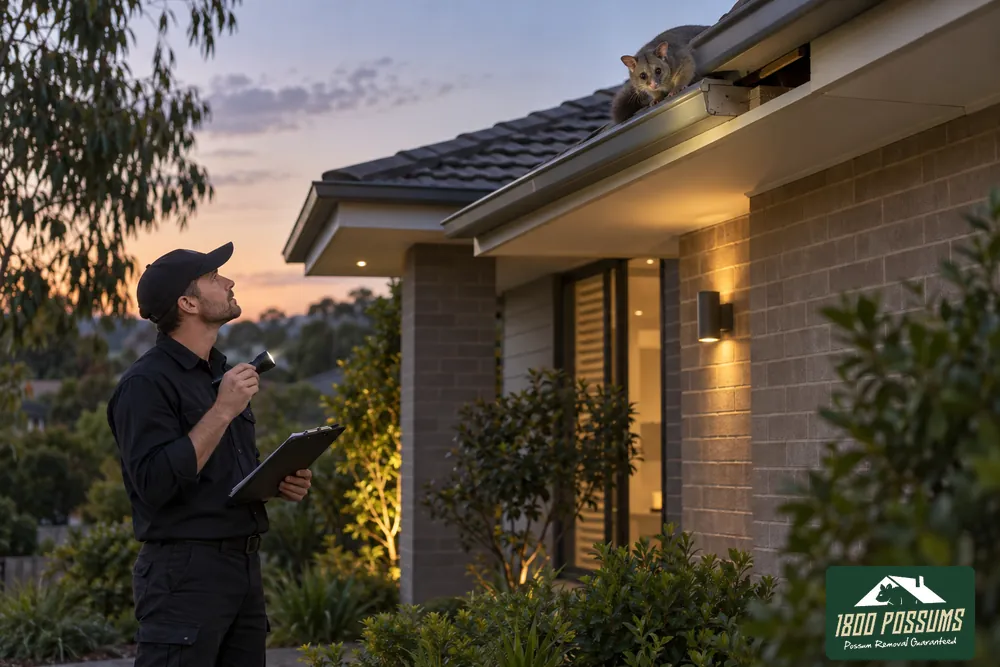
A possum in roof Melbourne issue is common in older homes because small gaps, worn materials, and roof features often create easy access points. What looks minor to homeowners can feel like a safe entry to a possum.
Why Older Homes Attract Roof Possums
Older homes develop small gaps over time as materials shift, weather, and age, creating hidden entry points in roofs, eaves, and fascia. Combined with nearby trees and quiet roof cavities, these features make them ideal shelters for possums.
Possums seek safe, quiet shelter, not damage. Roof cavities offer dry, dark, elevated spaces away from pets and people, making them ideal daytime dens, but their presence can disrupt sleep and damage insulation, ceilings, and wiring over time.
Hidden Roof Gaps
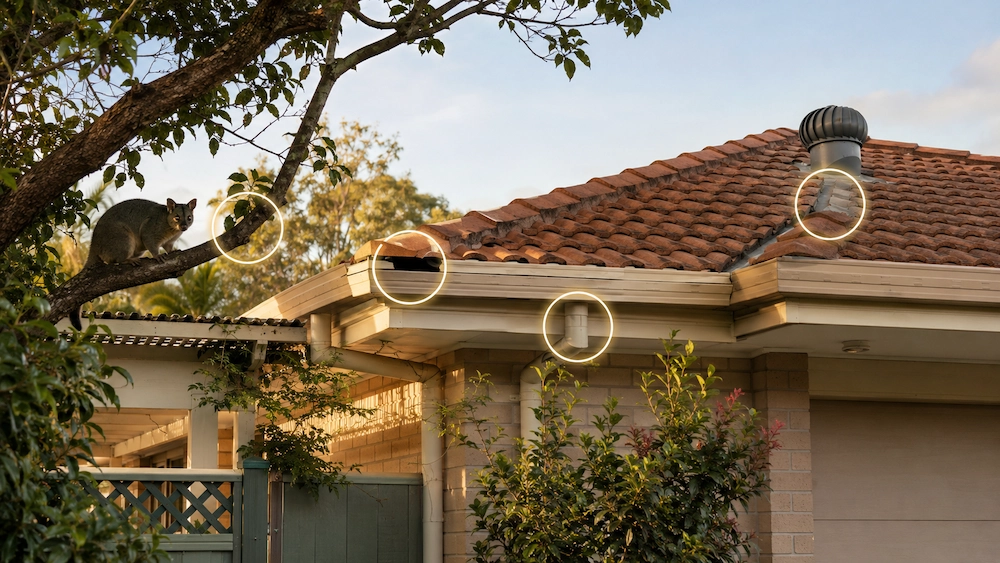
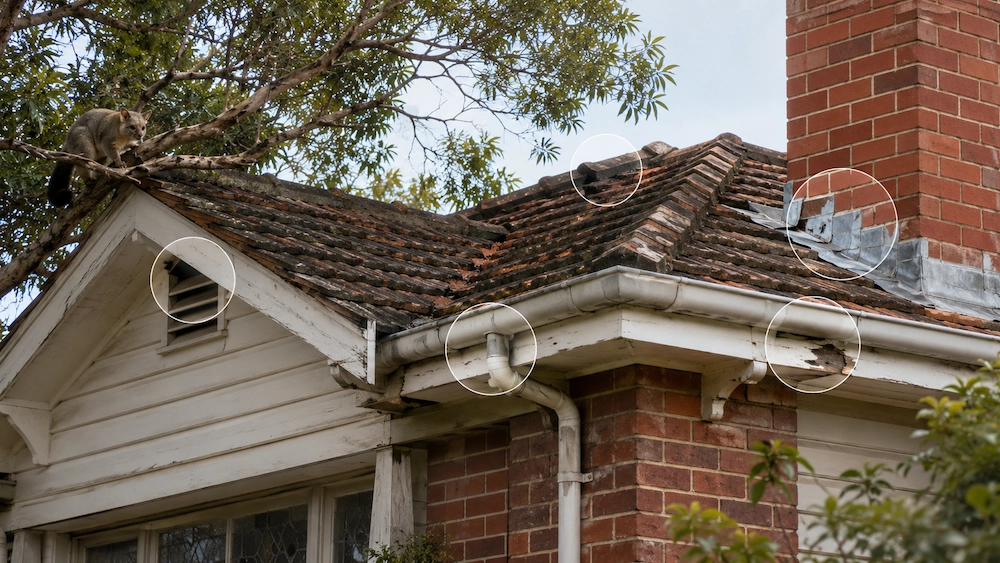
Older homes often develop small, hard-to-see gaps that possums can use to enter roof spaces. Common entry points include:
- Gaps beneath or between roof tiles
- Broken or loose fascia boards
- Openings near gutters and roof edges
- Unsealed vents or roof penetrations
- Chimneys and flashing gaps
- Eaves with worn or damaged timber
Roof Noises That Give It Away
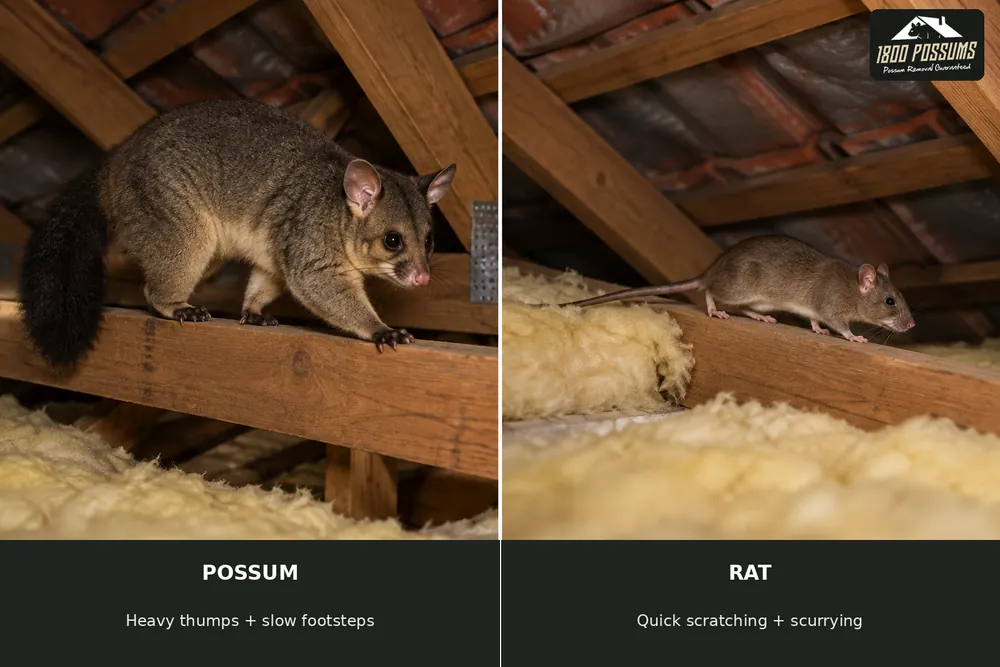
Not every roof noise means a possum, as rats, birds, or loose branches can also create sounds above the ceiling. However, possums usually make heavier, slower noises like thumping or dragging that feel more solid and noticeable at night.
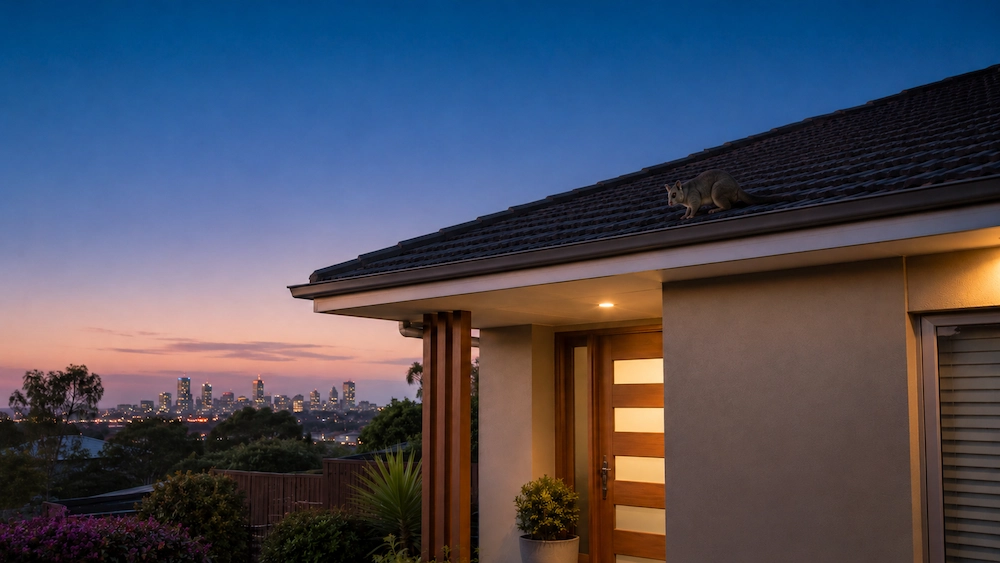
Possums are most active around dusk and overnight as they leave and return to the roof space. Lighter, faster, constant sounds often point to rodents, while heavier, slower movement usually suggests a possum above your ceiling.
Warning Signs to Watch For
Beyond noise, several signs can point to a possum in your roof, and spotting them early can help prevent further damage:
- Ceiling stains or marks
- Musty or unpleasant smells
- Droppings near roof edges
- Disturbed insulation
- Worn entry points
Recognising these signs early helps avoid guesswork and prevents incorrect fixes, such as sealing an entry point while the possum is still inside or misidentifying the problem as rodents.
Trees Make It Easier
Possums thrive in Melbourne’s leafy suburbs, where trees, fences, and nearby structures create easy pathways onto roofs. These natural connections make it simple for them to reach small gaps and settle into roof spaces.
Older suburbs often have more of these features, with tree-lined streets, branches close to roofs, and period homes featuring timberwork, chimneys, vents, and small construction gaps. These are not faults but features that need careful checking when possums are active nearby.
Easy Access, Big Problem
A possum can climb fences, cross roofs, and follow branches or brickwork until it finds a weak spot in your roof. Once it discovers a reliable entry point, it will keep returning, which is why removing the animal without fixing access often leads to ongoing roof noise.
DIY Fixes Can Backfire
It is natural to want the noise to go quickly, but blocking holes, using sprays, or trying to trap the animal can make things worse. Possum problems need careful handling because entry points may be hidden, and the animal could still be inside.
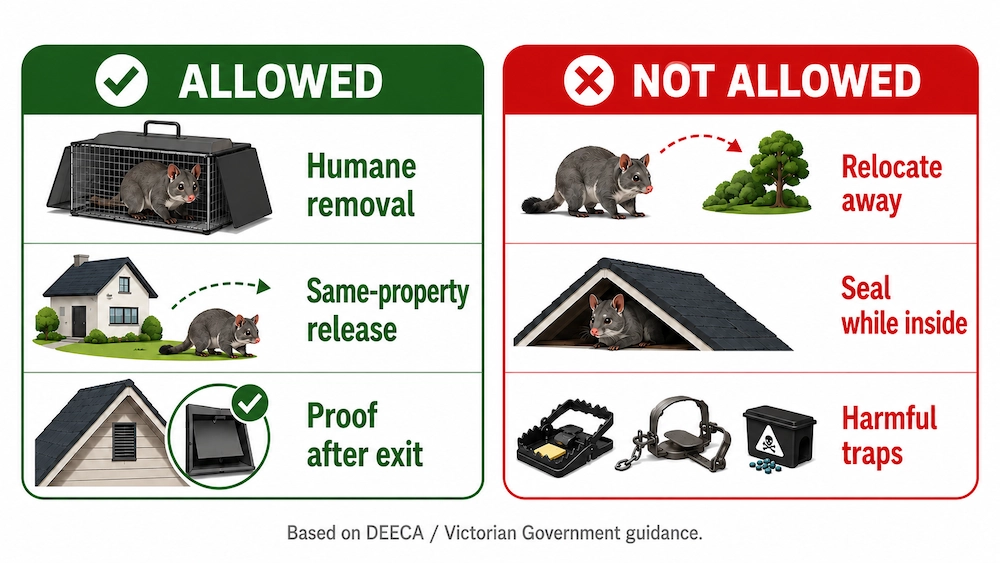
Possums are protected under the Wildlife Act 1975 in Victoria, and relocation is not allowed. They must not be harmed or interfered with unlawfully, which makes roof possum issues different from simple home repairs.
Seal Too Soon, Trap the Possum
Sealing a gap too early can trap the possum inside, causing stress, louder noise, and damage as it tries to escape. It can also leave dependent young behind, making the situation harder to resolve safely.
Proofing Beats Chasing
Getting the possum out is only part of the solution, because if the entry point stays open, it will likely return. Proper proofing focuses on closing access points, so your roof stops being an easy place to enter.
Proper proofing checks the entire roof, not just the noisy spot, because older homes often have multiple weak areas. It includes inspecting edges, vents, chimneys, and joins, so no gaps are left open for the possum to return.
Use the Right Material
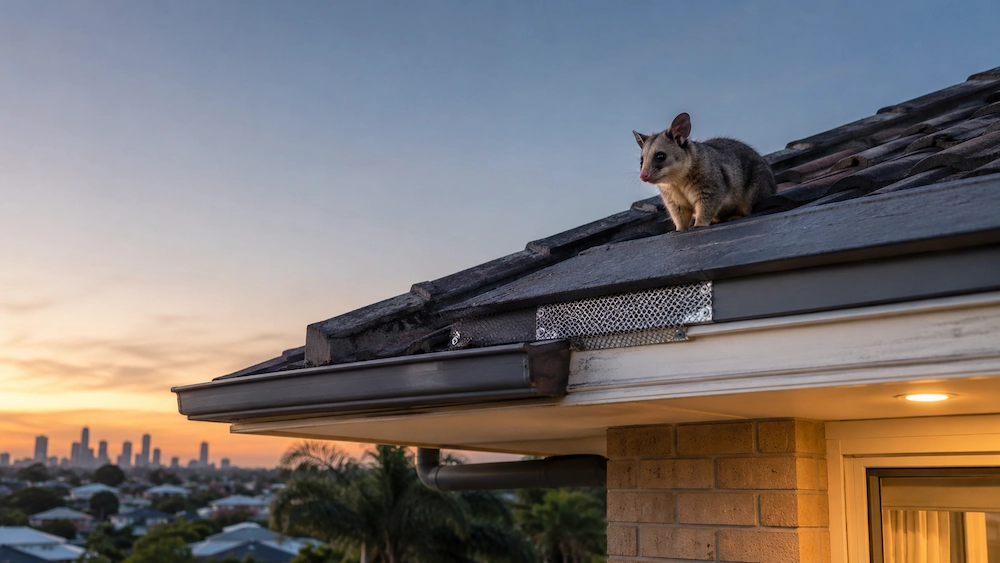
Different gaps require suitable materials such as metal, mesh, or timber repairs, depending on roof design and structure. Repairs must be durable enough to withstand weather, movement, and repeated pressure from possums over time.
Quick Ground Checks
You can safely check for signs of possum activity from the ground without climbing onto the roof or entering ceiling spaces. Focus on visible areas around your home and note anything unusual.
- Branches touching or close to the roof
- Gaps under roof edges or eaves
- Loose or damaged vents
- Visible droppings near gutters or walls
- Damaged or worn eaves
- Movement or disturbance near chimneys or rooflines
Avoid These Mistakes
Do not feed possums or try to block entry points or handle them yourself, as this can make the situation worse. Temporary possum deterrent like noise or smells rarely solve the issue and often lead to repeated roof problems.
Why Waiting Can Cost More
A small roof entry point rarely stays small once a possum keeps using it night after night. Scratching, weight, weather, and repeat movement can widen gaps, loosen materials, and make future repairs more involved than a simple proofing job later.
Waiting can also make the problem harder to identify because noises may spread across different parts of the ceiling. When the original entry point is missed, homeowners can end up dealing with repeat visits, more stress, and extra repair costs.
How 1800 Possums Fixes Roof Entry Problems
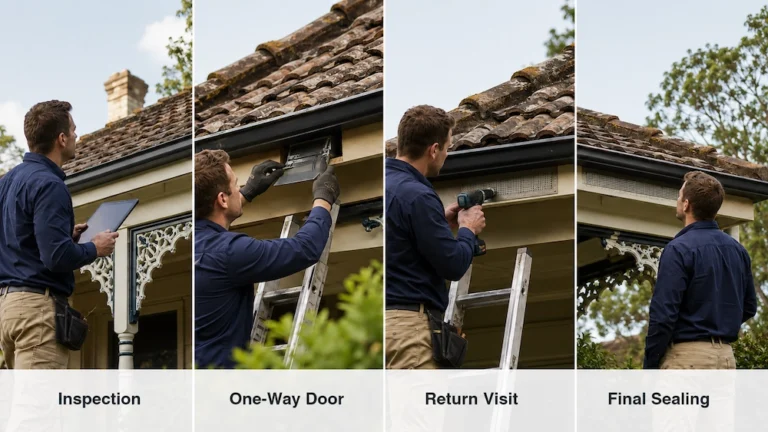
1800 Possums safely removes possums and fixes roof entry points for Melbourne homeowners, with services priced at $495 inc GST for many homes. The service includes inspection, one-way door installation, a return visit, final sealing, and a 2-year money-back guarantee.
This approach focuses on both possum removal and prevention, identifying how possums enter and sealing those points properly to reduce repeat problems. It covers the Melbourne metro and the Mornington Peninsula, making it suitable for many older homes in established suburbs.
Fix the Noise Before It Gets Worse
If you are hearing thumps, scratching, or movement in an older Melbourne home, do not wait for the problem to settle itself. A possum may leave the roof at night, but it can keep returning if the entry point remains open. Contact Us today!
Latest Articles