Professional Possum Removal Goes Beyond Trapping, and That’s a Good Thing
TL;DR: Professional possum removal is more than getting an animal out of a roof. A lasting solution identifies how the possum entered, provides a humane way for it to leave, and secures vulnerable openings so the property is less likely to face the same problem again.
Key Takeaways
- Correctly identifying the animal helps determine the safest and most appropriate removal method.
- One-way exclusion can allow possums to leave naturally without relying solely on trapping.
- Roof proofing is essential because removing a possum without fixing access points can lead to repeat activity.
- Professional help is especially useful when entry points are difficult to locate, roof access is unsafe, or wildlife regulations apply.
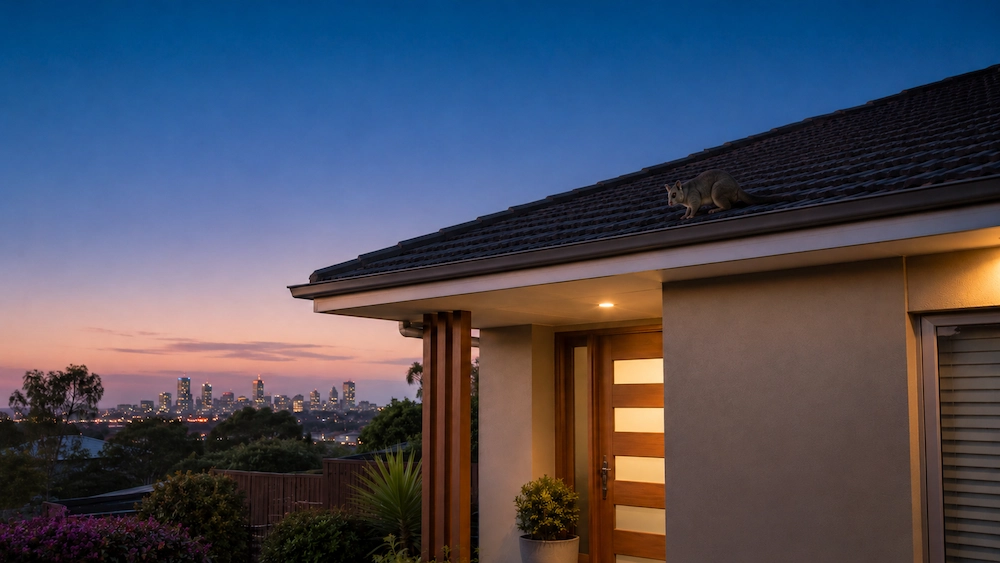
Hearing heavy footsteps above the ceiling at night can make it seem like the obvious solution is to catch whatever is up there and take it away. When the visitor is a possum, effective removal rarely means setting a trap and hoping the problem disappears.
Professional possum removal involves safely getting the animal out and identifying how it entered. Securing that access point helps prevent the problem from returning.
What Professional Possum Removal Means
The word “removal” can give homeowners the wrong picture, as though a technician simply catches a possum and leaves the roof empty. In practice, responsible service also focuses on inspecting the building and identifying how the animal gained access.
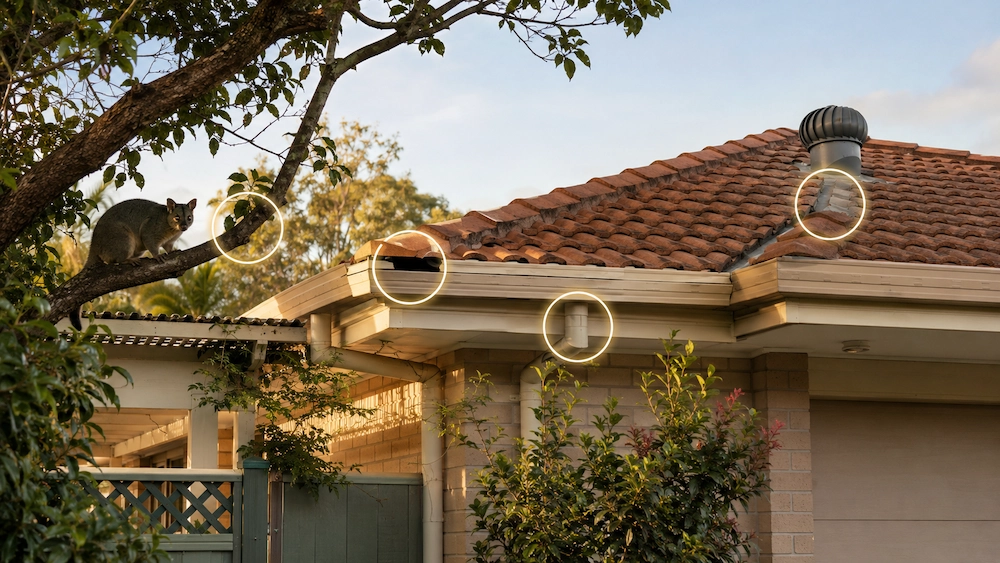
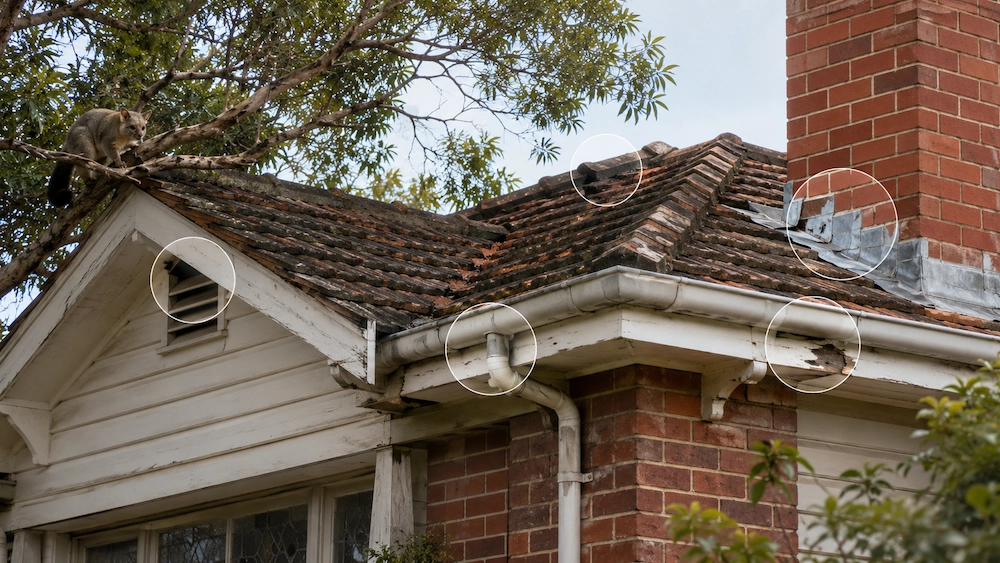
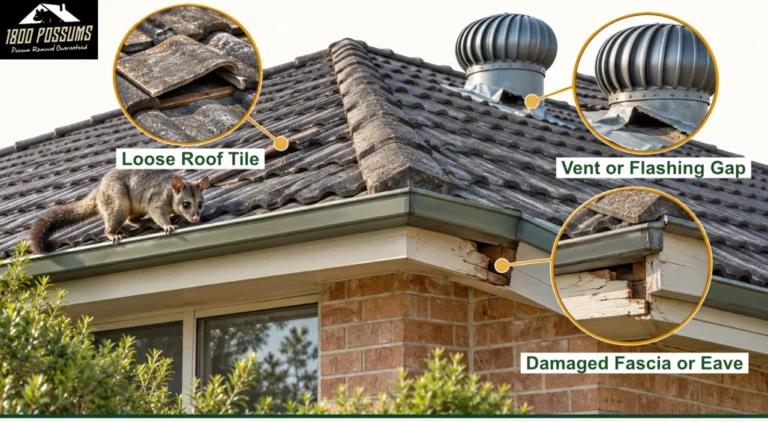
Possums enter roof cavities through openings such as loose roofing, damaged fascia or gaps around eaves, and removing one does not prevent another visit. Professional possum removal allows the animal to leave safely, secures vulnerable areas and reduces the chance of re-entry.
Make Sure It’s a Possum First
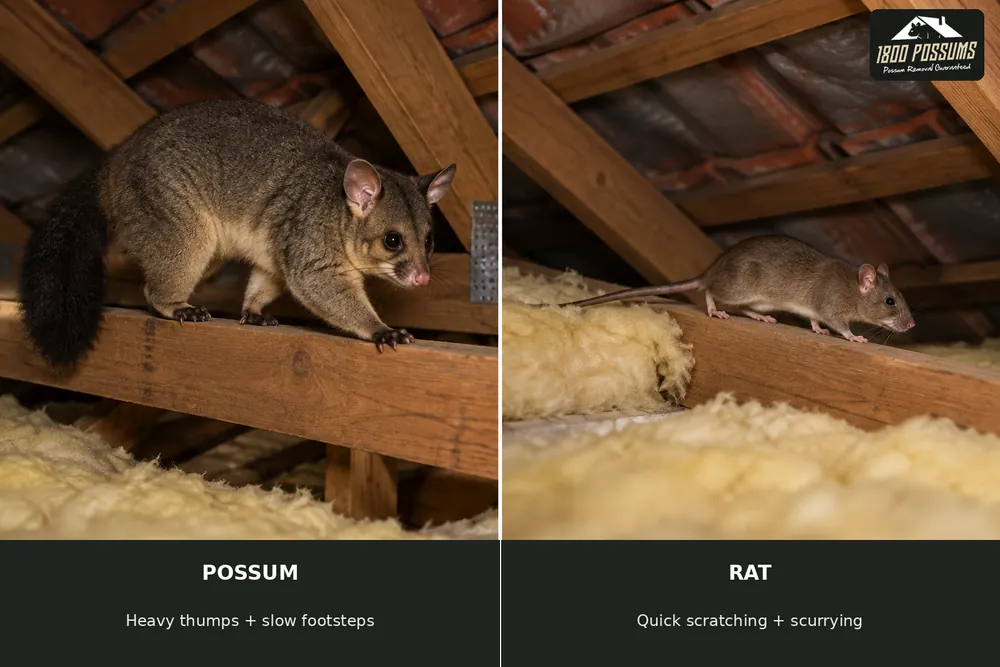
A loud noise in the roof does not automatically mean a possum is responsible. Rats, mice, birds and other animals can create surprisingly noticeable sounds once those noises travel through timber, plaster and ceiling cavities.
Listen to the Pattern, Not Just the Volume
Possums make heavier nighttime sounds, while rats produce quicker noises; inspect timing, damage, droppings, and entry points. Reliable identification considers activity timing, frequency, location, droppings, visible damage, and signs around possible entry points.
Identification Changes the Solution
Correct identification matters because different animals need different control methods. A professional assessment checks the sounds, movement and entry points to identify the animal and how it entered.
Investigation Starts Outside
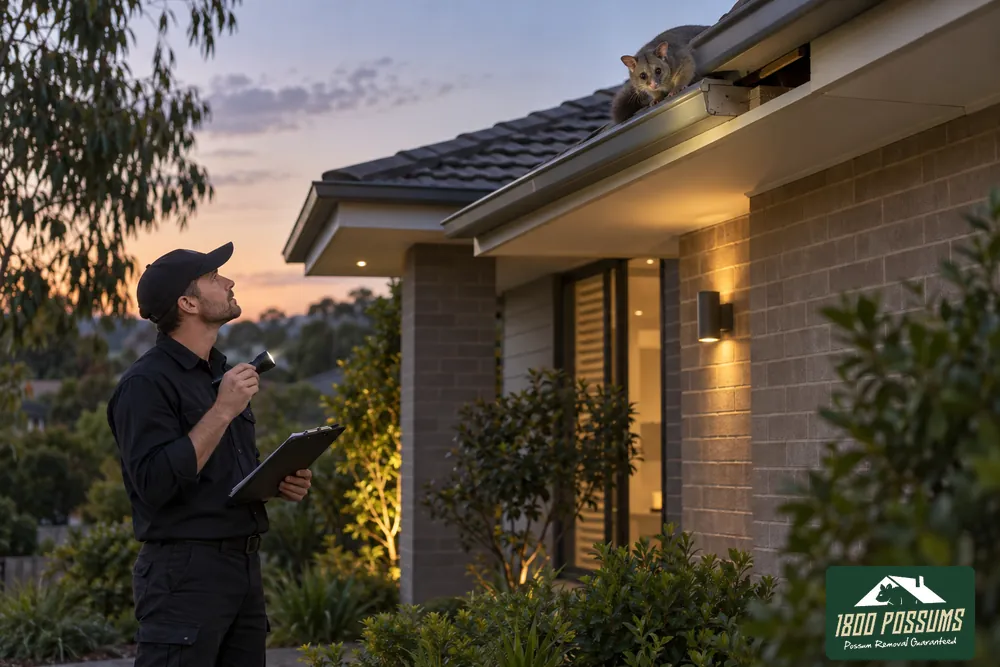
Finding a possum is only part of the job; locating its entry point is where the real detective work begins. Even roofs that look secure may have hidden gaps around tiles, eaves, vents, flashing, fascia boards, extensions, joins or damaged materials.
Active Entry Point Matters
Professionals look for wear, staining, fur, droppings and movement patterns to identify the opening the possum is actually using. Closing the wrong gap achieves little and sealing an active entry while the possum is inside can trap it in the roof.
One Opening May Not Be Enough
A thorough inspection should identify all vulnerable points around the building, not just the most obvious access route. For homeowners, landlords and property managers, whole-building proofing is more effective than patching a single visible gap.
How Professional Possum Removal Works
The exact method depends on the property, the species involved and local wildlife requirements. Still, a well-managed exclusion process generally follows a logical sequence.
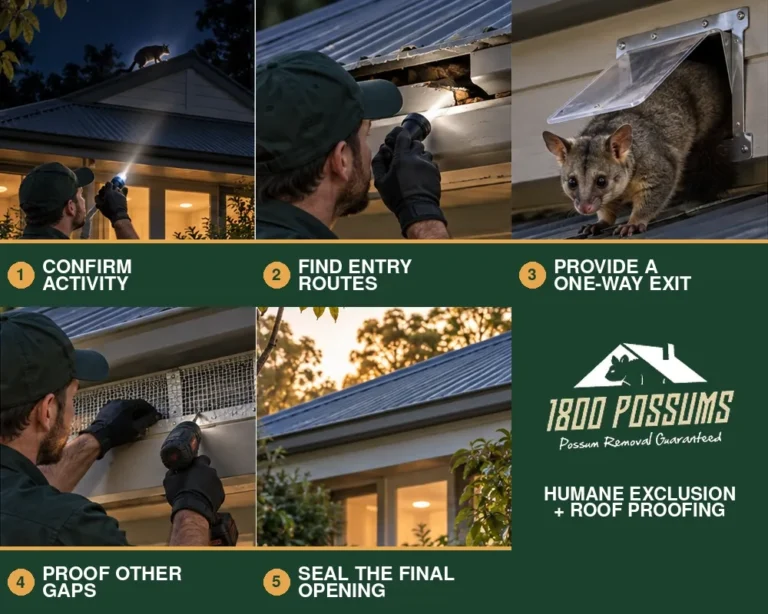
Step 1: Confirm the Activity
The first step is confirming possum activity by reviewing noise patterns, inspecting accessible roof areas and checking the building’s exterior for entry points. Treating the problem without proper assessment can waste time and money.
Step 2: Identify Entry and Exit Routes
Once possum activity is established, the building should be assessed for access points, including gaps around the roof, extensions, nearby structures and vegetation. Experience is often needed because possums can use openings that homeowners may not consider large enough.
Step 3: Give the Possum a Safe Way Out
Humane exclusion allows the possum to leave naturally while preventing it from returning through the same opening. A one-way exit device can help achieve this without chasing the animal through the roof cavity.
Step 4: Secure Other Vulnerable Openings
While the active exit remains available, other suitable gaps can be repaired or proofed with durable materials suited to the building. Effective proofing should withstand determined animals rather than merely appear secure from the ground.
Step 5: Close the Final Entry Point
After the possum has left, the final opening can be securely sealed to prevent future access and protect the building from repeat infestations. This helps prevent future access and protects the building from repeat infestations.
Why Trapping Alone Isn’t Enough
A trap removes an animal, but it does not repair the roof or close the entry point that allowed the possum inside. If that access remains open, the building can continue offering shelter to the same possum or another one.
Professional possum removal should therefore address both the animal and the property. A quiet roof is only a temporary result unless the underlying access problem is properly resolved.
Possum Proofing Prevents Future Problems
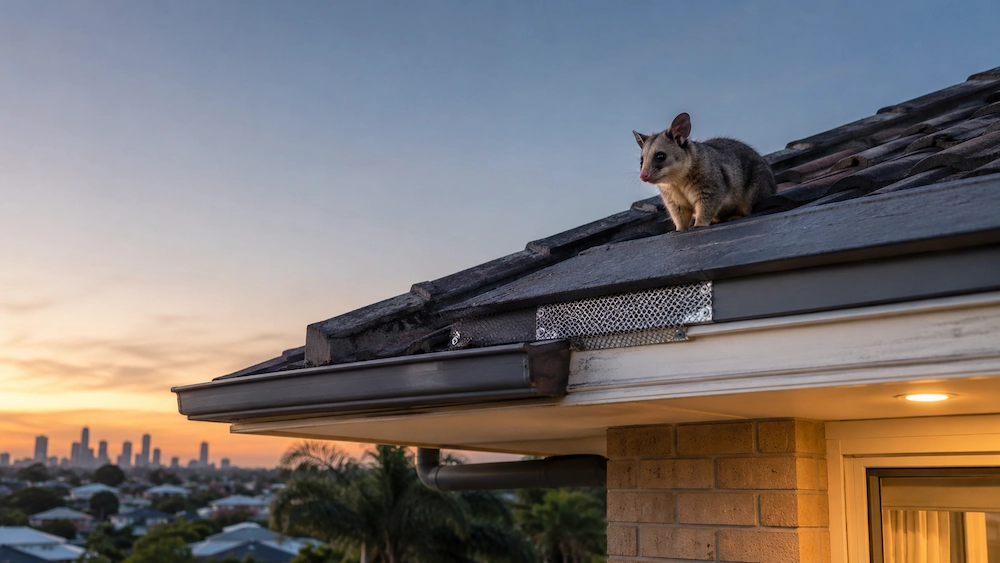
Possum proofing secures suitable access points so possums cannot easily re-enter the roof. Effective proofing requires identifying the right openings and using repairs that suit the building while preserving ventilation, drainage and essential roof functions.
For landlords and property managers, prevention helps avoid recurring tenant complaints and repeat callouts. A thorough inspection and durable proofing address the underlying property issue rather than temporarily silencing the noise.
DIY Mistake That Makes Things Worse
Once homeowners locate a possible entry hole, sealing it immediately can trap a possum inside and cause further disturbance as it searches for another way out. Timing matters, so the animal should be allowed to leave before the opening is secured.
Roof work also involves risks from high rooflines, fragile materials and confined ceiling spaces. A safe ground-level inspection is reasonable, but professional help is advisable when the problem requires more than a simple household repair.
Wildlife Rules Matter Too
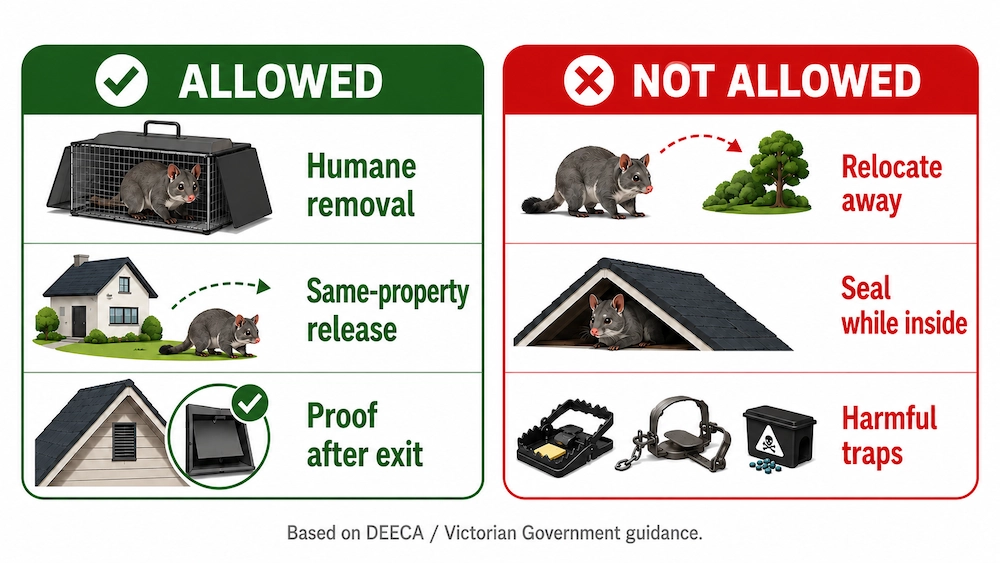
Possums are native wildlife, so their handling is subject to state-specific rules that vary by species and removal method. A responsible professional should understand local requirements, while homeowners should avoid anyone who treats possum removal like ordinary rodent control.
These regulations help ensure possums are handled humanely, particularly because relocating territorial animals to unfamiliar areas may cause harm. Before work begins, confirm that the provider follows the wildlife laws applying in your area.
How to Know If the Job’s Complete?
A quiet roof is a good sign, but proper possum removal should also include:
- Identifying and repairing entry points
- Safely removing the possum
- Securing the final opening
- Explaining any follow-up or warranty provided
A quiet ceiling is a good sign, but a professional should also explain where the possum entered, what was repaired and how future access will be prevented. Before choosing a provider, ask:
Is a Building Inspection Included?
Removing an animal without investigating access points may leave the original cause untouched.
Is Proofing Included?
Know whether the service covers only removal or also includes repairs intended to reduce re-entry.
What Happens Next?
Ask whether another visit is required to remove exclusion equipment or complete the final closure.
What Follow-Up Is Included?
Ask about the provider’s warranty and follow-up policy, and be cautious if they cannot clearly explain a process that goes beyond simply catching the possum.
When to Call a Professional
One strange noise on the roof may not require an urgent service call, as possums can cross roofs without living inside them. Repeated ceiling movement, recurring noises, droppings, damaged openings or persistent odours suggest a more serious issue.
Professional possum removal is useful when the access point is difficult or unsafe to locate, activity keeps returning or wildlife requirements need to be followed. Identifying the entry problem early makes it easier to choose an effective solution.
How 1800 Possums Handles Possum Removal
We combine wildlife management with property protection, inspecting the building to find entry points and repair needs. The team uses one-way doors to let possums leave safely, then repairs other openings and returns to complete the final sealing.
The family-owned business has provided possum removal and roof proofing services since 2005 for residential, rental, commercial and body corporate properties. Its service includes inspection, one-way exclusion, sealing and a two-year money-back guarantee.
Ready to Fix the Problem?
If possum noises keep disturbing your evenings, 1800 Possums can safely remove the animal and seal entry points to help prevent its return. If possum noises keep disturbing your evenings, 1800 Possums can safely remove the animal and seal entry points to help prevent its return.
Contact 1800 Possums today!
Latest Articles