Why Possums Keep Coming Back After You Block One Hole
TL;DR: Blocking one hole doesn’t stop possums if other entry points, food sources, or shelter remain available. To prevent repeat visits, you need to secure the entire property and remove what’s attracting them.
Key Takeaways
- Possums often return because multiple entry points exist, not just the one you sealed
- Sealing too early can trap a possum inside, leading to more damage
- Food sources and easy roof access keep possums coming back
- Long-term prevention requires full inspection, proper sealing, and removing attractants
You found the hole, sealed it up, and figured that would be the end of it until the scratching started again. When possums keep coming back after you block one hole, it usually means that opening was not the real issue. They still have access to shelter, food, or another way in somewhere else on your property.
Possums are persistent and tend to return night after night once they find a safe place to settle. Closing off one entry point might slow them down, but it rarely solves the bigger problem. To stop them for good, you need to understand what is drawing them in.
You Blocked the Entry Point, Not the Access Problem
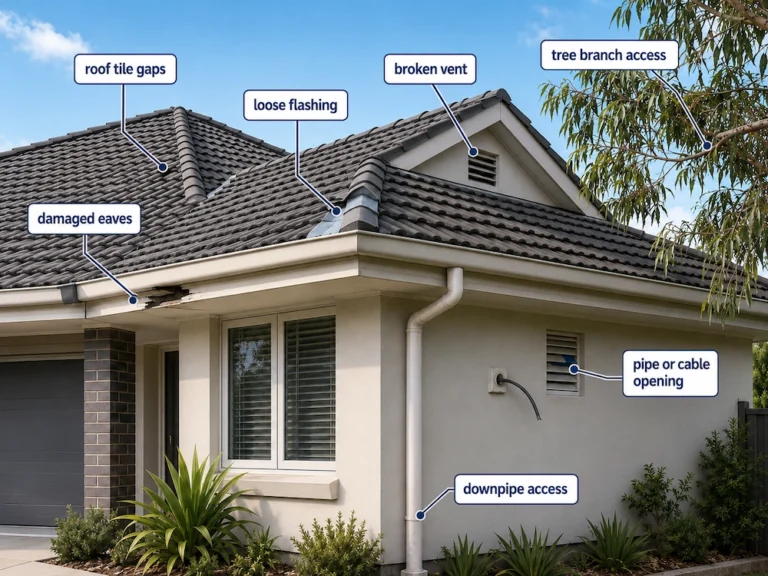
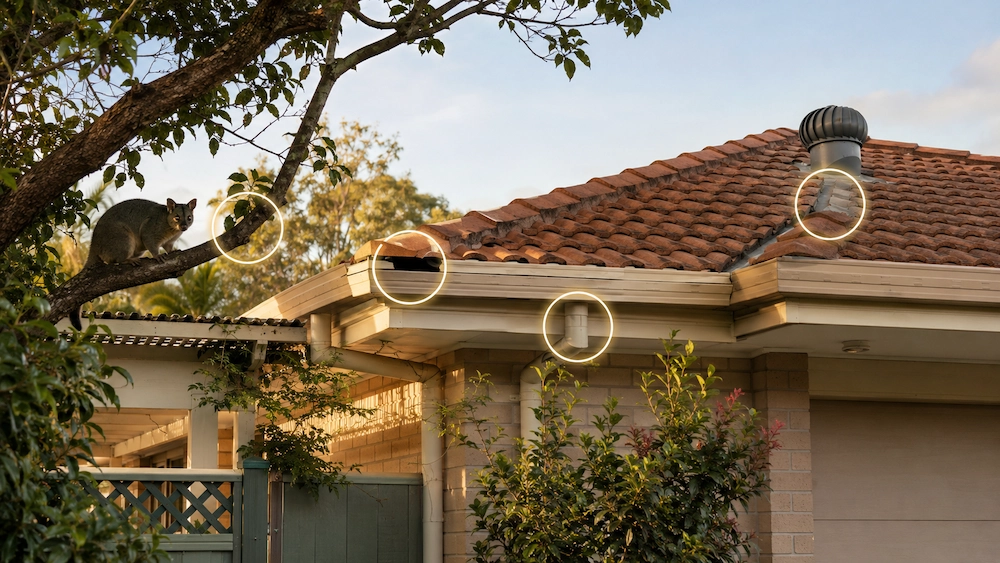
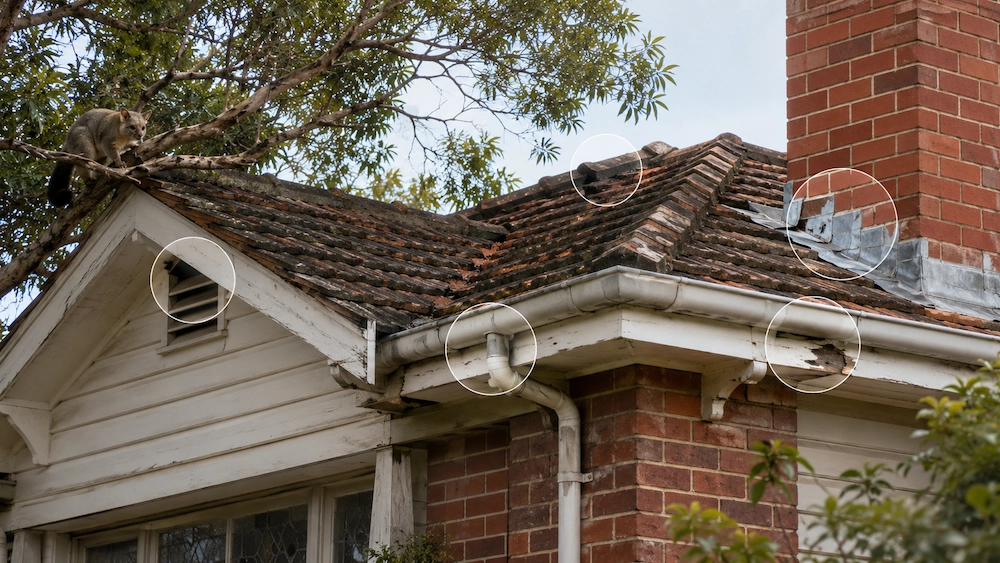
One of the most common reasons possums return is that the opening you sealed was not the only way in. Many homes have multiple vulnerabilities around the roofline, eaves, vents, fascia boards, wall cavities, and utility penetrations.
Even if you block one gap, a possum may simply move a few metres away and enter through another weak spot.
Common Alternative Entry Points
- Gaps under roof tiles
- Damaged eaves or soffits
- Broken vents or loose flashing
- Openings around pipes, cables, or cladding
This is why thorough inspections focus on the entire structure rather than a single hole. Unless all potential access points are identified, the problem often returns.
The Possum May Still Be Inside
Sealing an entry point before confirming the possum has left can create a bigger problem. If the animal remains inside a roof cavity, wall void, or other enclosed space, it will look for another way out.
Signs the Possum May Still Be Inside
- Continued scratching after repairs
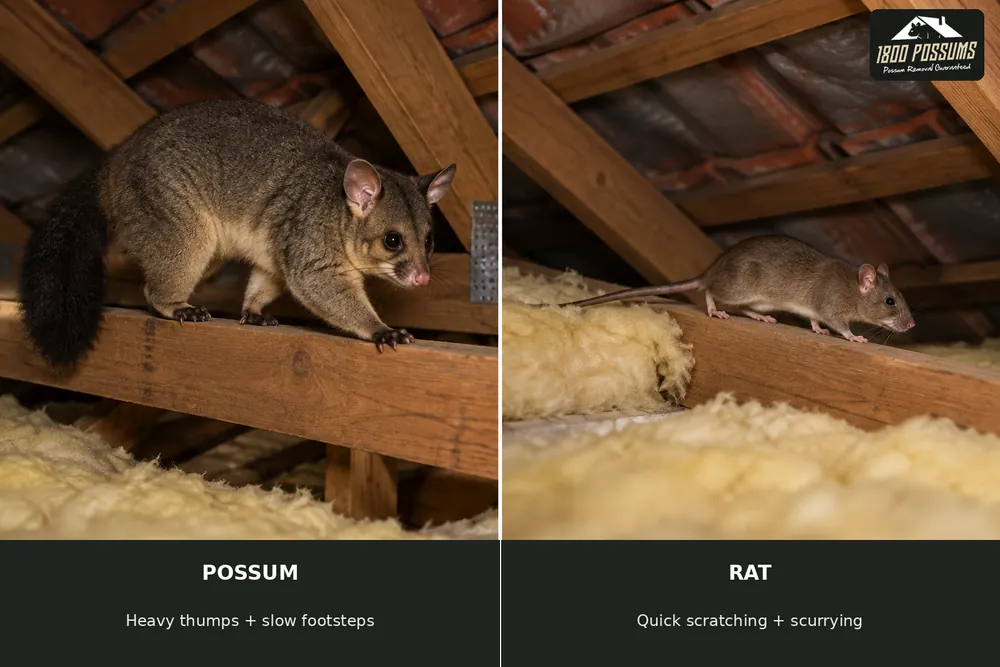
- Noises from different areas of the roof
- New damage near the sealed opening
- Strong odours from urine or droppings
The situation becomes more complicated if there are young possums present. An adult unable to reach them may repeatedly try to re-enter, causing further damage. Before sealing any opening, confirm that no animals remain inside.
Your Roof Cavity Is Still an Attractive Shelter
Possums do not come back just because they remember the hole. They are trying to get back to a space that felt safe and comfortable. Areas like roof cavities, sheds, and under decks offer warmth and protection, making them ideal hiding spots.
Once a possum settles into a place like that, it tends to stick with it and will keep looking for a way back in.
What Makes a Property Attractive
- Warm, dry shelter
- Minimal disturbance
- Easy roof access and nearby food
As long as the shelter remains available, possums may continue testing the structure for weaknesses.
Food Sources Keep Drawing Them Back
Even if a possum can no longer enter your roof, it may continue visiting your property if food is readily available.
Common Attractants
- Pet food left outdoors
- Unsecured rubbish bins
- Fallen fruit or compost
- Bird feeders or garden produce
If your property consistently provides food, possums may remain in the area and continue searching for shelter opportunities nearby. Reducing attractants helps make your property less appealing and lowers the chances of repeat visits.
The Repair Was Not Strong Enough
Not every repair holds up when animals keep coming back. Quick fixes like cardboard, light mesh, foam, or loosely attached covers might work at first, but they often shift, break, or open up new gaps over time.
Signs of a Failed Repair
- Bent or displaced materials
- Gaps forming around edges
- Damage around the repair site
Effective exclusion work requires durable materials and proper installation. The goal is to eliminate access opportunities rather than simply cover a visible hole.
Possums Still Have Easy Access to Your Roof
Blocking an entry point does not prevent a possum from reaching the roof, as overhanging branches, fences, pergolas, and downpipes can provide easy climbing routes. Once on the roof, it can inspect the structure and find alternative access points.
How Possums Reach Your Roof
- Tree branches touching or near the roof
- Structures like fences or pergolas close to the building
- Vertical surfaces such as downpipes
If repeat activity continues, examine how possums are reaching the building in the first place. Trimming branches and limiting access routes can significantly reduce re-entry attempts.
There May Be More Than One Possum
If one possum loses access to a shelter, another may eventually find your home and check it out. This is especially common in suburban areas with mature trees and plenty of food sources.
When multiple possums are active in the area, sealing just one hole usually isn’t enough. The problem tends to continue unless the whole property is properly secured.
How to Stop Possums From Coming Back
Long-term possum control requires more than patching individual holes.
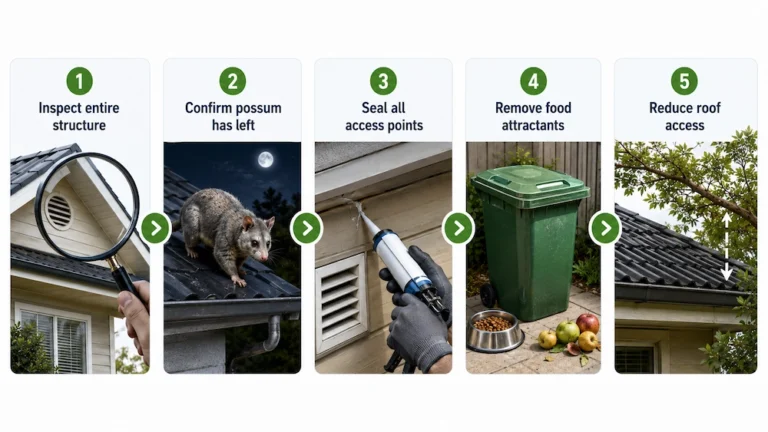
1. Inspect the Entire Structure
Check out the roofline, vents, eaves, fascia boards, sheds, garages, and crawl spaces for potential entry points.
2. Confirm the Possum Has Left
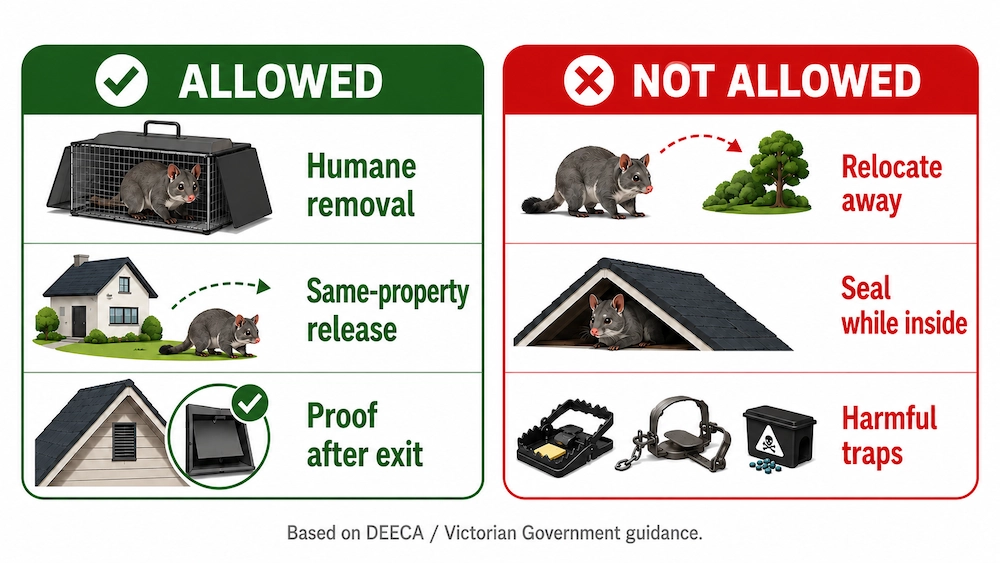
Never seal an opening until you are confident the animal is no longer inside, as doing so too early can trap it within the structure and lead to further damage or distress.
3. Seal All Vulnerable Access Points
Address every potential entry point across the structure, rather than focusing only on the most obvious or visible one.
4. Remove Food Attractants
Secure rubbish bins with tight-fitting lids, store pet food indoors when not in use, and regularly clean up fallen fruit or exposed compost to reduce attractants.
5. Reduce Roof Access
Trim overhanging branches so they no longer touch or hang close to the roof and reduce other easy climbing routes where itis practical to make access more difficult for possums.
6. Monitor for New Activity
Watch for noises, fresh droppings, or any signs that the possum is attempting to re-enter the property.
Why Choose 1800 Possums
When possums keep coming back, it is usually because something has been missed. At 1800 Possums, we take a complete approach to solving the problem, not just patching holes. We carry out thorough inspections to identify all entry points, not just the obvious ones, and use humane, compliant removal methods that follow local wildlife regulations.
If you need professional help, our possum removal service is designed to safely remove possums and prevent them from returning by addressing the root cause of the issue. Our work focuses on long-term results, with durable exclusion solutions designed to prevent re-entry, and we provide clear advice on reducing attractants and protecting your property so the issue does not return.
Ready to Stop Possums for Good?
If you are tired of blocking holes only to hear scratching again, it is time for a complete solution. Our team will identify exactly how they are getting in, remove the problem safely, and secure your property so they do not come back.
Contact 1800 Possums today for a professional inspection and long-term possum control.
Latest Articles