Possum Removal Rules in Queensland: What Brisbane Homeowners Need to Know
TL;DR: Possums are protected by wildlife in Queensland, which means homeowners cannot simply trap, relocate, or remove them however they choose. The most effective solution is humane exclusion combined with professional roof proofing to prevent future access.
Key Takeaways
- Queensland law protects possums, so homeowners cannot freely trap or relocate them.
- Sealing entry points too soon can trap a possum inside the roof.
- The most effective solution is humane exclusion combined with proper proofing to prevent re-entry.
- If you are unsure about what is causing roof noises, a professional inspection can identify the problem.
Hearing thumping or scratching your roof at night can be frustrating, but before you try to block an entry point or remove the animal yourself, it’s important to know the rules. Possums are protected by native wildlife in Queensland, so there are specific requirements around how they can be handled and removed.
The safest solution is to remove the possum humanely and prevent it from getting back in. Here’s what Brisbane homeowners need to know before acting.
Possums Are Protected Native Wildlife
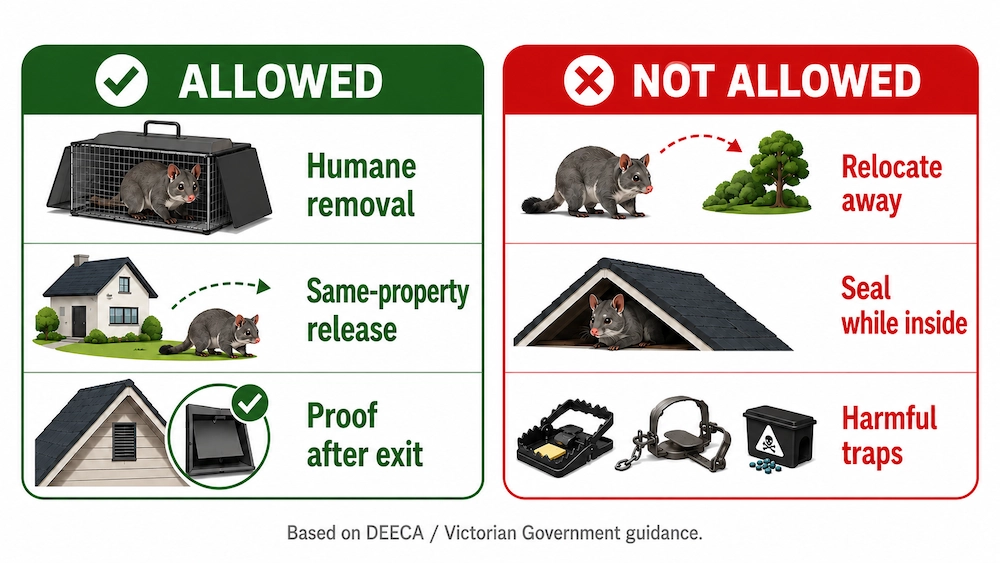
Possums are protected under Queensland wildlife laws, even when they take up residence in your roof. That means they can’t simply be poisoned, harmed, trapped, or moved elsewhere, so any removal needs to be done in a humane and legally compliant way.
The common brushtail possum is the species most often found in Brisbane roofs, as roof cavities offer the same warmth, shelter, and security they would normally find in a tree hollow. More often than not, the real problem is not the possum itself, but the loose tile, damaged vent, or gap in the roof that gave it a way in.
DIY Trapping Rules in Queensland
Many homeowners assume a cage trap is the quickest solution. In reality, possum trapping is subject to strict rules.
Trapping Is Not a Simple DIY Solution
In Queensland, trapping possums is generally not a DIY job and usually requires the appropriate authority or permit. Even with good intentions, trapping can cause problems, as possums can become highly stressed in captivity and you may end up catching the wrong animal.
Roof Noises Are Not Always Possums
Several animals can enter roof spaces and create similar sounds, including:
- Rats
- Birds
- Bats
- Other native wildlife
Without confirming what is on the roof, trapping may not solve the problem.
Release Requirements Matter
If a possum is trapped, it must be released in line with Queensland requirements and not moved too far from where it was found, as this can make it harder for the animal to survive. That’s why most possum specialists focus on getting the possum out safely and sealing entry points to stop it from coming back.
Why Relocating a Possum Is Usually Not the Answer
One of the most common questions homeowners ask is: “Can’t I just take the possum to a nearby park or bushland area?” While it may sound like a kind solution, it is usually not the best outcome for the possum or the homeowner.
Possums Are Territorial Animals
Possums depend on familiar shelter sites, feeding areas, and travel routes. When moved to an unfamiliar location, they may face:
- Competition from resident possums
- Difficulty finding shelter
- Greater exposure to predators
- Challenges locating food and water
Relocation Does Not Fix the Real Problem
Even if the possum is removed, another possum may move into the roof if the entry point remains open. That is why Queensland guidance focuses on preventing re-entry. Once the possum has safely left, the roof should be properly sealed.
Safe Steps Homeowners Can Take
Before contacting a professional, homeowners can take a few practical steps. The focus should be on observation, not handling wildlife. Possum Removal Rules QLD
Identify the Type of Noise
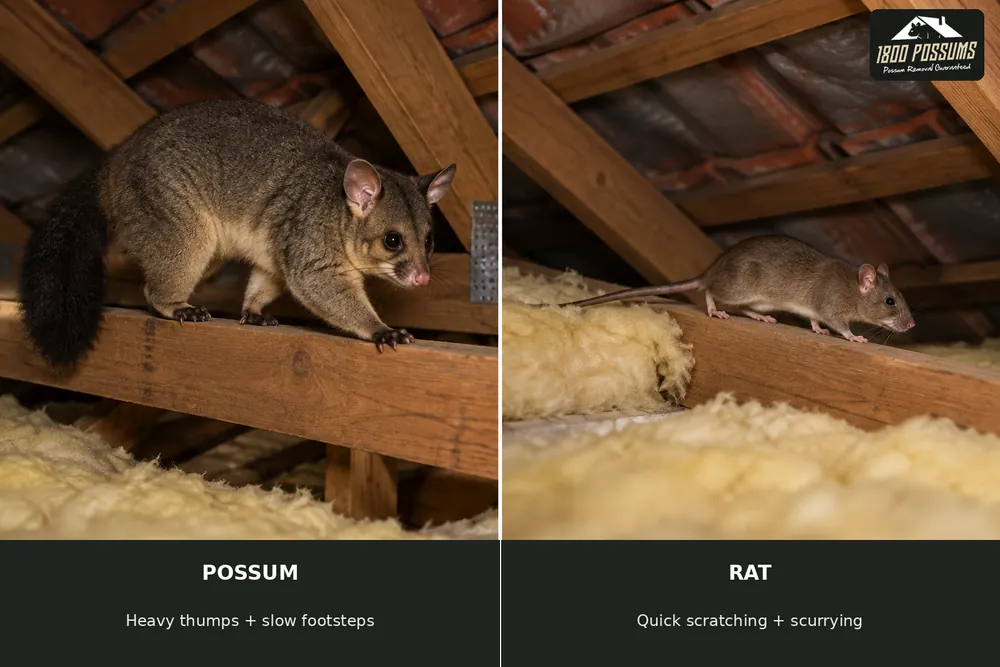
Possums usually create heavier sounds than rats. Common signs of possum activity include:
- Thumping
- Dragging
- Slow movement across the ceiling
- Heavy footsteps at night
Rats typically create lighter scratching or scurrying sounds.
Look for Potential Entry Points
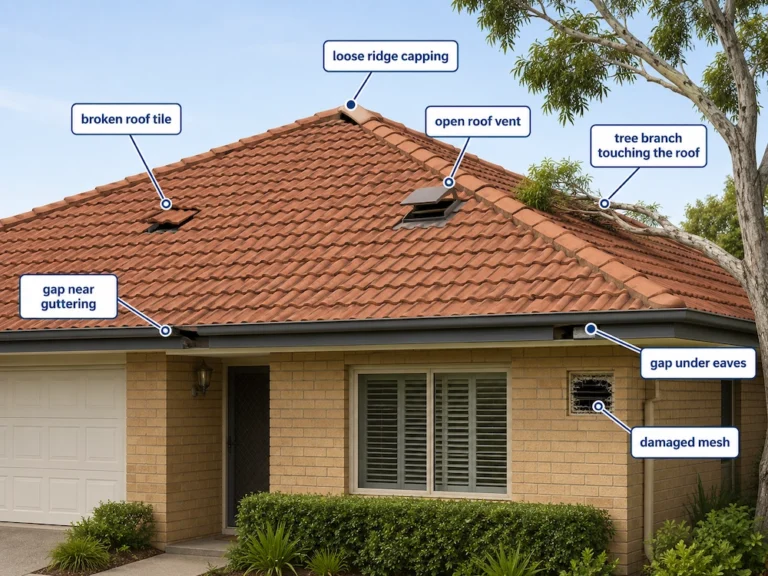
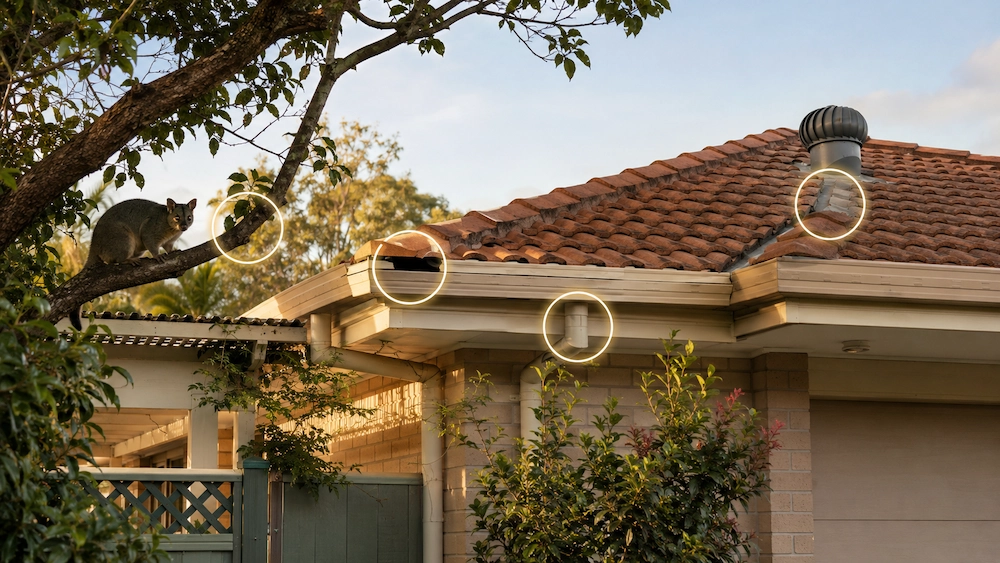
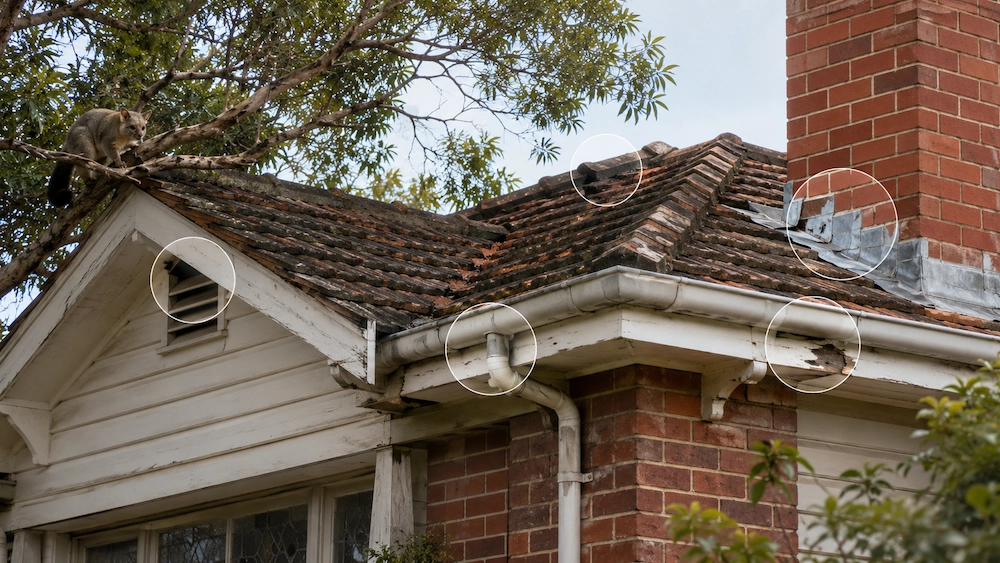
Inspect the outside of the property for possible access points. Common entry points include:
- Roof gaps near guttering
- Broken tiles
- Loose ridge capping
- Open vents
- Gaps under eaves
- Spaces around verandahs or extensions
- Tree branches touching the roof
- Damaged mesh or old patch repairs
Prioritise Safety
Many entry points are difficult to access. Avoid climbing onto the roof unless you have the proper equipment and experience. A fall poses a far greater risk than the possum.
Observe When the Possum Leaves
Possums are nocturnal and usually leave the roof after dark to feed, and Queensland Government guidance suggests placing loose paper near suspected entry points to help identify where they are entering and exiting. Do not seal the opening until you are certain the possum is no longer inside.
Avoid Sealing the Roof Too Early
Blocking an entry point may seem like the quickest fix but doing it too soon can create bigger problems.
You Could Trap the Possum Inside
If the possum is still on the roof when the opening is sealed, it may become trapped and try to escape through other parts of the structure.
This can lead to:
- Additional property damage
- Increased noise
- Strong odours
- Animal welfare concerns
Young Possums May Be Present
A mother possum may have dependent young people nearby. Separating a mother from her joy can create serious welfare issues and make the situation harder to resolve.
Professional Exclusion Is Safer
Professional possum removal isn’t just about finding a gap and sealing it—it’s about making sure the possum has safely left first. One-way doors are often used to let the possum exit naturally at night, and once the roof is confirmed clear, the entry points can be permanently sealed to stop it coming back.
Why Possum Proofing Matters
Many homeowners focus on removing the possum. Specialists focus on preventing future access.
Removal Alone Is Rarely Enough
A possum can only live on your roof if it can get inside. If the animal is removed but the entry point remains open, another possum may soon move in. This is common in Brisbane suburbs with established trees and active possum populations.
What Is Possum Proofing?
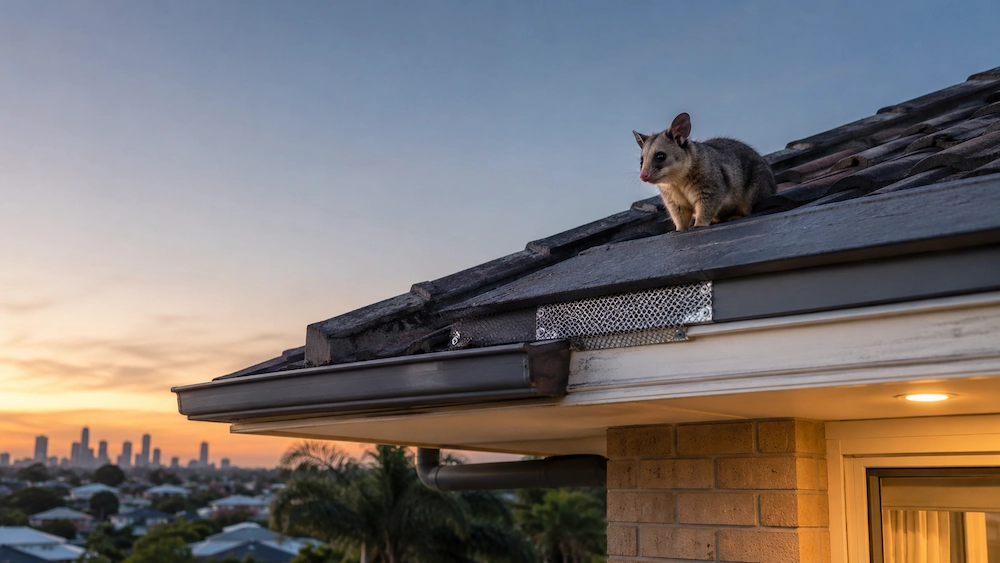
Possum proofing involves identifying and sealing potential entry points using durable materials suited to the property.
This may include:
- Roof gaps
- Eaves
- Vents
- Roof joins
- Extension connections
- Other vulnerable access points
Durable Repairs Matter
Possums are strong climbers and persistent animals, so effective proofing requires durable materials that can withstand weather and repeated attempts to regain access. Quality repairs provide long-term protection and help reduce the chance of future callouts.
When Should You Call a Professional?
Consider contacting a professional if:
- You are unsure whether it is a possum or rats
- The entry point is on the roof
- There may be young animals involved
- The property is tenanted
- There are repeated complaints
- Previous repairs have failed
- You want proofing backed by a warranty
If you’re dealing with ongoing roof noises or suspect a possum has moved into your ceiling, a professional Brisbane possum removal service can identify entry points, safely exclude the animal, and help prevent it from returning.
What a Professional Possum Removal Process Usually Involves
Most effective possum removal services focus on helping the animal leave safely while making sure it cannot get back into the roof. The goal is not simply to remove the possum, but to address the entry points that allowed it inside in the first place.
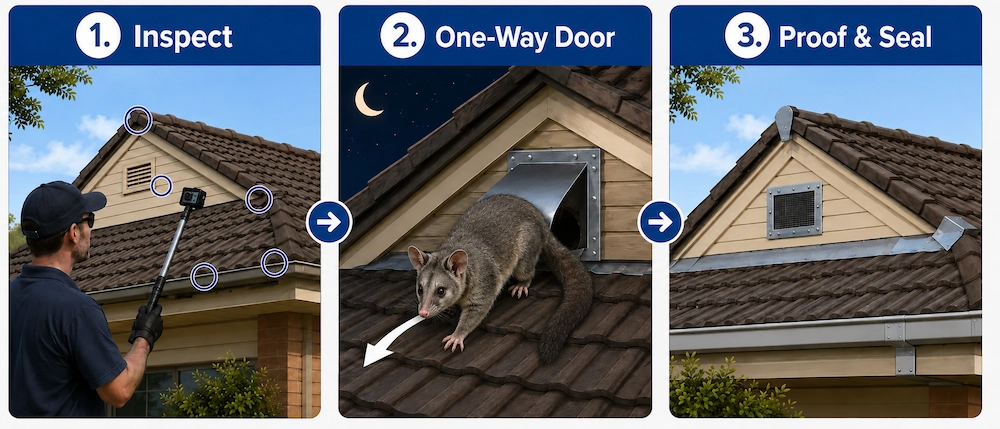
Step 1: Inspection
The process starts with an inspection to identify entry points and assess the roof and surrounding structures. Finding how the possum is accessing the property is essential for a lasting solution.
Step 2: Humane Exclusion
Professionals often use one-way doors that allow the possum to leave during its normal nightly routine while preventing it from returning. This method is generally more humane than trapping because it lets the animal exit on its own.
Step 3: Final Proofing
After the possum has left and the roof space is confirmed clear, the exclusion devices are removed, and all remaining entry points are sealed. This helps prevent the same possum—or another one—from returning.
Why Choose 1800 Possums?
Getting a possum out of your roof is only part of the solution. If entry points remain open, the same possum or another one can return. That is why 1800 Possums does more than remove the animal. Our team identifies how the possum is getting in, helps it leave safely and humanely, then seals access points to help prevent future problems.
Brisbane homeowners trust 1800 Possums because we understand local possum behaviour and roof entry points. Using proven one-way door systems and reliable proofing methods, we help keep possums out, with no-deposit bookings and eligible work backed by a 2-year warranty.
Need Help with a Possum on Your Roof?
If you’re hearing scratching, thumping, or movement in your ceiling, it’s a good idea to deal with it early before it leads to more noise, damage, or ongoing issues. 1800 Possums helps homeowners, landlords, and property managers across Brisbane with professional inspections, humane possum removal, and roof proofing solutions designed to stop possums from coming back.
Book your inspection today or contact 1800 Possums for expert advice.
Latest Articles