Possum or Rat in Roof? Your Ceiling Has the Answer
TLDR: Heavy thumping, scratching or scurrying in the roof can point to different animals, and the right solution depends on identifying the source first. Possums and rats require different handling, so safe inspection and proper exclusion are key to preventing repeat problems.
Key Takeaways:
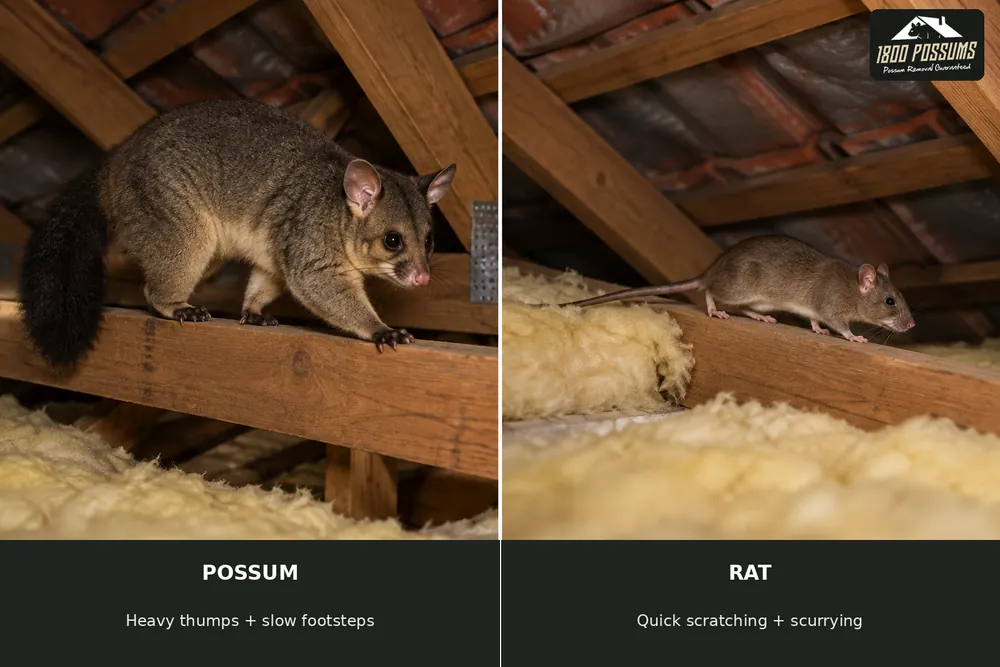
- Heavy footsteps and thuds are more commonly linked to possums, while fast scratching and scurrying often suggest rats.
- Never seal an active roof entry point until you are sure the animal has safely left.
- Possums are protected wildlife in Victoria and must be managed according to local rules.
- Long-term prevention depends on finding and securing access points, not just removing the animal.
A sudden thump above the bedroom at midnight can make any homeowner wonder what has moved into the roof. Rats are often the first suspect, but surprisingly heavy footsteps may indicate a possum, while amplified roof-cavity sounds can make identification difficult.
Knowing whether you have a possum or rat in roof matters because each requires a different, legally appropriate response. Before sealing gaps, setting traps or trying home remedies, identify the clues your roof is giving you.
Midnight Thump Can Reveal More
Roof spaces can amplify small movements, making an animal several metres away sound as though it is directly above your bed. The character of the noise still provides useful clues, with possums often sounding like heavy footsteps or thumping and rats producing lighter scratching or scurrying sounds.
One noise alone cannot confirm what is in the roof. Listen for patterns and combine the sounds with other evidence around the property.
Listen Before You Look
Heavy Footsteps Often Point to a Possum
A common brushtail possum is roughly the size of a cat, so it can make surprisingly substantial noise when moving through a ceiling cavity. Homeowners may hear slow footsteps, sudden thuds or heavier movement as the animal climbs through an entry point and crosses roof timbers.
Possums can also make vocal sounds. Growling, hissing, screeching and other calls may be heard when animals communicate or react to another possum nearby. If the roof seems to contain something much larger than a mouse or rat, a possum becomes a reasonable possibility.
Fast Scratching & Scurrying Suggest Rats
Rats usually sound quicker and lighter than possums, with scratching, tapping, rustling or fast scurrying that starts and stops suddenly. Repeated scraping or chewing may also indicate rat activity, as rodents regularly gnaw materials with their continuously growing teeth.
You may hear movement in several areas because rats can travel through narrow gaps around a building. While sound alone cannot confirm what is in the roof, the contrast between heavy footsteps and rapid scurrying can help narrow down the possibilities.
When Is the Roof Most Active?
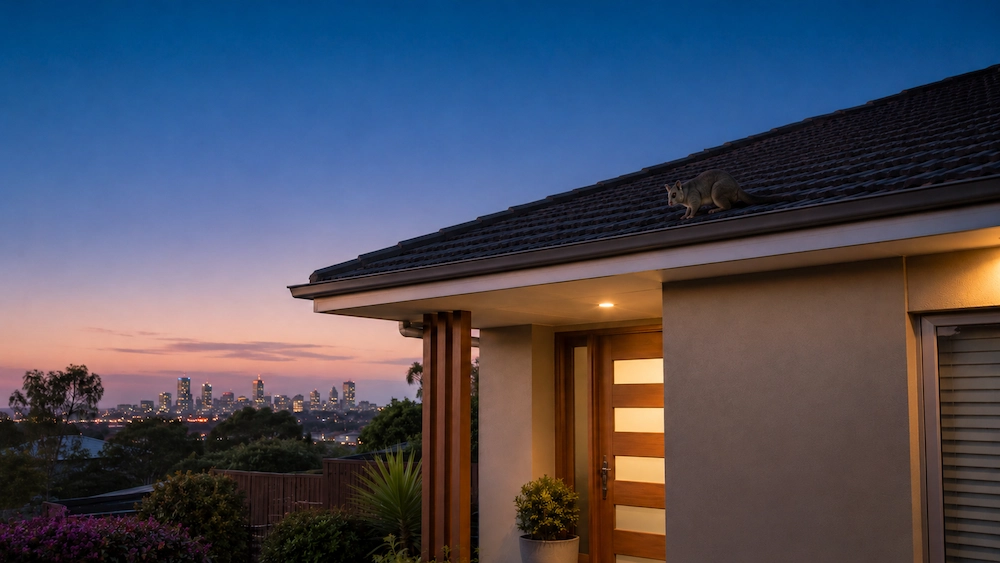
Both possums and rats are active after dark, so nighttime noises alone cannot confirm which animal is in your roof. Possums often become active around dusk, while rats may move more frequently and irregularly throughout the night.
Because their activity times can overlap, use timing as one clue rather than the deciding factor. Combine it with the sound’s weight, visible evidence and possible entry points when identifying a possum or rat in roof.
Your Roofline May Reveal the Culprit
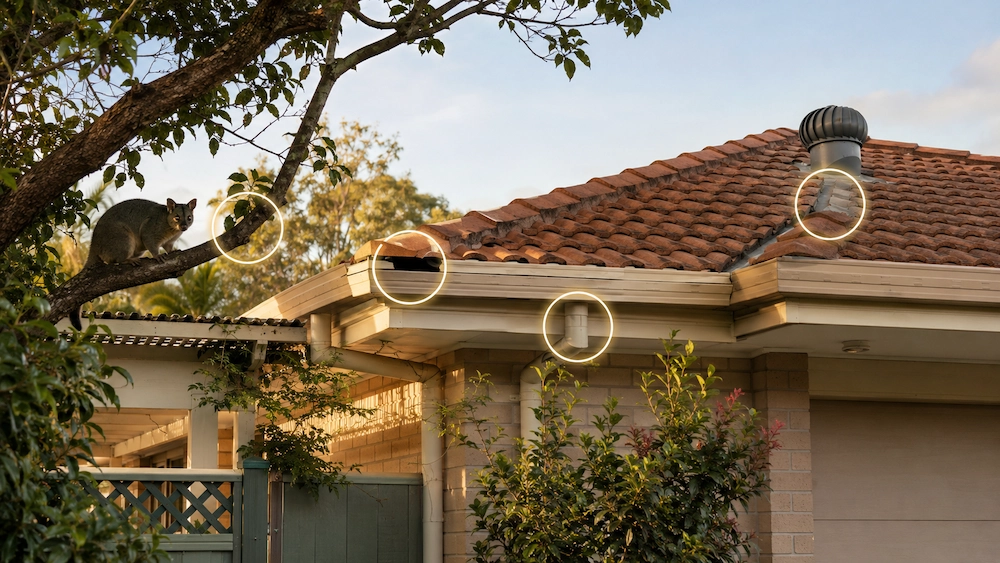
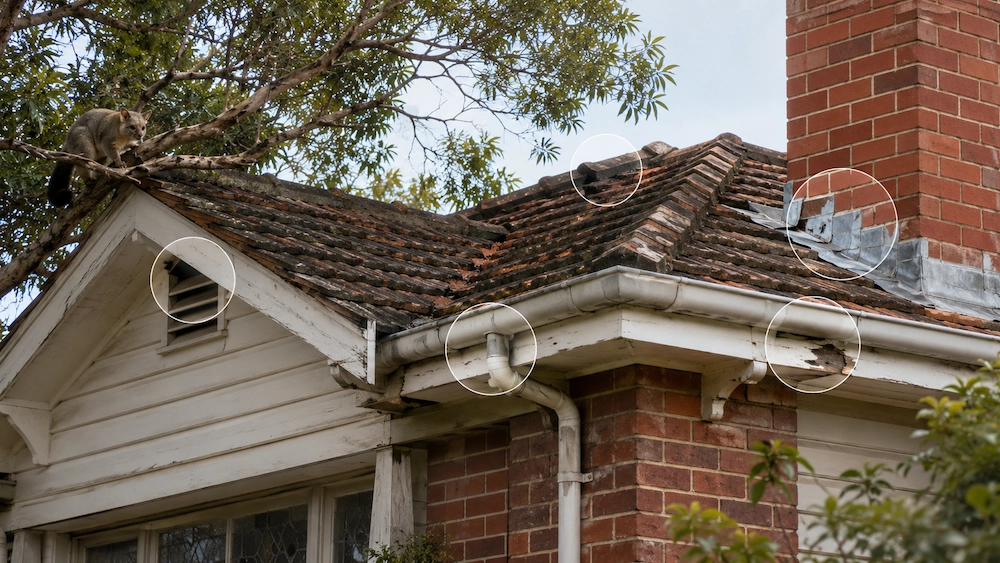
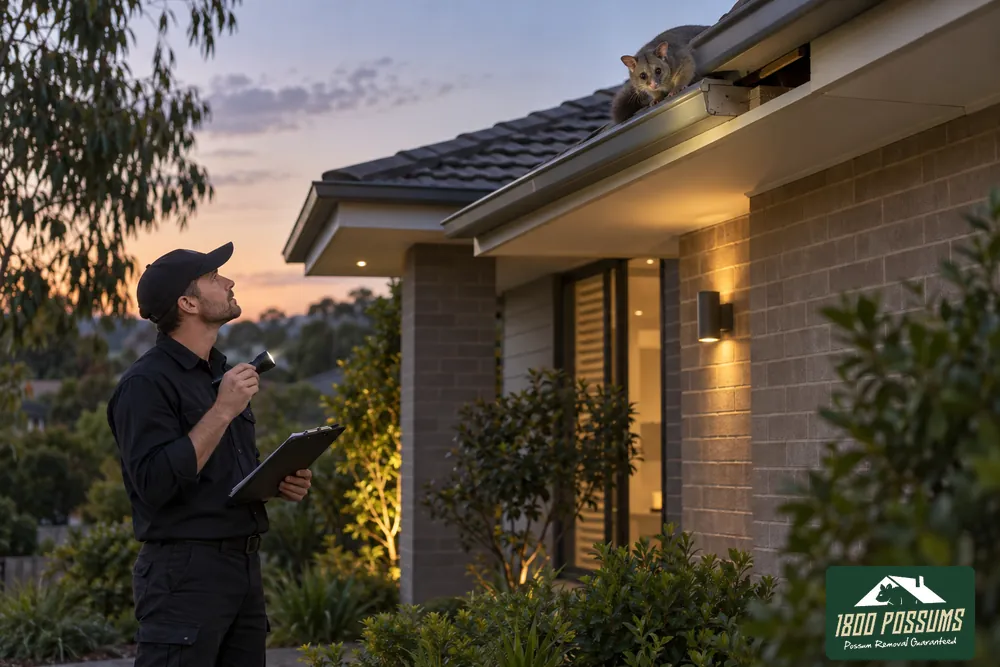
Sometimes the clearest clues are outside rather than inside the ceiling, as possums can enter through damaged eaves, loose roofing, gaps around roof edges and other openings in the building exterior. Victorian wildlife guidance specifically identifies gaps in roofing and holes in eaves as possible access routes.
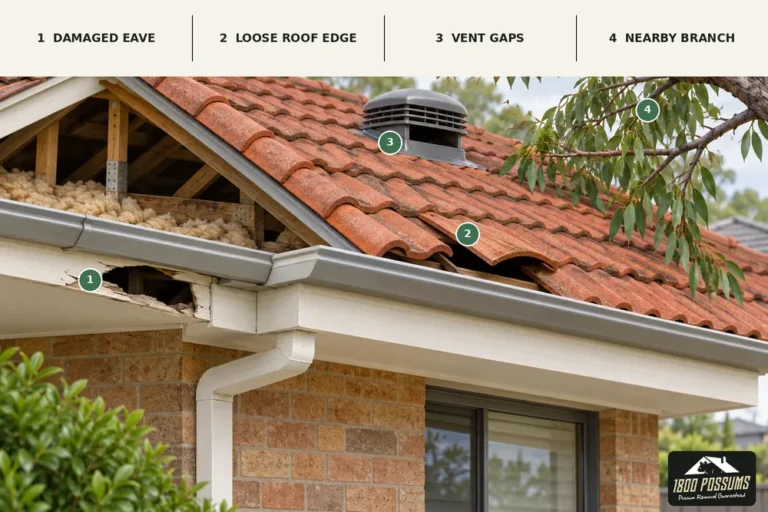
From ground level, inspect roofing, vents, eaves, building gaps, branches and nearby structures for potential roof access points. Avoid climbing onto the roof without proper equipment or experience, and never seal openings until the animal has safely left.
Biggest Mistake is Sealing Too Soon
Finding an entry point is not the same as solving the problem. Sealing it too soon can trap a possum inside, especially if dependent young are present. Always confirm the possum has safely left before closing an active entrance.
A better approach is to establish whether the opening is currently being used and ensure the possum can safely leave before the final access point is sealed. Professional roof proofing is not simply about finding holes; it is also about managing them in the right order.
Possum Is Different from a Rat
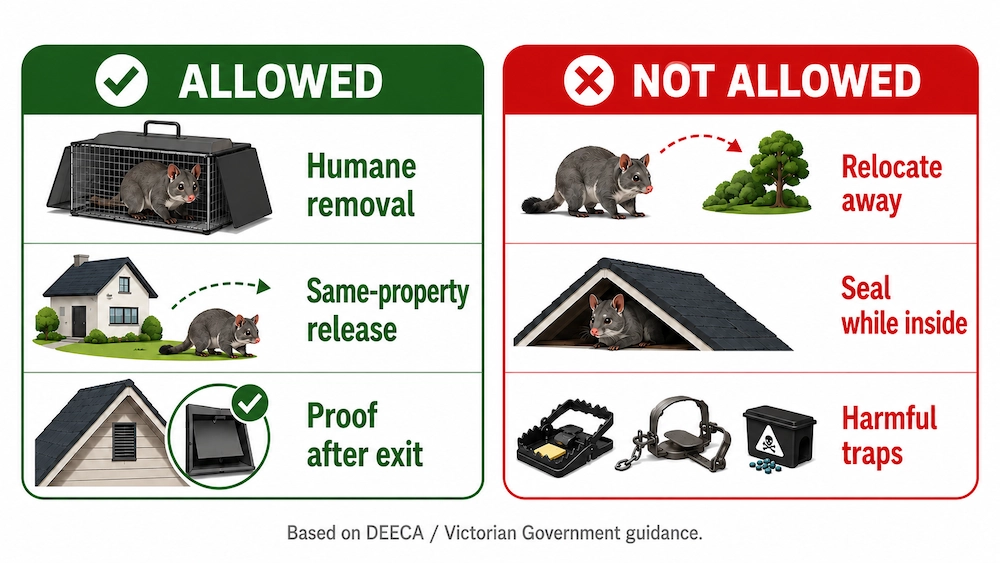
In Victoria, possums are protected under the Wildlife Act 1975 and require legally compliant management. Victorian guidance permits conditional brushtail possum management, while ringtail possum trapping generally requires a permit.
Rats are treated differently and may require baiting, trapping, sanitation and exclusion measures. Correctly identifying the animal before choosing a treatment helps avoid wasted effort, animal welfare concerns and potential legal problems.
You Can’t Relocate a Trapped Possum
One persistent misconception is relocating trapped possums to parks or reserves, but Victorian law prohibits releasing them elsewhere. Current Victorian guidance requires trapped common brushtail possums to be released after sunset, within 50 metres of capture, on the same property.
These rules protect possums from unfamiliar territory and predators, while research shows relocated urban brushtails often have poor survival rates. For homeowners, the goal is to keep possums outside, not remove them from the neighbourhood.
Getting Possum Out Is Only Half the Job
A roof attracts wildlife because it provides warm, protected shelter, so removing a possum without addressing the entry point leaves the underlying problem unresolved. The same access route may remain available, allowing another animal to enter.
That is why exclusion and building proofing are essential alongside humane removal. Victorian wildlife guidance recommends one-way flaps that let possums leave without returning, as well as addressing access routes such as branches leading to the roof.
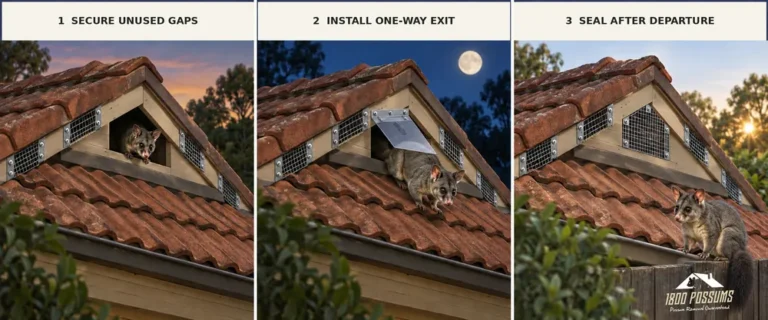
What Proper Possum Exclusion Involves
The basic principle behind one-way exclusion is simple: a suitable device allows the possum to leave the roof cavity at night but prevents it from returning through the same opening. Other unused access points are secured so the animal cannot re-enter elsewhere.
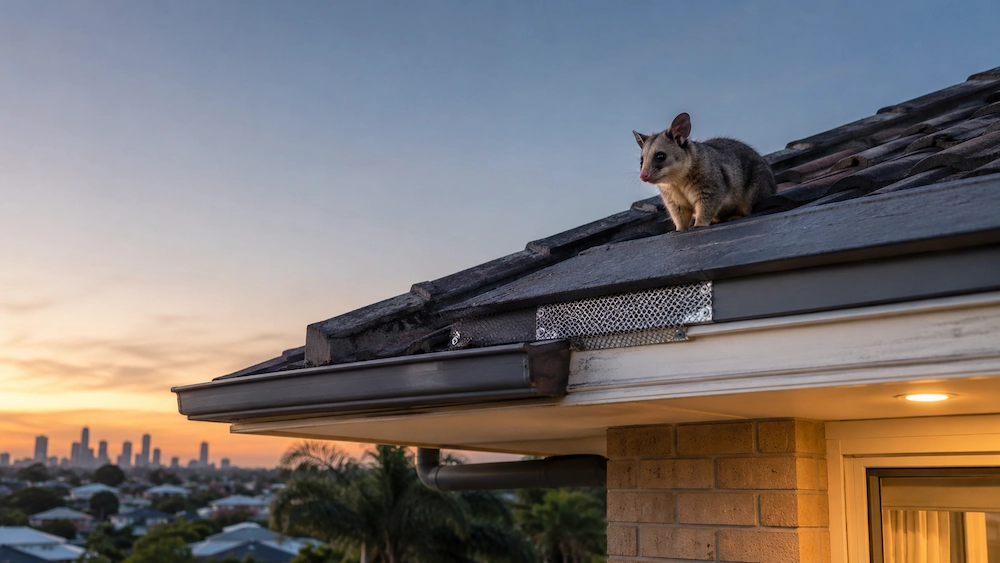
After the possum leaves and the roof is clear, seal the opening permanently with durable mesh, metal or timber. This approach solves the access problem without repeatedly disturbing the wildlife around your property.
Stop Making Your Roof Easy to Enter
Once the immediate problem is under control, prevention becomes much easier by repairing damaged eaves, ageing roof materials, loose sections around vents and other potential access points. Regularly inspect the roofline before small gaps become larger openings.
Trim branches at least 1.5 metres from the roof where possible. Never prune near power lines yourself; contact your utility provider. Never prune near power lines; contact your utility provider.
When Guessing Stops Being Useful
If roof noise continues, the animal is unclear or repairs have failed, arrange an inspection—especially when entry points are difficult or unsafe to reach. Arrange an inspection when suspected entry points are difficult to reach or the roof is high, steep or unsafe to access.
An experienced inspection can assess droppings, access routes, damage patterns and other evidence to distinguish rodent activity from possum activity. This helps determine the right next step without risking a ladder or roof accident.
How 1800 Possums Solves Roof Problems
We identify whether the roof visitor is a rat or possum and inspects the property for activity, entry points and re-entry risks. If an active possum entrance is found, we can install one-way door so the possum can leave naturally at night without returning.
Other openings are sealed with suitable materials, and the one-way device is removed after the possum leaves. The current standard possum removal and proofing service also includes a two-year building-wide guarantee, subject to the company’s warranty terms.
Stop Guessing About Roof Noises
If the nightly scratching, footsteps or thumping has you wondering whether you have a possum or rat in roof, you do not have to keep guessing. Getting the animal correctly identified is the first step towards choosing a solution that protects both your property and the wildlife around it.
Contact 1800 Possums today!
Latest Articles