Possum Removal Rules Victoria: The DIY Shortcut That Can Backfire
TL;DR: Possum removal in Victoria is not a simple trap-and-release job because possums are protected native wildlife. Homeowners need to focus on humane removal, correct release requirements, and proper roof proofing to stop repeat problems without breaching local wildlife rules.
Key Takeaways
- Possums in Victoria must be handled under wildlife rules, not treated like ordinary pests.
- Relocating a trapped possum away from the property is prohibited and can harm the animal.
- Sealing roof gaps before confirming the possum is out can trap it inside and worsen the issue.
- Long-term prevention depends on identifying entry points, removing the possum humanely, and proofing the roof properly.
A possum in the roof can quickly become a nuisance with constant scratching, thumping, and potential damage, leading many homeowners to assume they can simply trap and relocate it. In Victoria, possums are protected wildlife, so they must be removed humanely and prevented from re-entering.
Common Mistakes
Protected Native Wildlife
In Victoria, possums are protected under wildlife laws. That means they cannot be treated like rats, mice, or insects. Even when a possum is keeping you awake, damaging roof materials, or leaving mess in the ceiling cavity, it is still a native animal that must be handled within the rules.
Homeowners should be cautious with DIY advice because even simple actions, such as trapping and releasing a possum elsewhere, may be unlawful in Victoria. The law is designed to reduce harm to the animal while giving property owners a safe way to manage genuine problems inside buildings.
Relocation Is Not the Answer
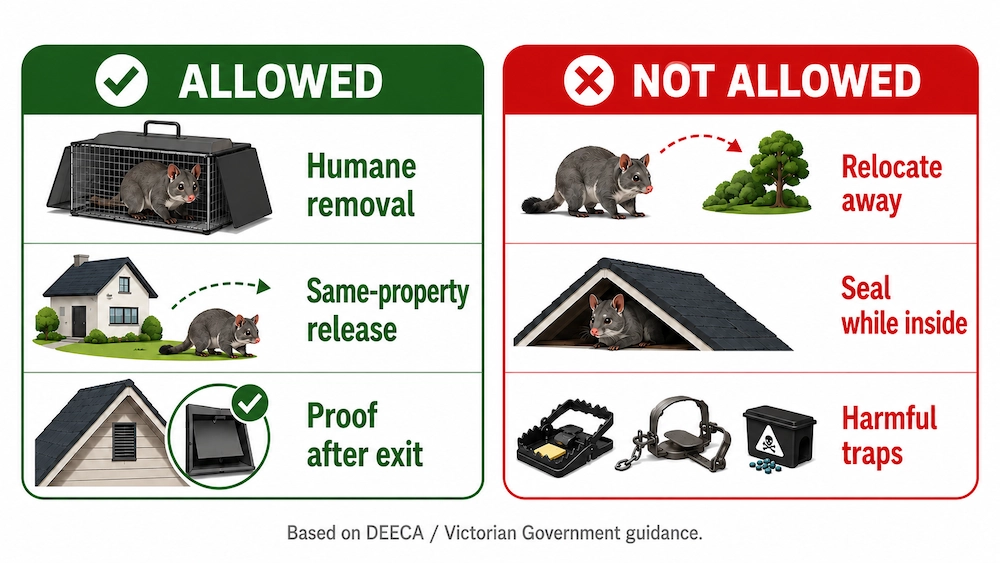
Relocating problem possums away from the property is prohibited in Victoria. If a Common Brushtail Possum is legally trapped from a building, it must be released on the same property and within the permitted distance of where it was captured.
Although it may seem odd, possums are territorial, so relocating them far away can cause stress, injury, or death. The real solution is to remove the possum from the roof space and seal all entry points so it cannot get back inside.
Better Options for Homeowners
Humane Removal First
The goal of possum removal is to safely get the animal out of your roof without causing harm and stop it from returning. Rather than being a quick trapping job, it requires the right approach to both wildlife management and property protection.
For homeowners, landlords, and property managers, roof spaces can be difficult to assess because possums often enter through structural gaps and defects in the roofline. Blocking the wrong entry point can trap the possum inside and create a bigger problem.
Trapping Rules
Victorian rules allow Common Brushtail Possums in buildings to be trapped under strict conditions, using traps that prevent injury and protect the animal from weather, sun, and pets. The possum must also be released correctly and cannot be taken off the property and released elsewhere.
While possum trapping may seem straightforward, it comes with legal and animal welfare responsibilities that many homeowners underestimate. If you are unsure about the species, entry points, or release requirements, it is best to seek professional help before taking action yourself.
Possum in the Roof?
Signs to Look For
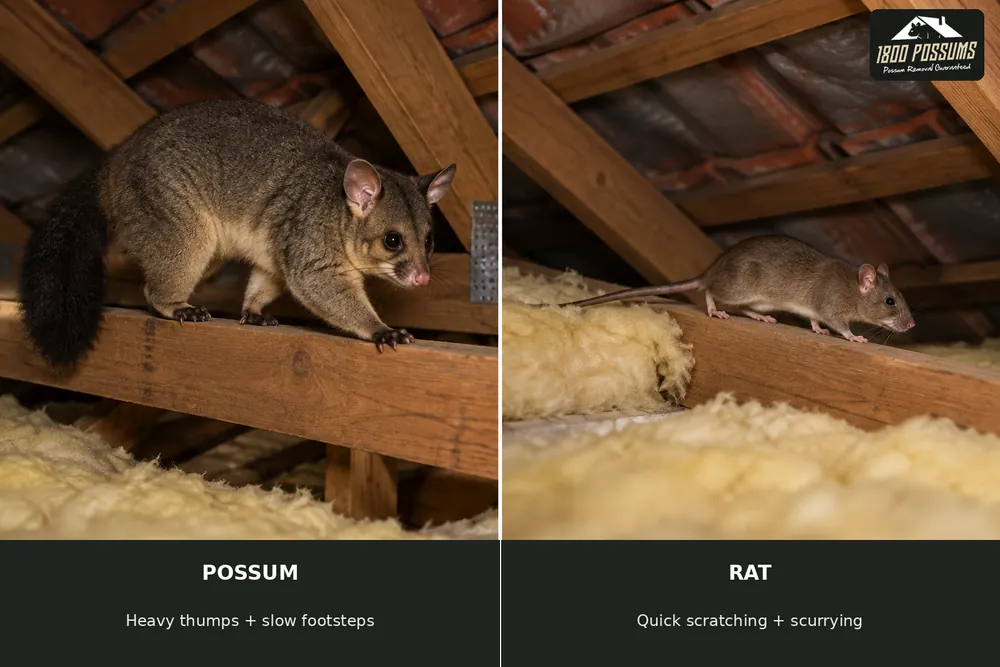
Not every roof noise is a possum, but loud nighttime thumping, heavy scratching, droppings, and roof-edge damage are common signs of possum activity. Identifying the animal is important because different pests require different treatment.
- The type, timing, and location of noises from the roof or wall cavities
- Droppings, nesting materials, and other signs that help identify the animal
- Active entry points and evidence of ongoing activity
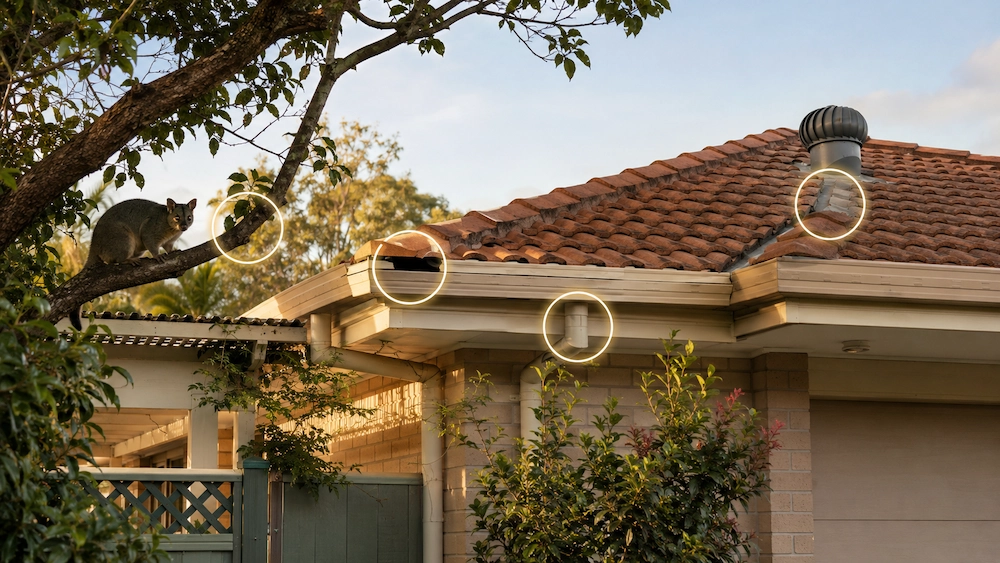
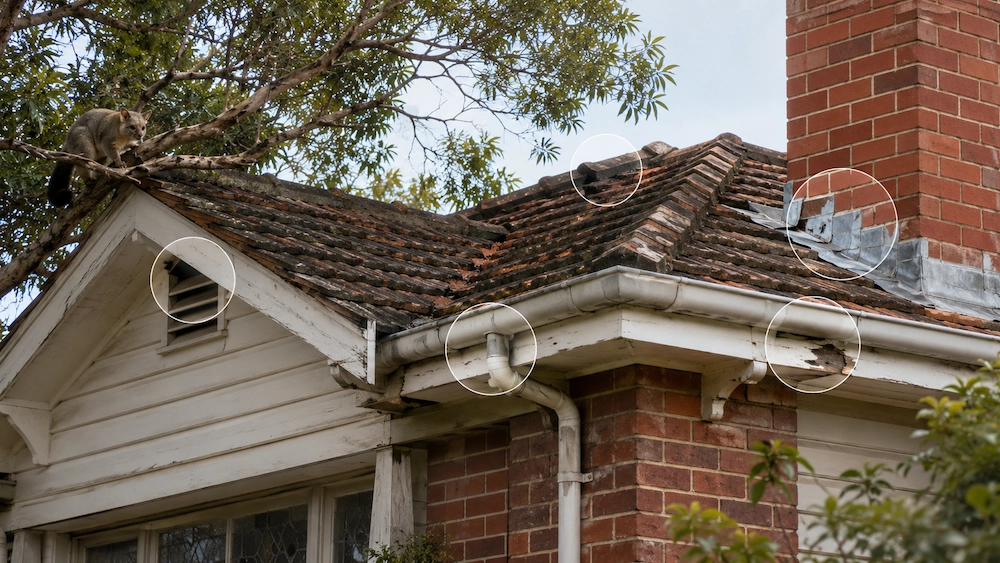
- Potential access points such as gaps, cracks, loose tiles, or damaged vents
- Damage to the home and nearby structures that may provide roof access
Don’t Seal Too Early
Blocking a visible gap might seem like the quickest solution, but sealing an entry point while a possum is still inside can trap it in the roof or wall cavity. This can lead to property damage, ongoing noise, or serious welfare issues, especially if there are young possums present.
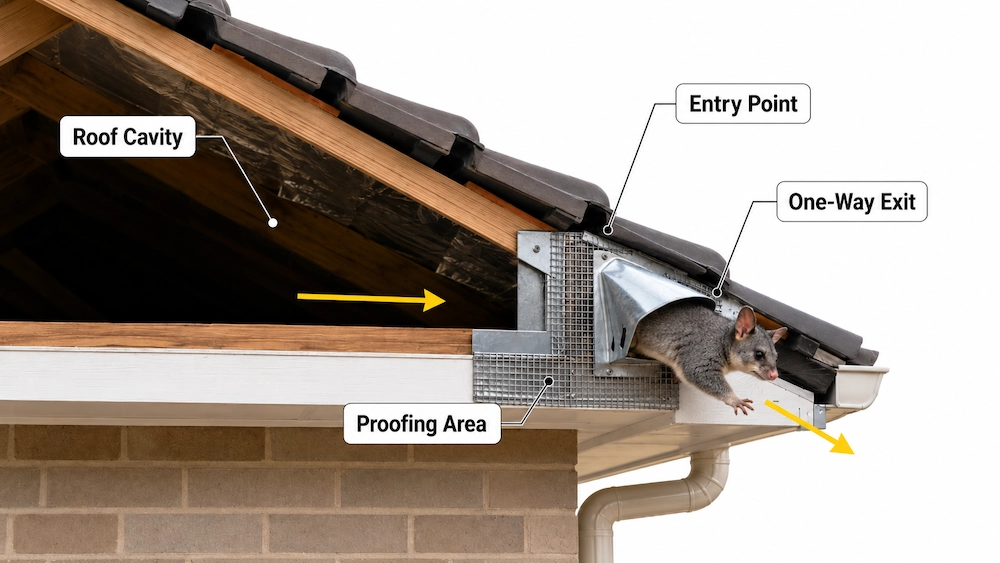
If it is safe, identify where the possum exits and use a method that allows it to leave without re-entering. Once it is out, seal the entry points properly because removing a possum without proofing only creates a temporary fix, while sealing access before removal can trap the animal inside.
Proofing Matters More
Access Points Matter
A possum enters a roof because it provides a dark, dry, and secure shelter. If the access point remains open, the same possum or another one can return, which is why removal alone often fails without proper proofing.
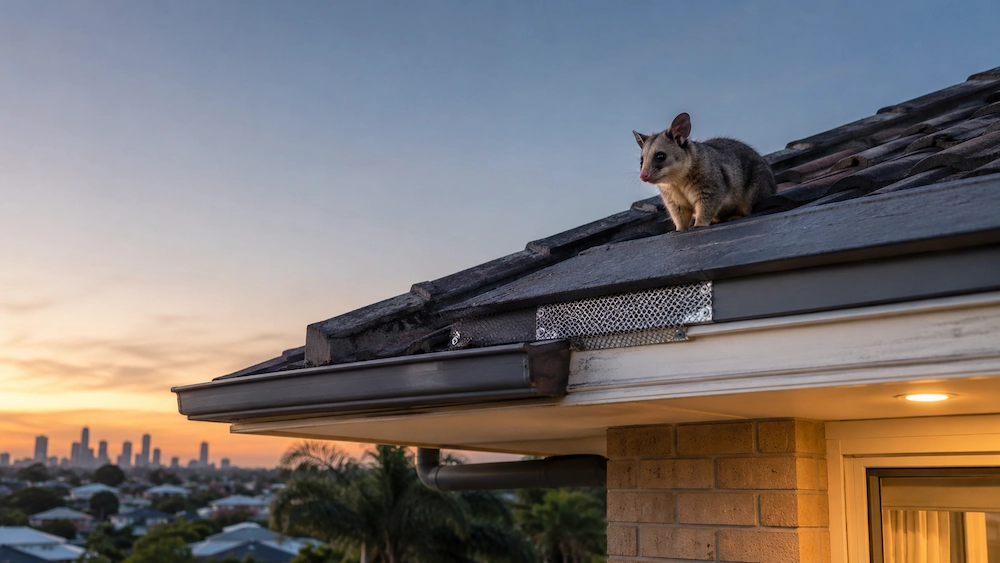
Roof proofing provides long-term protection by sealing entry points such as loose tiles, eave gaps, broken vents, timber holes, and roofline openings. It may also involve pruning nearby branches and maintaining adequate clearance to reduce possum access to the roof.
Protecting Possums Too
Good proofing does more than keep your home quiet by reducing future contact between people and wildlife. When possums cannot access roof cavities, homeowners are less likely to resort to unsafe DIY methods, creating a safer outcome for both the property and the animal.
This is especially important in suburban areas where gardens, fences, trees, and roof lines often give possums easy access to homes. A long-term solution should address not only the noise in the roof but also the conditions that allowed the possum to enter and settle there in the first place.
Common Mistakes to Avoid
Relocating the Possum
Many homeowners think relocating a trapped possum is a kind solution, but it can breach Victorian rules and leave the animal struggling to survive in unfamiliar territory. The better approach is to remove the possum humanely from the building and seal entry points properly to stop it from returning.
Repellents Aren’t Enough
Repellents such as sprays, lights, scents, and noise devices may offer temporary relief, but possums often ignore them or return once the effect fades. Since deterrents do not repair roof access points, homeowners should focus on proper inspection, safe removal, and proofing to achieve a lasting solution.
Damage Worsens Over Time
Some homeowners ignore early signs of possum activity, but a quiet roof does not mean the problem is gone. The possum may return, another animal may move in, or hidden damage may continue. Acting early makes it easier to identify entry points and address the issue before it becomes more complex and costly to fix.
When to Call a Professional
Professional help is worth considering if you are unsure about the rules, cannot safely inspect the roof, or have recurring possum issues. A qualified service can identify the animal, inspect the property, use humane removal methods, and seal access points to help prevent the problem from returning.
How 1800 Possums Helps
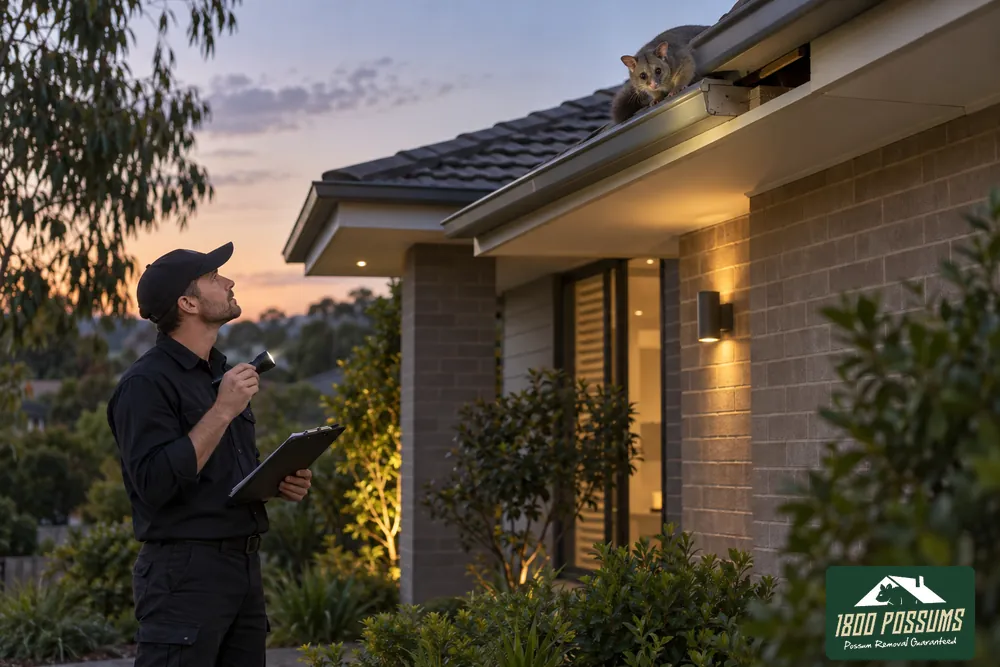
1800 Possums works with homeowners, landlords, real estate teams, and property managers who need possum issues handled safely, legally, and with less back-and-forth. Their service is built around a clear outcome: get the possum out of the building humanely, then secure the property so it does not simply return through the same weak spot.
Their process includes inspection, humane one-way exit methods, sealing identified entry points, and a return visit to complete the proofing. For many standard homes, they offer fixed-price possum removal and proofing backed by a 2 year money-back guarantee, giving property owners a practical long-term solution instead of repeated callouts.
Need a Possum Removal?
If you are hearing thumping, scratching, or movement in your roof, do not rush into trapping, sealing, or relocating the animal yourself. The safest next step is to get advice from people who understand possum removal rules Victoria and know how to protect both your home and the animal. Contact 1800 Possums today.
Latest Articles