Possums in Your Roof? Check These Sneaky Entry Points
TL;DR: A possum on the roof is usually a sign of an open access point, not just a noisy night-time visitor. The safest fix is to find how it is getting in, let it leave humanely, and seal the gap properly so it cannot keep coming back.
Key Takeaways
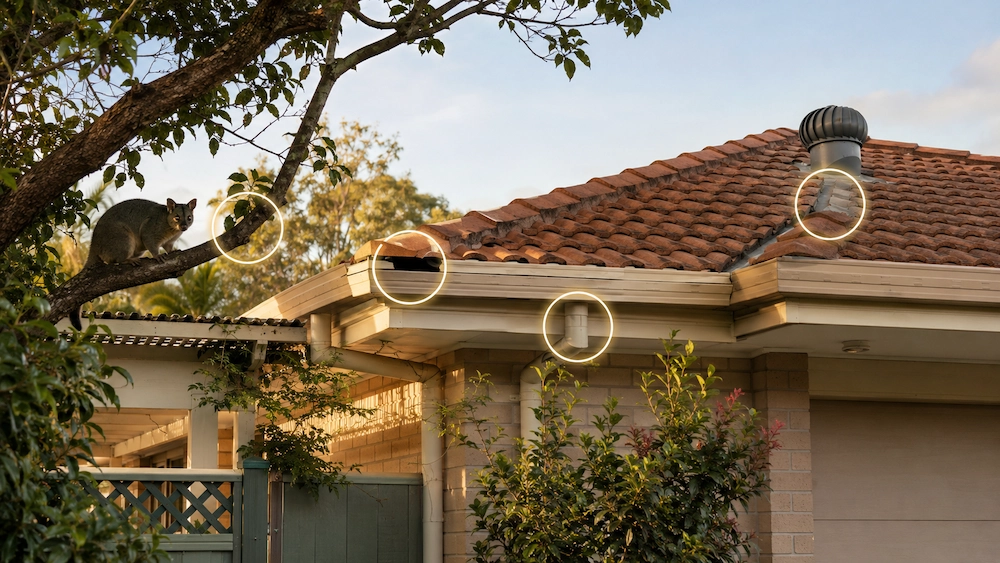
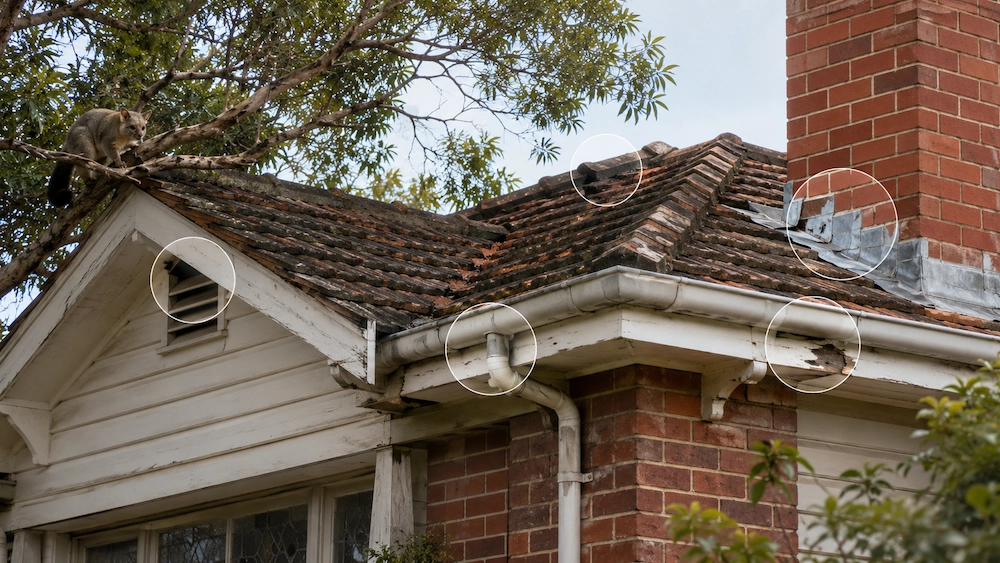
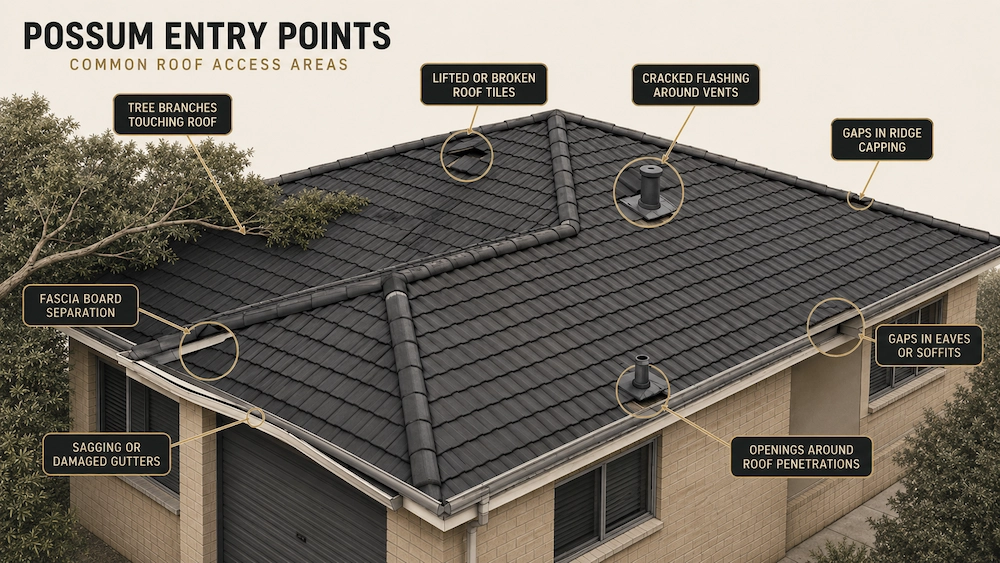
- Common entry points include roof tile gaps, eaves, fascia boards, flashing, gutters, tree branches, and renovation joins.
- Night noises often help narrow down where the possum is entering and moving.
- Do not seal holes too early, as this can trap the possum inside the roof.
- A proper inspection should check both the roof access route and the actual entry point.
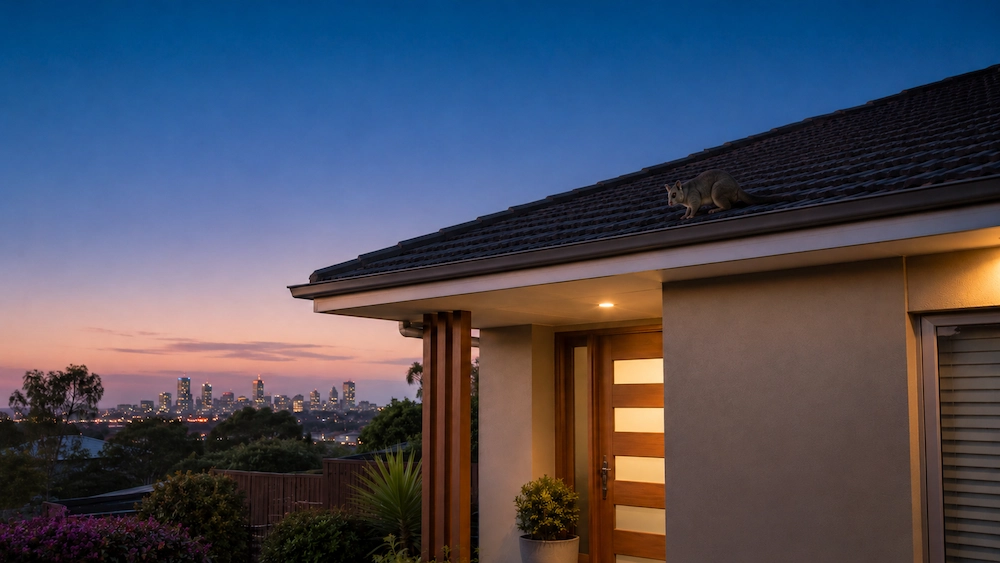
A possum in roof space usually gets in through a weak spot, such as a lifted tile, gutter gap, loose flashing, or nearby branch. The noise is only the warning sign, while the real problem is the open entry point that needs to be found and handled safely.
Small Gaps, Big Possum Problems
Possums are skilled climbers that can turn small roof gaps into regular entry points. They may squeeze through loose materials or reach the roof from a nearby branch, fence, or structure.
This is often the confusing part for homeowners, landlords, property managers, and business owners. The roof may look fine from the ground, but the entry point could be hidden behind a gutter, under a tile edge, near a corner, or around an old repair.
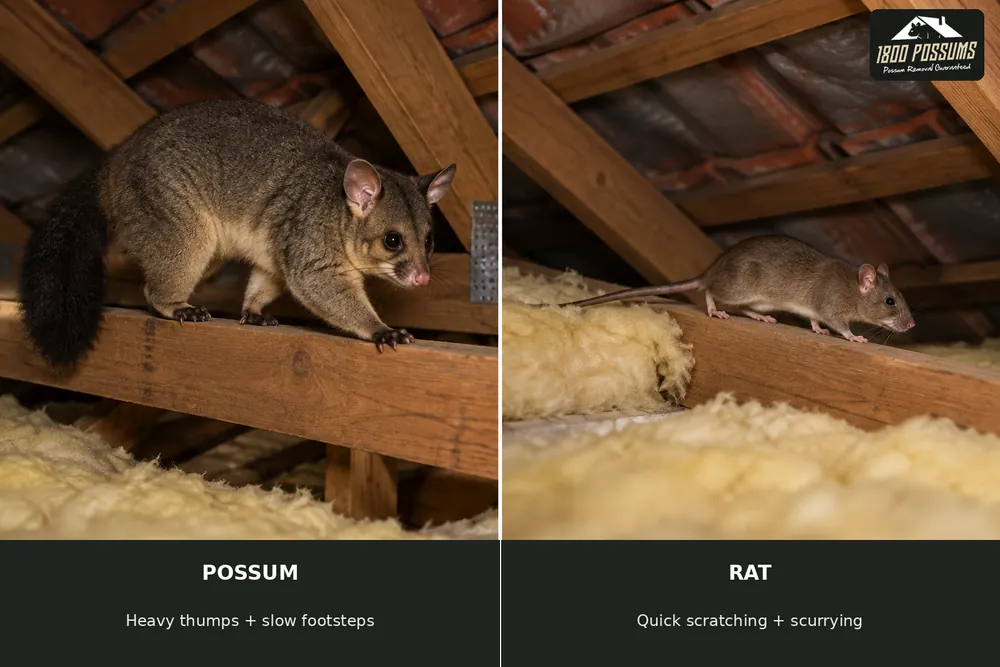
Night Noises Give It Away
Possums are usually active at night, so repeated sounds around dusk or before morning can point to a regular roof entry point. If the noise keeps coming from the same area, check that side of the building safely from the ground.
Entry Point 1: Sneaky Roof Tile Gaps
Roof tiles are one of the first places to check when diagnosing a possum in roof spaces. Even one lifted or slipped tile can give a possum enough room to get inside, especially near a valley, ridge, corner, or gutter edge.
Older tiled roofs are more likely to shift after storms, maintenance work, nearby branches, or years of wear. Once a small gap appears, a possum may keep pushing through the same spot until it becomes a regular entry point.
Ground Clues to Watch
Look for uneven tile lines, cracked tiles, missing corners, staining, leaf build-up, or a small, shadowed gap along the roofline. Stay on the ground when checking, as roof tiles can be slippery and easy to damage underfoot.
Entry Point 2: Hidden Eave and Fascia Gaps
Eaves and fascia boards sit where the roof meets the outer wall, making them easy access points for possums. If the timber has shifted, rotted, warped, or pulled away, it can create a direct path into the roof cavity.
This issue is common in older homes, weather-exposed properties, and buildings with previous water damage. It can also happen when gutters have overflowed for a long time and softened the timber behind them.
Easy to Miss
Fascia gaps can look like normal shadow lines, so watch for these clues:
- Sounds near the outer ceiling edges
- Scratching close to bedrooms or verandas
- Tenant reports of noise near the wall line
These details can help show whether the possum is entering from the roof edge instead of moving through the middle of the ceiling.
Entry Point 3: Loose Flashing Trouble Spots
Any roof feature that cuts through the surface can become a weak spot if it is not sealed properly. Chimneys, flues, skylights, vents, exhaust outlets, and antenna mounts can all leave gaps when the flashing lifts or cracks.
These areas often look fine from the ground, which makes them easy to overlook. Even a small opening beside loose flashing can be enough for a possum to investigate and use.
Warning Signs to Check
Loose flashing can leave clues around areas like bathrooms, kitchens, chimneys, and roof vents, including:
- Water marks inside the ceiling
- Musty smells
- Small debris in the roof space
Avoid quick patches with foam or temporary filler, as these can fail fast and may not stop a possum from using the same entry point again.
Entry Point 4: Gutter Gaps That Invite Possums
Gutters can hide weak roof edges where possums may travel, test gaps, and slip behind the fascia. This is common when gutters are sagging, blocked, rusted, or pulling away from the roofline.
Leaf build-up can make the issue worse by trapping moisture against timber and loosening fixings over time. By the time you hear movement inside, that small gap may have been growing for months.
Ground Checks That Matter
From the ground, check for gutters that dip, lean forward, grow plants, show wall stains after rain, or have branches rubbing against them. If noise starts after wind or heavy rain, loose roof materials may have shifted and made a hidden entry point easier for a possum to use.
Entry Point 5: Tree Branch Roof Bridges
A roof gap is only one part of the problem because possums still need a way to reach it. Overhanging trees, fence lines, pergolas, sheds, and nearby structures can all become easy roof bridges.
Branches touching the roof are one of the clearest warning signs. If they stay in place, possums can keep reaching the roof and looking for gaps around tiles, eaves, or gutters.
Branches Keep the Problem Going
Trimming one branch may help, but it will not solve the problem if the entry point is still open or another route is nearby. A proper inspection checks both how the possum reaches the roof and where it gets inside, because both matter for long-term prevention.
Entry Point 6: Renovation Gaps Possums Love
Not every entry point comes from age or neglect. Newer work can also leave gaps. Extensions, roof replacements, solar installations, air conditioning work, new vents, and old patch jobs can create small openings around joins and penetrations.
These gaps are easy to miss because the rest of the building may look well maintained. The issue may sit at the join between old and new roof sections, behind a fascia return, or near a section that was repaired quickly after storm damage.
Why New Roofs Still Get Possums
A renovated roof can still attract possums if it has a small gap, quiet shelter, and easy access. That is why the whole roofline should be checked, especially around joins, new fittings, and areas where trades have changed the original structure.
Do Not Seal the Possum In
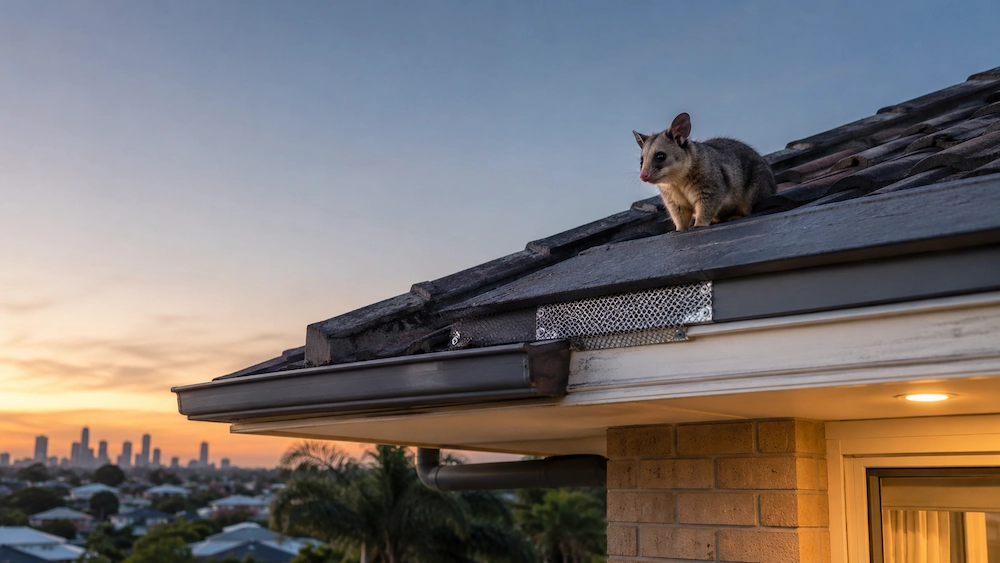
Blocking a roof gap too soon can trap the possum inside, leading to more noise, damage, stress, and bad odours. Because possums are protected native wildlife in many parts of Australia, removal should be handled by a licensed local professional.
Do not seal holes during the day, use bait or poison, climb onto the roof, or rely on home remedies. The safer fix is to find the active entry point, let the possum leave humanely, and seal the building properly.
Find the Entry Point Safely
You can gather useful clues without getting on the roof. Start with the noise pattern, including the time, the loudest room, and whether the sound moves toward an outer wall, corner, or the centre of the ceiling.
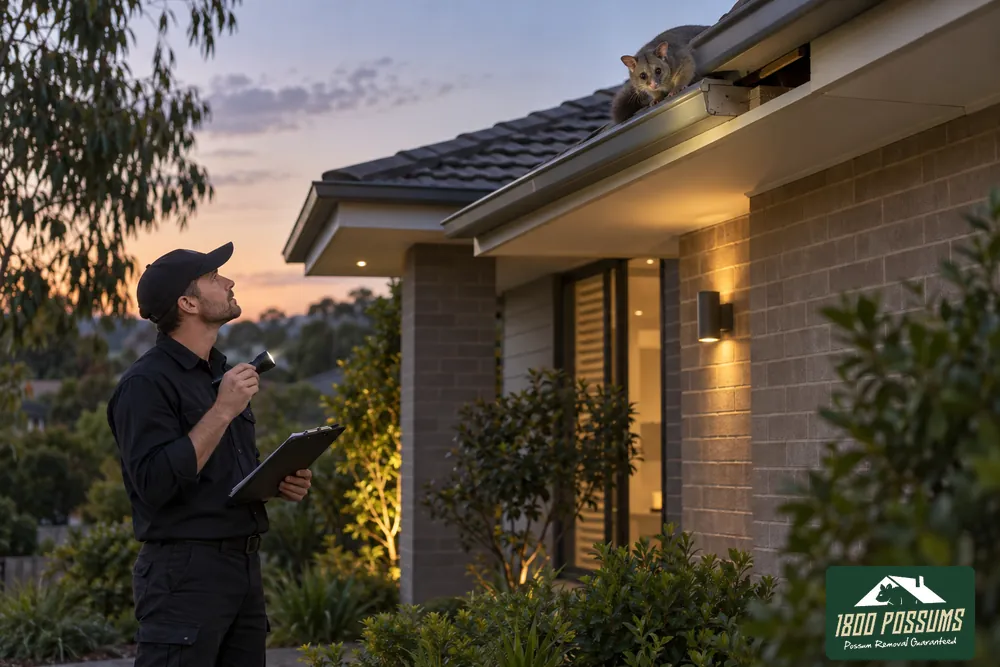
During daylight, walk around the property and check from the ground for lifted tiles, sagging gutters, broken fascia, loose flashing, tree branches, roof stains, or obvious gaps near vents and roof joins. For rentals or commercial sites, ask the occupant for simple details instead of asking them to inspect unsafe areas.
Quick Roof Clue Checklist
To reduce guesswork and help a technician inspect the right areas first, note these clues:
- Noise mostly at night
- Roof access from trees, fences, sheds, or pergolas
- Repeated movement in the same ceiling area
- Visible roofline gaps from a safe distance
- Recent storms, renovations, roof work, or gutter problems
How 1800 Possums Fixes the Gap
1800 Possums helps homeowners, landlords, real estate teams, body corporates, and commercial sites deal with possums in roofs and buildings. Our service focuses on inspection, humane removal, and possum proofing instead of a quick temporary fix.
For standard possum removal service and proofing, they offer fixed pricing, roof and exterior checks, one-way exit methods, entry point sealing, and a return visit to remove the exit device. Our standard possum proofing service also includes a 2-year money-back guarantee for added peace of mind.
Find the Gap Fast
If you hear scratching, thumping, or movement and suspect a possums in your roof spaces, do not block holes or climb up to check.
Latest Articles