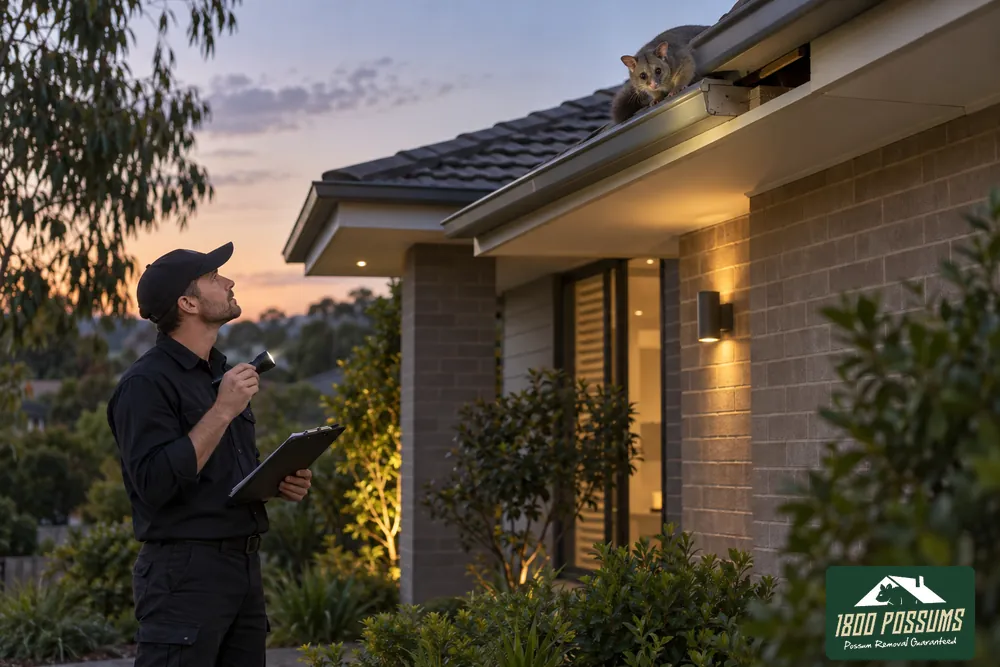
Common Signs of a Possum Infestation in Your Home

TL;DR: Listen for heavy nocturnal thumping and scratching in your roof, check for musky odours and pellet-like droppings, and inspect for chewed eaves or insulation; these are primary signs of a possum in your home.
Summary: Possums in your home reveal themselves through distinct signs. At night, listen for heavy thumping, scratching, and scurrying in your roof or walls. A strong, musky, urine-like odour, along with dark, pellet-like droppings, often indicates their presence. Additionally, look for visual damage like chewed wiring, insulation, or entry points around eaves and fascia boards.
Are you hearing strange noises in your roof at night? Perhaps some scuttling, thumping, or even what sounds like a tiny argument happening above your head? If so, you’re not alone. While possums might look cute and cuddly in your backyard, discovering them taking up residence in your roof cavity or walls is a different story entirely. These nocturnal natives are a common sight in urban and suburban areas, and while they’re protected, their presence inside your home can lead to a host of problems, from sleepless nights to significant property damage.
Identifying a possum infestation early is crucial. The longer they stay, the more mess they create and the more damage they can cause. Not to mention, their droppings and urine can pose health risks, and the constant noise can be incredibly disruptive. This article will walk you through the tell-tale signs to look out for, helping you determine if those mysterious sounds and smells are indeed a possum taking up unwanted residence.
The Auditory Clues: What You Hear
When it comes to possum infestations, your ears are often your first and best defence. Because possums are most active between dusk and dawn, strange noises at night are the most common indicator that you have an uninvited guest.
Nocturnal Noises – The Most Common Sign
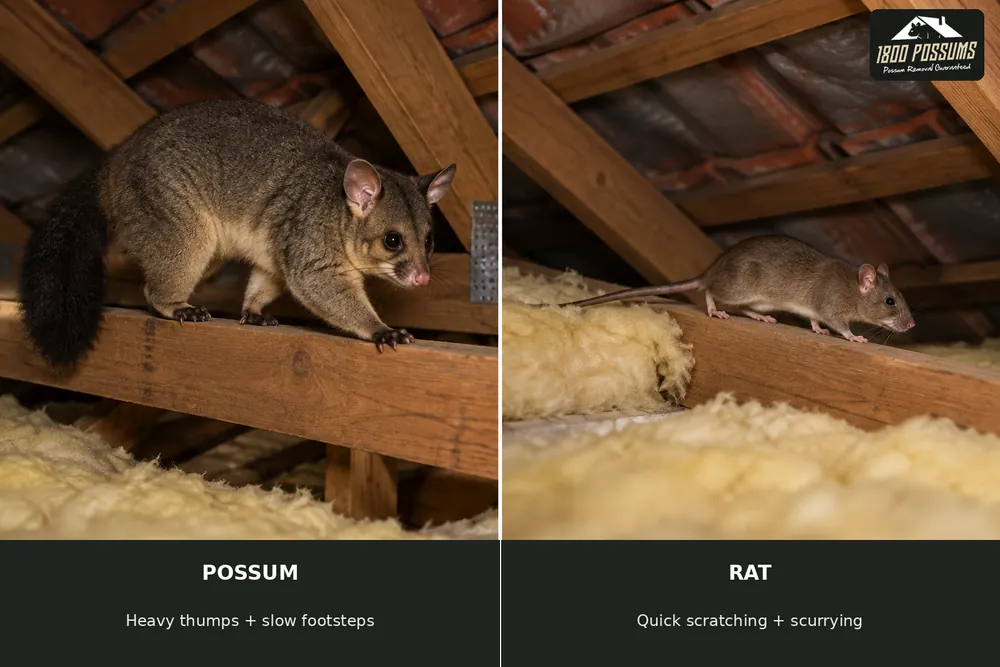
Possums aren’t exactly quiet neighbours. Unlike the light, rapid scratching of rats or the chirping of birds, possum sounds are often heavier, slower, and more deliberate. You might hear a variety of noises, each telling its own story:
- Scratching: This isn’t the frantic scratching of a rodent. Possum scratching tends to be louder, more drawn out, and might sound like claws on timber or plaster.
- Thumping or Bumping: This is a classic possum sound, especially from brushtail possums. Their heavier bodies create distinct thumping noises as they move across ceiling joists or attic spaces. It can sound like someone is gently walking around in your roof.
- Hissing and Chattering: While not as common, possums can make these sounds, particularly if they’re startled, disturbed, or interacting with another possum. You might even hear growling if they’re fighting over territory.
- Scurrying and Dragging: You’ll hear them moving around, and sometimes it can sound like they’re dragging something, perhaps nesting materials or food items.
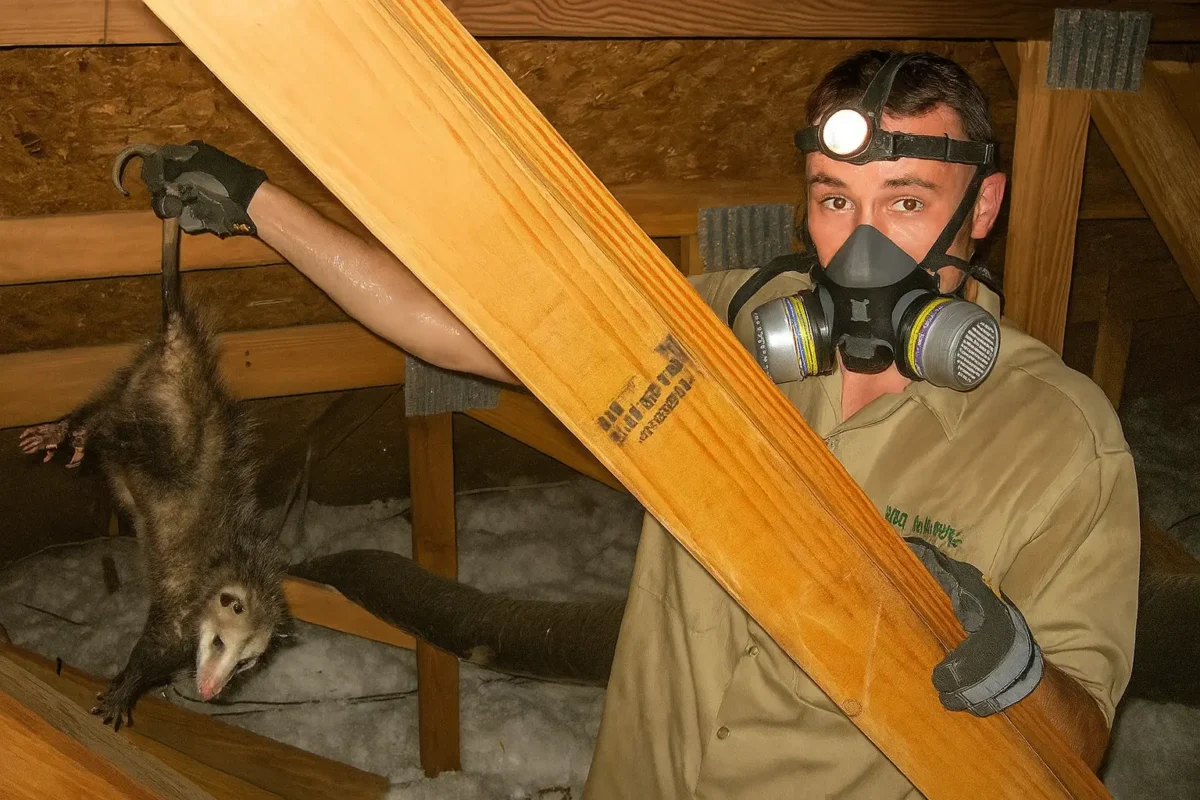
Are you wondering how to tell if possums are in your roof based on sound alone?
Pay close attention to the timing. Possum activity peaks just after sunset and before sunrise. If the noises are consistent during these hours, it’s a strong red flag. While other animals like rats or even birds can get into your roof, the nature of the sounds – their volume, weight, and timing – are usually quite distinctive when it comes to possums. Rats tend to be faster, lighter, and more skittish.
Location of Sounds
Possum sounds can originate from various parts of your home. The roof cavity is the most common hangout spot, but they can also be found in wall cavities, under your house, or even in the chimney. Listen closely to pinpoint where the sounds are coming from. Do they seem to move from one end of the house to another? This indicates an active, mobile occupant exploring its new territory.
Consistency of Sounds
Is the noise a one-off event, or is it a regular nightly occurrence? A consistent pattern of noise, night after night, strongly suggests a resident possum (or family of possums) has made your home their new shelter.
The Olfactory Evidence: What You Smell
Sometimes, a possum infestation reveals itself not just through what you hear, but also through what you smell. And trust us, it’s not a pleasant aroma.
Unpleasant Odours
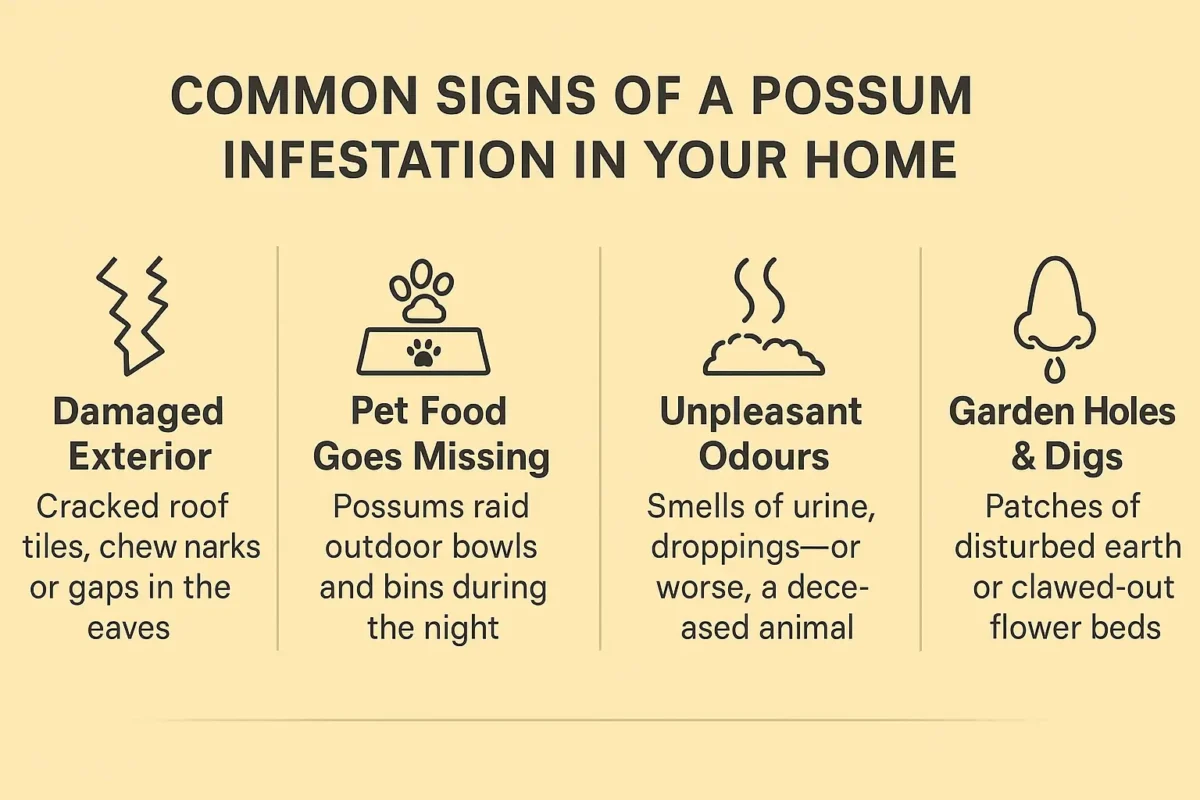
Possums are messy tenants. Their urine and faeces, combined with the natural oils from their fur, can create a very strong, musky, and often persistent odour. It’s a distinct smell that many describe as stale, damp, and somewhat urine-like. The longer a possum resides in your roof, the more concentrated and pervasive this smell becomes. It can permeate through your ceiling, insulation, and even into your living areas, making your home quite unpleasant.
Where to Detect Odours
You’ll most likely notice these odours:
- In the roof cavity: This is where the smell will be strongest, especially near their preferred nesting or toileting spots.
- In wall cavities: If they’re nesting or travelling within your walls, the smell can become trapped and very pungent.
- Near entry points: If they’re frequently using a specific access point, the smell of their oils and droppings can accumulate there.
- Permeating into living areas: Over time, the smell can seep through plasterboard ceilings and vents, becoming noticeable inside your home.
Severity of Odour
A faint, intermittent smell might be an early sign, but a strong, consistent, and worsening odour indicates a well-established possum presence. This is particularly concerning as it suggests a significant build-up of droppings and urine, which can not only be unhygienic but also attract other pests.
Visual Indicators: What You See
While possums are masters of hiding, especially during the day, they often leave behind visual clues that betray their presence.
Droppings (Faeces)
Possum droppings are one of the most definitive signs. They differ depending on the possum species:
- Brushtail Possum Droppings: These are typically dark, cylindrical pellets, often resembling large sultanas or small, black olives. They’re usually 1-2 cm long and might be found scattered.
- Ringtail Possum Droppings: These are smaller, rounder, and often clumped together.
Where to find them: Look for droppings in the roof cavity, on insulation, in the subfloor, under eaves, on decks, or even along pathways they frequent around your house. Differentiating them from rat or bird droppings is important; possum droppings are generally larger and more uniform than rat droppings, and less chalky than many bird droppings.
Damage to Property
Possums don’t just occupy; they often cause damage, both inside and outside your home.
External Damage:
-
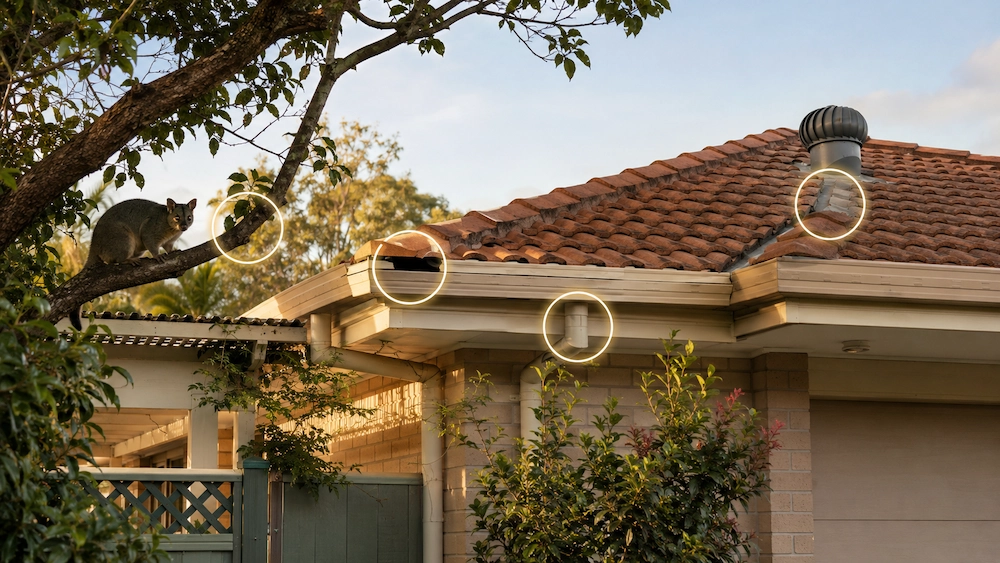
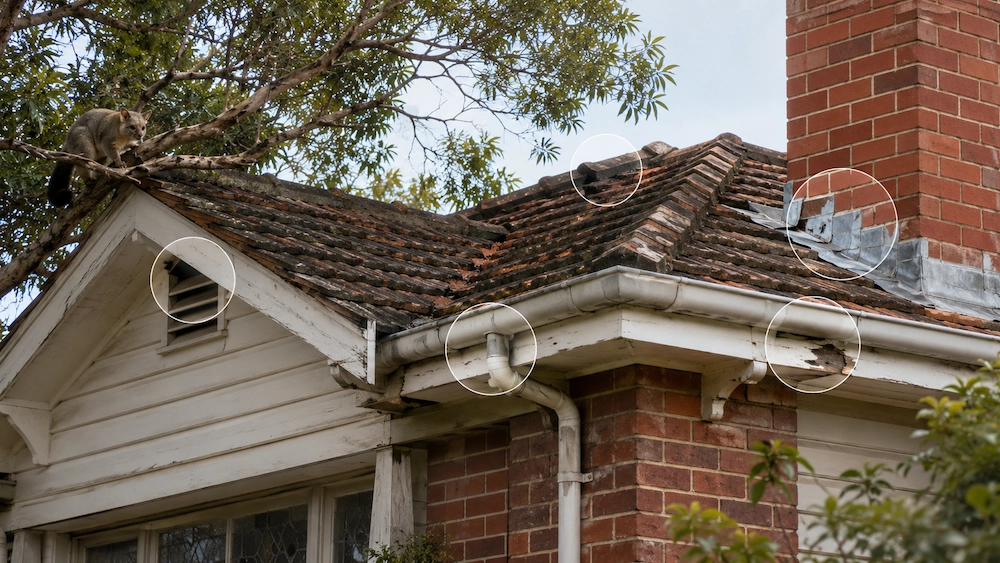
- Chewed eaves, fascia boards, and roof tiles: Possums are surprisingly adept at finding or creating entry points. They’ll gnaw at timber, lift loose tiles, or push through gaps to gain access. If you’re curious about common entryways, our guide on where do possums enter the house? offers a definitive guide to identifying them.
- Damaged flyscreens or vents: Weak points like these are easy targets for a determined possum.
- Garden damage: Eaten fruit, stripped bark from trees, munched flowers, or raided vegetable patches can all be signs of possum activity around your property, suggesting they might be looking for a warmer, safer harbour indoors.
Internal Damage:
-
- Chewed wiring: This is a major concern. Possums chew on electrical wires, which can not only disable appliances but, more dangerously, create a significant fire hazard.
- Damaged insulation: They’ll tear up insulation to create nests, leading to reduced thermal efficiency and higher energy bills.
- Stained ceilings: Urine saturation can lead to unsightly and often foul-smelling stains on your ceiling, especially if they’ve found a consistent toileting spot.
Possums chew for various reasons – to create or enlarge entry points, to gather nesting materials, or simply to wear down their continuously growing teeth. This is why it’s vital to possum proof your home to prevent future issues.
Greasy Smudges/Rub Marks
As possums repeatedly squeeze through narrow openings or rub against beams and pipes, the oils and dirt from their fur leave dark, greasy smudges. Look for these marks around suspected entry points (e.g., gaps under eaves, around pipes entering the roof) or along well-worn paths within your roof cavity. These marks are clear evidence of regular possum traffic.
Nests (Dreys)
While possums don’t build elaborate nests like birds, they do create “dreys” – rudimentary nests made from shredded insulation, leaves, bark, twigs, or any soft material they can find. If you have safe access to your roof cavity, spotting a collection of these materials could indicate a possum’s sleeping quarters. They might also nest in wall voids or even under the house.
Sightings of Possums Themselves
This might seem obvious, but actually seeing a possum on your roof, climbing up walls, or scurrying across your fence near your house at dusk or dawn is a very strong sign they’re active in your immediate vicinity and could be attempting to gain entry, or already have. Remember, they are nocturnal, so daytime sightings are less common unless they’ve been disturbed.
Other Less Common, But Significant, Signs
While sounds, smells, and visible damage are the primary indicators, a few other signs can sometimes point to a possum problem.
Pet Behaviour
Your pets, particularly dogs, can be surprisingly good detectors. If your dog suddenly starts barking incessantly at the ceiling, a specific wall, or stares intently at an area in your roof or yard that usually holds no interest, they might be reacting to the presence of a possum they can hear or smell.
Sudden Increase in Flies/Pests
A sudden unexplained increase in flies or other insect pests inside your home, especially near a particular area, could indicate the presence of possum droppings or, in unfortunate cases, a deceased possum that hasn’t been removed.
Disturbed Garden/Compost Bins
While not directly indicating an internal home infestation, if you notice consistent raiding of your fruit trees, vegetable patch, or compost bin, it means possums are actively foraging nearby. If they’re around your property, the chances of them seeking warmer, safer shelter indoors, especially during colder months or breeding season, significantly increase.
What to Do If You Suspect an Infestation
If you’ve noticed any of these signs and suspect a possum has moved in, your next steps are crucial.
Do NOT attempt DIY removal. In Australia, all possum species are protected native animals. It is illegal to harm them, and only licensed professionals are permitted to trap and relocate them. Attempting to remove them yourself can not only be dangerous (they can scratch and bite) but can also result in hefty fines. Moreover, without understanding their behaviour and entry points, even if you manage to scare one away, another will likely take its place.
Importance of Professional Possum Removal
A professional possum removal service, like 1800 Possums, offers safe, humane, and effective solutions. They will:
- Humanely trap and relocate the possum according to Australian regulations. This usually means relocating them to a nearby suitable habitat within a specific distance from where they were found.
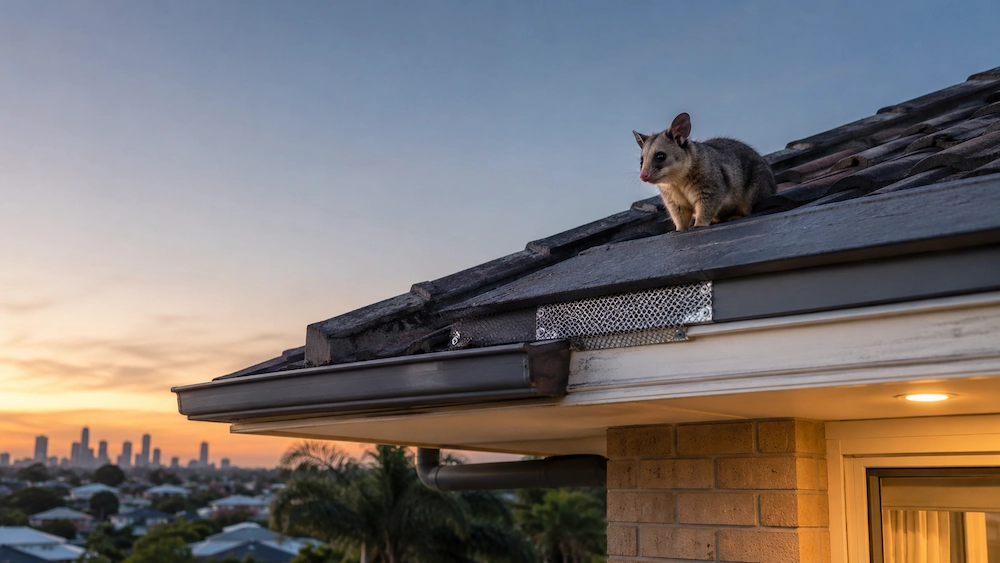
- Identify and seal all entry points: This is arguably the most critical step. Possums are persistent, and professionals know how to find even the smallest gaps and implement effective, durable proofing solutions to prevent future infestations. This highlights why hiring a pro matters when you have possums in your roof.
- Clean and sanitise contaminated areas: They can safely remove droppings, soiled insulation, and neutralise odours, mitigating health risks and preventing secondary pest issues.
- Provide advice on further deterrents or property maintenance to keep possums out.
Why Choose Australia’s Trusted Possum Experts?
When you choose 1800 Possums, you’re choosing peace of mind across Australia. We are dedicated to providing humane, effective, and legally compliant possum removal and proofing services. Our experienced technicians understand possum behaviour, ensuring quick detection, safe relocation, and expert sealing of all entry points, protecting both your property and these protected native animals.
Reclaim Your Home Today!
Don’t let nocturnal noises or tell-tale smells keep you up at night. If you suspect a possum has made your home theirs, it’s time to act.
For swift, professional, and humane possum removal and property protection anywhere in Australia, contact us now or visit our website to schedule an inspection. Take the first step towards a possum-free home and undisturbed sleep!
Latest Articles