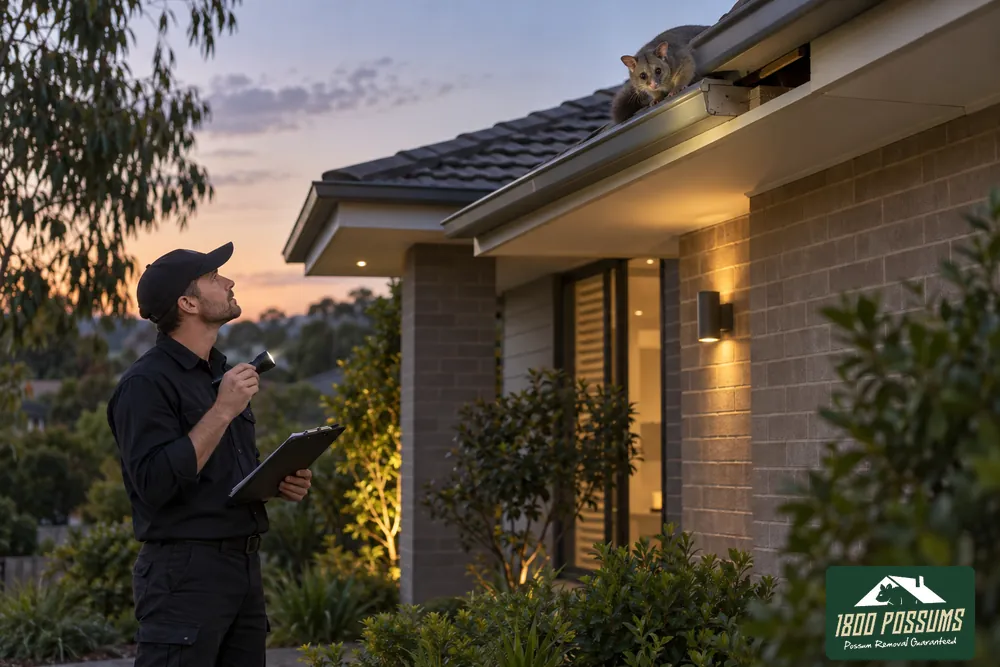
DIY Possum Traps in the Suburbs Are the Cruel “Quick Fix” People Keep Recommending
TLDR: DIY possum traps look like a fast win, but in the suburbs they often turn into stress, injury risk, heat exposure, repeat invasions, and even legal trouble. The more humane and reliable fix is usually letting the possum leave naturally at night via a one-way exit device, then properly proofing every realistic entry point so nothing can get back in.
Key takeaways:
- Trapping rarely fixes the real problem because possums already know the entry routes, and another possum will use the same access if it stays open.
- “Humane” means low-stress setup, shade, early checks, careful handling, and lawful release, otherwise a “good intention” can become cruelty fast.
- If trapping is necessary, it should be part of a bigger plan (welfare-first removal + proofing), not the whole strategy.
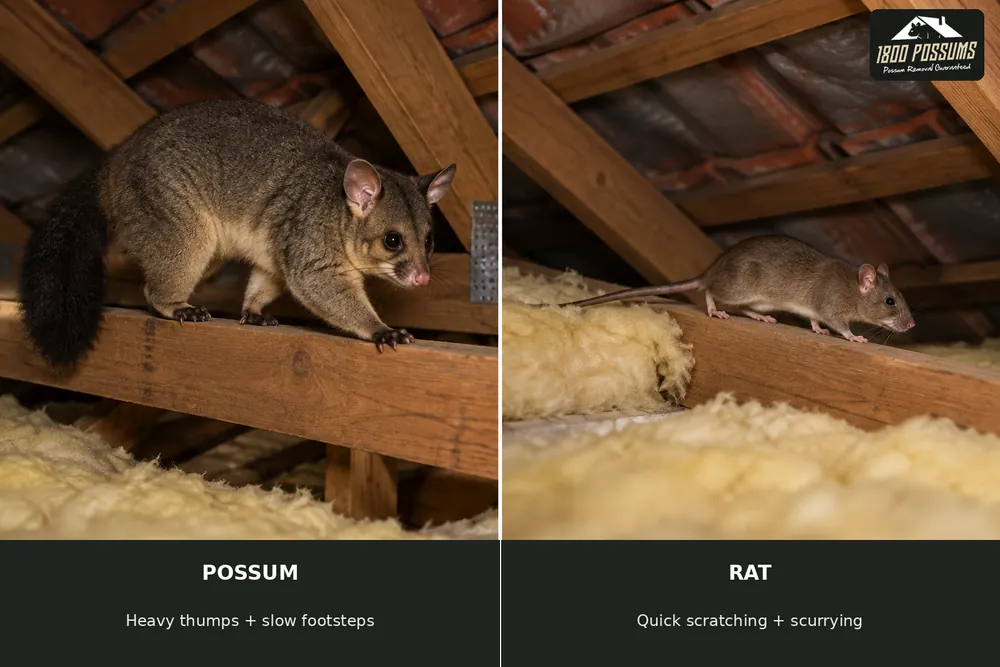
You hear the thump-thump in the roof and your first thought is a cage trap from the hardware store. In urban areas, that snap decision is where most possum stories turn messy, loud, and sometimes illegal.
This guide breaks down humane possum trapping methods that actually reduce stress and protect your home. It also explains the approach many homeowners skip, which is usually more humane than trapping in the first place.
Why Trapping Backfires in the Suburbs
In the suburbs, a possum is not “passing through”, it is using a reliable route into a warm, safe space.
- They already know the entry points. Roof voids, eaves, vents, and wall cavities become repeat pathways, so a trap rarely stops the bigger pattern.
- Traps can spike panic and injury. A stressed possum will slam the cage and try to force its way out, which is where harm happens fast.
- Heat and exposure are real welfare risks. A trap left too long, or placed in sun, can turn cruel even if your intent is good.
- The rules are tighter than most people assume. Possums are protected, and handling or release mistakes can put you on the wrong side of the law.
- Wrong timing can trap an animal inside the house. If you seal the wrong gap first, you can lock a possum in and create damage and distress.
If you want the legal side in plain English before you even think about a trap, read Legal Possum Trapping Victoria: Break This One Rule and Get Fined.
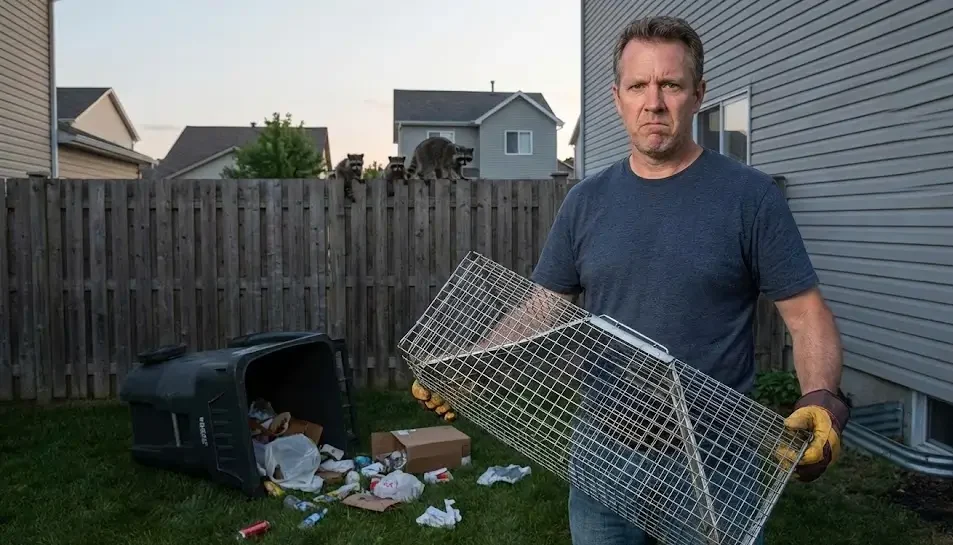
What “humane” really means
Humane does not mean “I did not mean to hurt it.” Humane means the method reduces fear, avoids injury, prevents overheating, and follows wildlife rules from start to finish.
In an urban setting, humane possum trapping methods are built around time, placement, and handling. If any of those three are wrong, the method stops being humane very quickly.
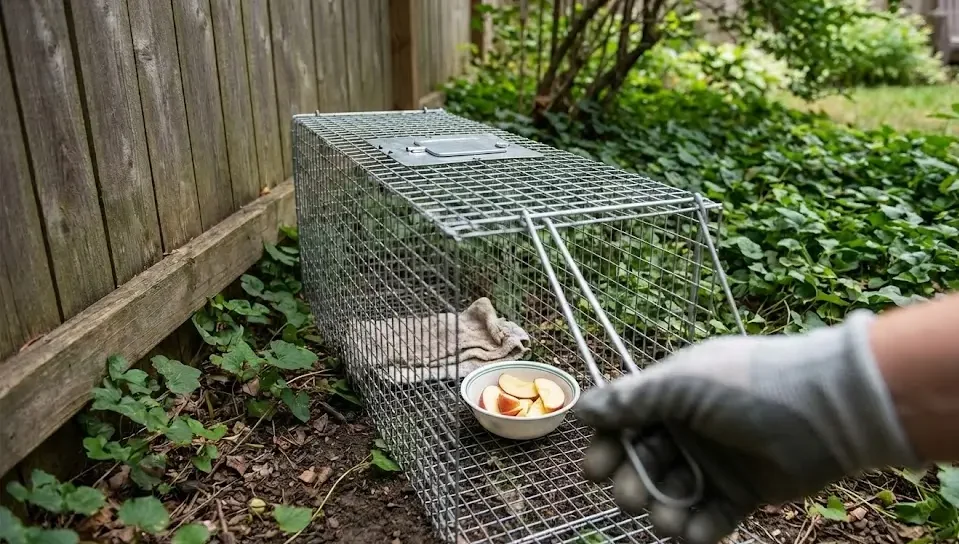
- Get the setup right from the start. Use a sturdy, roomy cage trap, keep it shaded and away from pets and foot traffic, and check it early so the possum isn’t stuck there stressed for hours.
- Keep it calm all the way through. Use simple bait for a clean walk-in, handle gently, and follow the legal release rules; if you can’t do that confidently, don’t DIY it.
The humane method most urban homes actually need, exit and proofing
Here is the controversial bit that experienced technicians see every week. The most humane “trapping method” in an urban area is often not trapping at all.
If a possum is living in your roof, the kinder outcome is usually to let it leave on its own at night and stop it coming back in. That reduces confinement stress and avoids the chaos of a trapped animal in your yard.
This is where one-way exit devices and proper proofing change the whole situation. You are not wrestling with a scared animal, you are changing access in a controlled way.
One-way exit devices, humane by design
A one-way door is fitted to the active entry point so the possum can leave but cannot re-enter. It works with the animal’s natural night routine instead of fighting it.
In practice, this can be calmer for everyone. The possum exits to feed and does not experience a stressful capture event.
Proofing is not “blocking a hole,” it is protecting the whole building
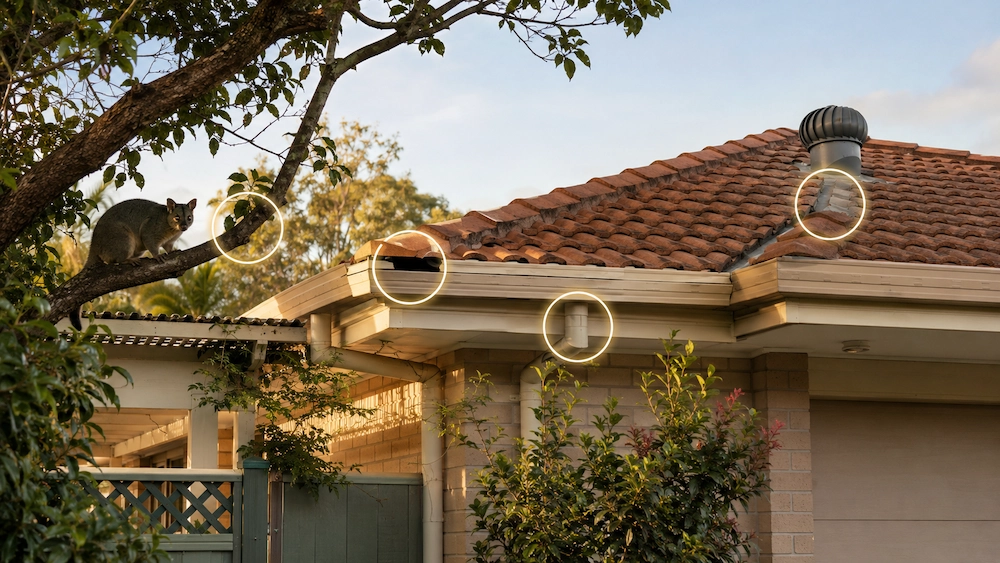
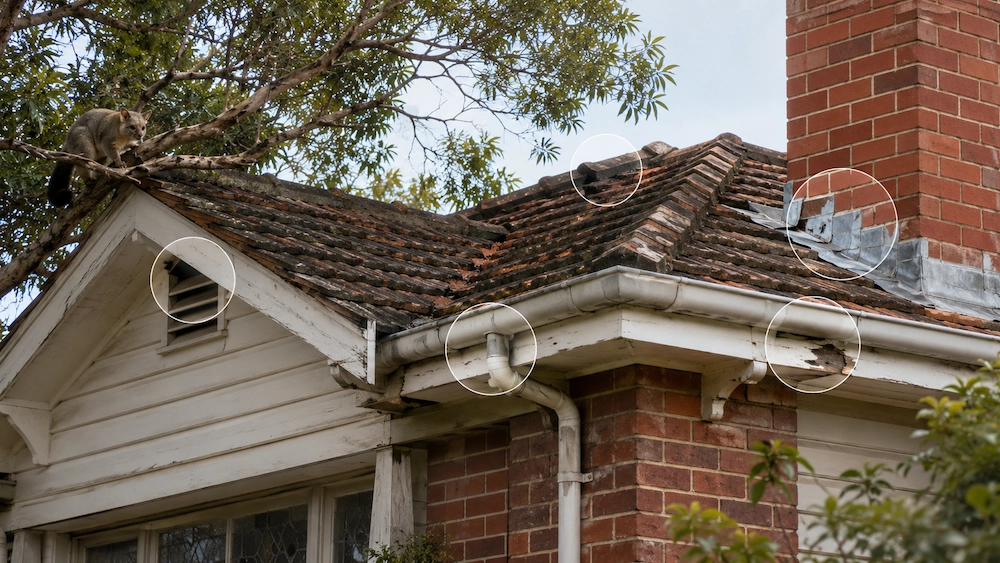
Urban roofs are full of weak spots. Gaps around pipes, loose tiles, broken eave vents, and old flashing can create multiple access points.
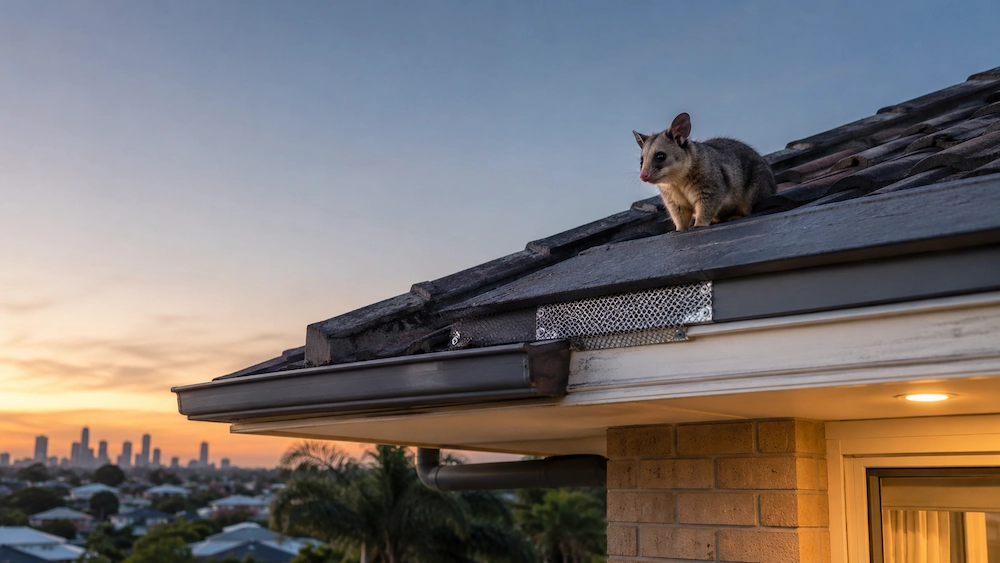
Proper proofing means identifying every realistic entry point, then sealing with materials that last. If it is a quick patch job, possums often find the next weak point.
Timing matters here too
Sealing everything before you confirm the animal has left can trap it inside. That is not humane and it can lead to damage, smell, and an ugly outcome.
A careful process allows exit first, then final sealing once the property is clear. This is why return visits are not “upselling,” they are part of doing it properly.
Urban possum hotspots you should not ignore
Possums rarely pick a random spot. They choose warmth, shelter, and repeatable access, which is why certain parts of homes get hit again and again.
Roof voids and wall cavities
Roof voids are quiet, warm, and safe from predators, which makes them ideal. Wall cavities can also become a travel route, especially in older homes with gaps and voids.
If you only focus on the noise, you might miss the access point entirely. The fix is not inside the ceiling, it is usually outside the building.
Eaves, fascia gaps, and broken vents
Small gaps at roof edges can be enough. If you can slide two fingers in, a determined possum may be able to work it wider.
Vents are a favourite entry point when mesh is missing or degraded. A “quick repair” that does not use durable materials often fails after the first weather cycle.
Townhouses, units, and shared roof lines
Shared roof spaces mean shared problems. If your neighbour has an entry point, you might be dealing with the same animals moving across the roof line.
This is where building-wide thinking matters. Treating one tiny section while ignoring shared access can waste time and money.
When trapping makes sense
There are situations where trapping can be appropriate and responsible. The key is doing it as part of a plan, not as the plan.
Trapping can make sense when a possum is inside the living space and cannot exit safely on its own. It can also be needed when an animal is in a spot that makes one-way exclusion impossible.
If you are stuck choosing between “catch it” and “solve it,” this breakdown helps: Possum Removal vs Possum Trapping: The Shocking Difference Homeowners Overlook.
Even then, humane trapping should be paired with proofing. Otherwise you are likely to repeat the same stressful process again.

Stress reduction is not optional
A humane trap setup reduces exposure, reduces noise around the trap, and reduces the time the animal is confined. That means early checks, shaded placement, and calm handling.
It also means thinking about dependent young. If a possum has a nest, careless trapping can separate a mother from juveniles, which is a welfare issue and a homeowner nightmare.
What a professional approach looks like
The best operators do not start with tools, they start with questions. The goal is to identify what you are hearing, where it is getting in, and what the long-term fix should be.
A proper inspection checks the building top to bottom, not just the area where the noise is loudest. This is how you avoid sealing the wrong spots and missing the real entry point.
Then the removal method is chosen based on welfare and practicality. In many cases, that means one-way exit first, then sealing once the building is clear.
Finally, the repair work needs to hold up. Urban possums are persistent, and if a repair is weak, they will test it until it fails.
Why Choose 1800 Possums
We do possum work the way it should be done in the suburbs: get the animal out humanely, then protect the building so it doesn’t happen again. That matters because “removal” without proper proofing is usually just a short break before the next roof-thump.
We focus on keeping possums on-site where the rules require it, using a low-stress exit approach rather than turning your backyard into a holding pen. In most cases we fit a one-way door so the possum can leave naturally at night, then we come back to remove it and seal the final access points.
We also keep pricing straightforward for common jobs, because surprise add-ons are where homeowners get burned. Our standard possum proofing rate is $495 including GST, and if your place genuinely needs extra work, we’ll give you a free quote before anything changes.
We back our repairs with a two-year money-back guarantee across the entire building, not just one patched hole. That’s us putting skin in the game, because the only guarantee that matters is the one that still stands when the noise tries to come back.
We’re a licensed pest management team and we’re insured, which is the minimum bar for roof work and protected wildlife. If someone can’t clearly explain their process, their compliance, and what happens after the possum is out, you’re gambling with your roof.
We service metro areas within around 20 km of the Melbourne and Brisbane CBD and also cover the Mornington Peninsula. If you’re hearing movement up top, chances are we’ve seen your roof style before, and we know where the weak points usually hide.
The truth, humane methods protect your home too
Humane possum control is not only about the animal, it is also about your property. Possums in roofs can damage insulation, soil ceilings, and widen entry points as they force access.
The longer it goes on, the more likely you are to end up with bigger repair work. The humane option is often the most cost-effective because it prevents repeat damage and repeat callouts.
Ready to stop the roof noise without the backyard drama
If you want humane possum trapping methods, you also want a plan that stops the problem from repeating. That means identifying entry points, using a low-stress exit approach where possible, and sealing the building properly.
Book online with 1800 Possums, or call 1800 767 786 to talk it through and get a clear quote. If you want the fix handled legally, humanely, and backed by a strong warranty, this is the moment to stop guessing and get it sorted properly.
Latest Articles