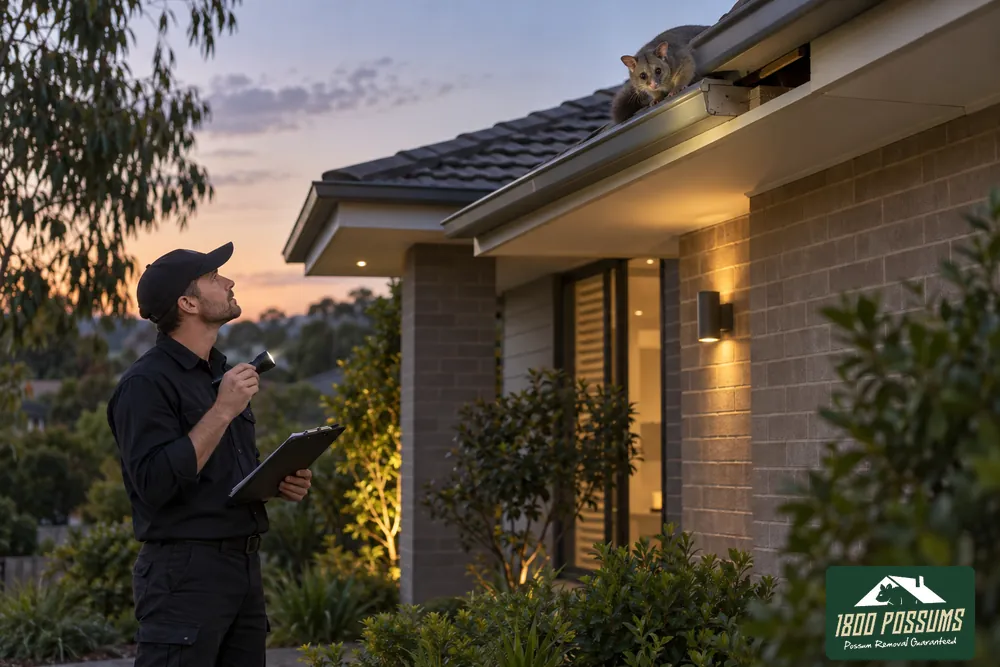
10 Efficient Strategies For Possum Removal
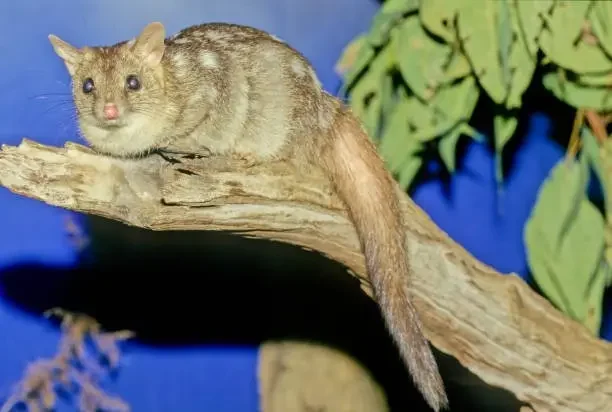
Did you know that possums are protected under Australian law and can’t just be trapped and relocated far from where they were found? Many assume they can catch and release a possum elsewhere, but it is illegal in most states and can harm the animal.
What is the finest approach to handle possums invading your house?
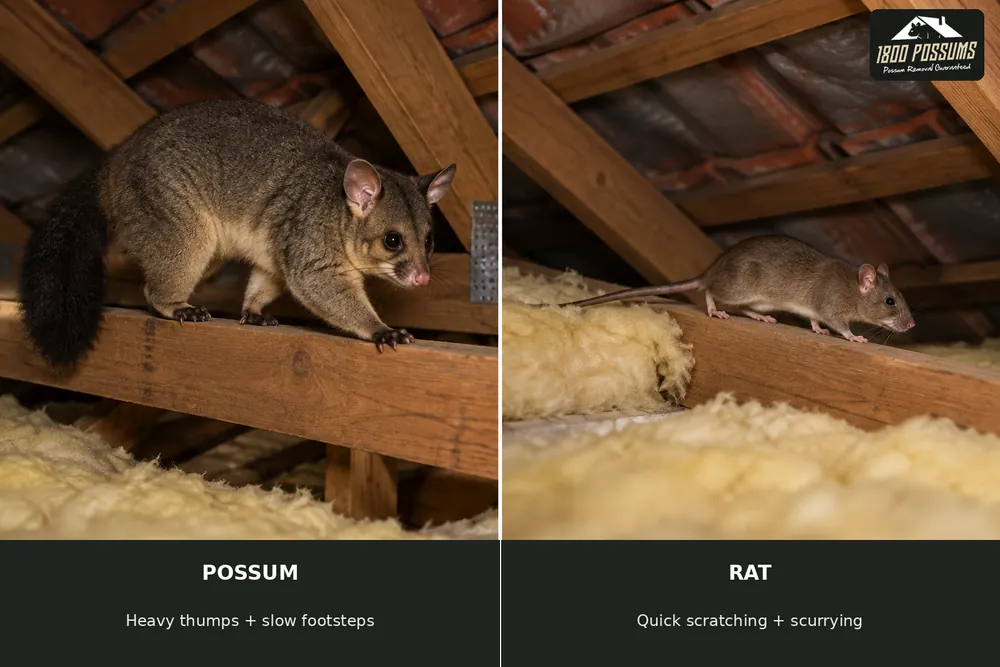
Though they seem harmless, possums can be a pain when they move in. They gnaw on electrical wiring, scratch and scurrow on the roof, and leave messes, drawing in other pests. You know how annoying it may be if possum behaviour at night has ever awakened you.
If possum behaviour at night has ever awakened you, you know how annoying it may be. Handling the problem correctly is important—without breaking the law or causing unnecessary harm to the animal.
Today, we’ll walk you through 10 highly effective strategies for removing possums from property safely and legally.
10 Efficient Strategies For Removing Possums from Property
Possums might be cute in the wild, but they become a full-blown nightmare when they invade our home. Scratching in the ceiling, raiding the bins, chewing through wiring—they don’t pay rent, but they sure act like they own the place.
Here are 10 proven ways for removing Possums from your property—and keep them gone:
- Seal up entry points
- Cut off their food supply
- Trim tree branches
- Use motion-activated lights and noise deterrents
- Try natural repellents
- Offer a nesting box
- Install a one-way exit door
- Use humane traps (only if legal in our area)
- Trick them with predator scents
- Call in the professionals
1. Identify Entry Points and Seal Them
How Do Possums Get In?
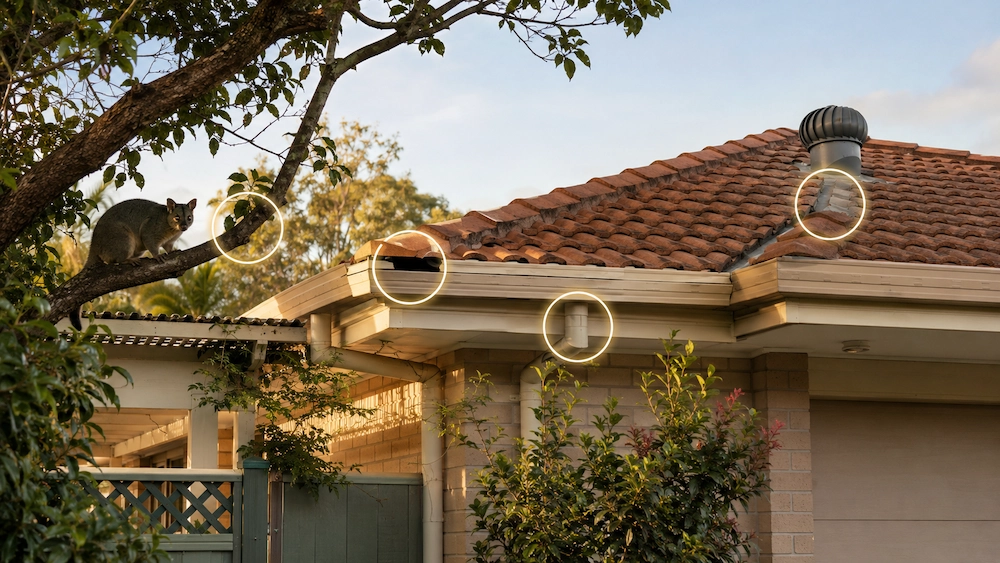
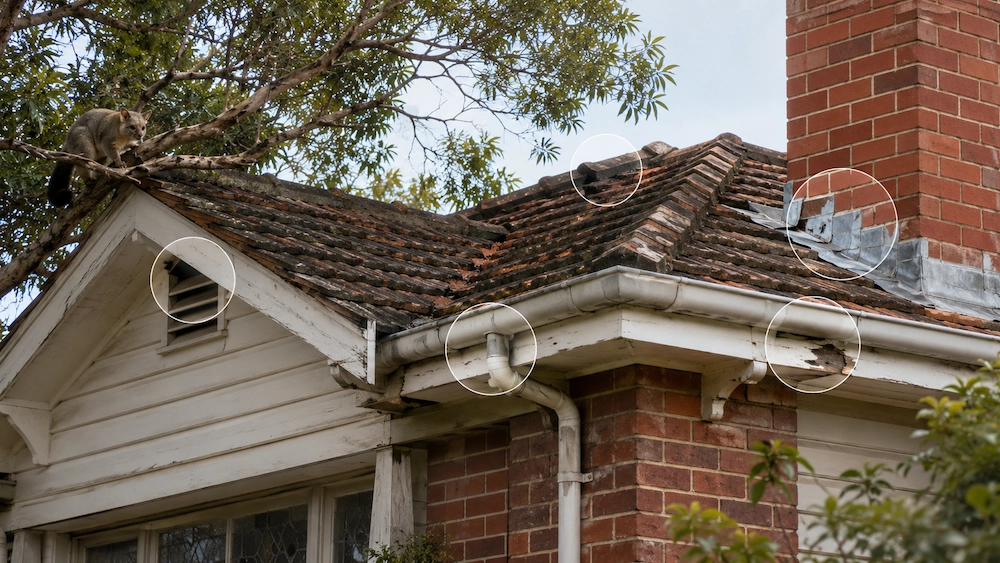
Possums are excellent climbers and can squeeze through small holes. They merely require a loose tile, a broken vent, or a small hole in your eaves; they do not need a wide-open door. You should check at this point.
- Roof gaps: Possums adore comfortable rooftop areas. Search for broken roof sheets, missing ridge capping, or loose tiles.
- Vents and chimneys: Possums will find an opening if one exists. Check exhaust fans, air vents, and chimneys for the correct covering.
- Wall cavities: Gaps in walls and under eaves make perfect entry points. Even a small crack can be a doorway for a determined possum.
How to Block Their Access (For Good)
Once you’ve found their way in, it’s time to seal the entry. But before you block anything, make sure no possum is still inside. One last thing you want is a caged possum scuffing at your walls.
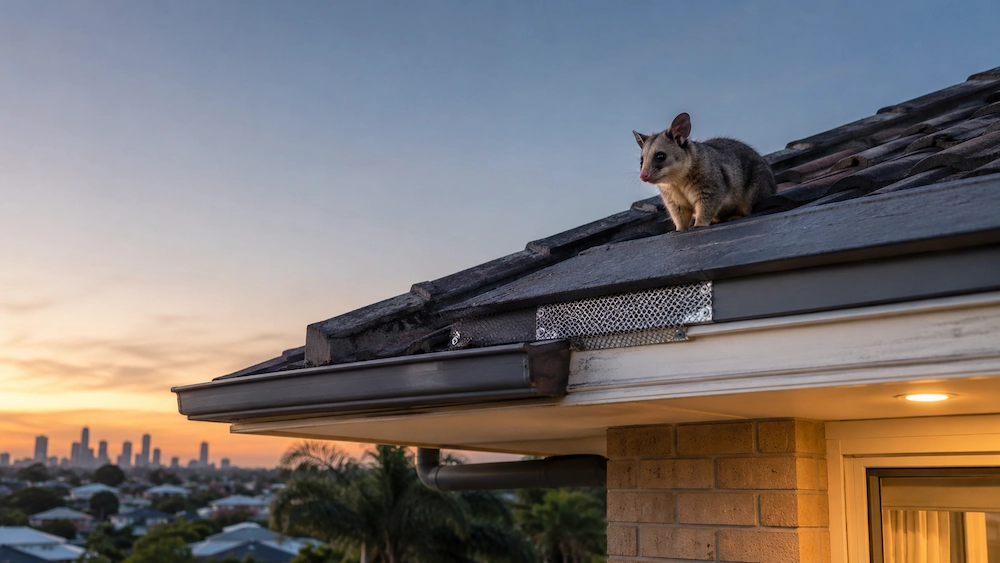
- Use sturdy materials: Possums can chew through weak barriers. To close gaps, use metal mesh, timber, or heavy-duty flashing.
- Install one-way exit doors: If a possum is inside, use a one-way exit door. This lets them leave but stops them from returning. Once you’re sure they’re gone, seal the entry immediately.
- Double-check at night: Possums are nighttime animals. Wait till after dark and listen for movement to be sure one is still inside; then, close doors.
Keeping possums out mostly depends on blocking access points. They won’t linger if they cannot enter.
2. Remove Food Sources Around Your Property
If possums exist, your backyard would be their preferred eatery. Fruit waste, pet food, overflowing bins, and even a neglected compost heap are in if it smells like a free meal. They are not choosy and won’t depart without struggle once they have discovered a food supply.
What’s Attracting Possums?
- Fruit trees – Overripe or fallen fruit? That’s a feast. If you don’t pick it, the possums will.
- Pet food – Leaving kibble outside? Possums love a late-night snack.
- Open rubbish bins – If your bin isn’t sealed tight, possums will dig right in.
- Compost heaps – If it smells like food, possums will be interested. Meat scraps, bread, and fruit peels are a possum’s dream dinner.
How to Cut Off Their Food Supply
There is no reason to stay if food is missing. We can remove possums from the guest list like follows:
- Pick up fallen fruit daily. It takes five minutes but stops possums from making your yard their pantry.
- Feed pets indoors or remove food bowls once they’ve eaten. A half-finished bowl of kibble is an open invitation.
- Lock down your bins. Use tight-fitting lids, secure bin clips, or store them in a shed to stop possums from rummaging through your leftovers.
- Manage compost heaps properly. Keep them covered, turn them regularly, and avoid adding strong-smelling scraps.
Possums are not tenacious; they search for an easy meal. If you give them your supplies, they will move to better ground—that—else’s backyard or the countryside.
3. Trim Trees and Block Access to Your Roof
How Possums Get to Your Roof
Possums are natural climbers with sharp claws and strong limbs. They use:
- Tree branches – Overhanging limbs act like ladders. Possums will drop straight onto your roof if a branch is close enough.
- Fences and pergolas – Wooden, metal fences and outdoor structures give possums an easy boost.
- Climbing surfaces – Rough-textured walls, pipes, and drainpipes provide perfect grips for possums to scale up.
How to Cut Off Their Access
We need to make the climb impossible. Here’s how we do it:
- Trim branches at least 2 metres from your roof. No branches, no easy jumps. Keep trees pruned back so possums don’t have a direct path.
- Install metal possum guards on tree trunks. A smooth metal band around the base of trees prevents possums from climbing up.
- Use possum-proof fencing. Adding a rolled-out PVC pipe or a floppy wire barrier along the top of fences makes it harder for possums to grip.
- Block climbable surfaces. Wrap drainpipes in smooth plastic or metal to make them too slippery to climb.
Possums won’t stick around if they can’t get in. Cut off their climbing routes, and you cut off their access—simple.
4. Use Bright Lights and Noise Deterrents
Nature drives possums to be nocturnal. Their eyes are sensitive to strong lights, and they move about safely under cover of darkness. Unexpected sounds or sudden flashes of light set off their survival instincts; they flee when they perceive a threat.
How to Use Light and Sound to Your Advantage
- Install motion-activated floodlights. Possums hate sudden light exposure. Arrange motion-activated LED lights around outbuildings, fences, common access points, and rooftops.
- Apply ultrasonic bug repellents. While silent to humans, these gadgets produce high-frequency sounds that annoy possums. They’re great for covering larger areas.
- Play the sounds of predators. Possums know when they’re not the biggest threat around. Playing recordings of barking dogs, owls, or other natural predators can convince them it’s time to leave.
What Not to Do
Not all noises work. Possums quickly get used to repetitive sounds, so mix it up. And while strobe lights might seem like a good idea, they can bother pets and neighbours more than the possums themselves.
Light and sound won’t just scare possums once—they’ll teach them that our home isn’t a safe place to stick around. And that’s exactly what we want.
5. Try Natural Possum Repellents
Possums mark territory and hunt food using their sense of smell. Strong, offensive smells throw them out of their comfort zone and cause them to second-guess their stay. We are not discussing anything poisonous; we are simply discussing a few natural elements that possums find objectionable.
What Works (And What Doesn’t)
- Garlic and chilli spray—Strong and pungent meals taste bad to possums. A simple, potent repellent is made from crushing garlic, chopping chillies, and water mixed in a spray bottle. Mist it around fences, garden beds, and doors.
- Vinegar or ammonia – Soaking rags in vinegar or diluted ammonia and placing them in possum-prone areas can be enough to send them packing. (Just be careful where you use ammonia—it can irritate pets too.)
- Eucalyptus or tea tree oil – A few drops on cotton balls or mixed with water in a spray bottle works wonders. Possums find these scents overpowering and will avoid the area altogether.
What Not to Do
- Don’t rely on one trick. Possums get used to smells over time, so rotate repellents so they don’t catch on.
- Skip the mothballs. They might smell strong, but they’re toxic to pets and wildlife. Not worth the risk.
- Don’t spray directly on plants. Some homemade mixes can damage leaves. Stick to fences, walls, and possum entry points.
With the right mix of smells, we’re not just keeping possums away—we’re sending them a message: This is not your home.
6. Install a Possum Nesting Box Away from Your Home
Possums aren’t pests in the wild—they’re part of our ecosystem. When we remove their habitat through urban development, they look for the next best thing—our roof. A possum box mimics the hollow of a tree, giving them a place to shelter without bothering us.
How to Set Up a Nesting Box
- Put it high in a tree – At least 3–4 metres off the ground, keep them safe from predators.
- Make it sturdy—Use weather-resistant wood and make sure it’s securely attached to the tree. A loose or shaky box will not feel safe.
- Add some nesting material. Possums love a soft space, so line the box with dry leaves or straw to make it inviting.
- Choose the right spot – Position it away from the house but still in an area where possums already live. The closer it is to their usual territory, the more likely they’ll move in.
What Not to Do
- Don’t place it too close to the roof. Even if the box is far from the house, they’ll check in for a roof inspection.
- Skip the food bribes. We want to offer shelter, not start a feeding program. Possums are independent—they’ll move in when it feels safe.
- Don’t expect instant results. It may take a possum a few days or weeks to claim the box, but once it does, it will stay put.
A possum in a tree means no possum in the roof. Give them a home, and we’ll finally get our home back.
7. Set Up a One-Way Exit Door
How a One-Way Exit Works
- We install the one-way door over the possum’s entry point.
- When night falls, the possum heads out for food like usual.
- The door shuts behind them, blocking their way back in.
- We seal the entry point properly so they can’t find a new way inside.
Setting It Up the Right Way
We need to make sure the possum leaves before sealing things up. If we trap one inside, it’ll panic, scratch, and possibly die in our walls—which no one wants.
- Find their main exit hole. Possums have a preferred entry point. We block up all the others first, leaving only the main one open.
- Install the one-way door. These can be bought online, or we can DIY one using a sturdy flap that only opens outward.
- Give it a couple of nights. Once we stop hearing possum activity in the roof, we know it’s safe to seal everything up for good.
What Not to Do
- Don’t use poison. It’s illegal and inhumane, and possums are protected under Australian law.
A one-way exit isn’t just smart—it’s humane. We gently push the possums in the right direction, and once they’re out, we ensure they stay out. Simple, effective, and no midnight scratching in the ceiling.
8. Consider a Humane Possum Trap (If Allowed in Your Area)
We need to know the rules. Possums are protected under Australian law, and trapping them comes with strict conditions.
We must check our local regulations before we even consider catching a possum. In most states:
- A permit may be required to trap possums legally.
- Possums must be released within 50 metres of where they were caught—no driving them into the bush.
- It’s illegal to harm or relocate them far from their home territory.
If we don’t follow the law, we could end up with a fine instead of a possum-free home.
How to Trap a Possum the Right Way
If trapping is allowed, we need to do it safely and humanely. Here’s how:
- Use a possum-friendly cage trap. These are designed to hold the possum without injury. Never use snap traps or anything that could hurt the animal.
- Bait it with fresh fruit. Apples, bananas, or grapes work well—no meat or chemicals, just natural food.
- Check the trap frequently. We don’t want a possum stuck in a cage for hours—check it every morning to ensure it’s not suffering.
- Release it properly. Once caught, the possum must be released within 50 metres of the capture site, preferably near a tree with shelter.
Trapping sounds like a quick fix but is not a long-term solution. Suppose one possum finds its way onto our roof, another will, too—unless we seal up entry points and remove what attracts them. We’ll play possum ping-pong forever if we don’t fix the problem at its source.
9. Use Predator Scents to Deter Possums
Possums might act bold when they scurry across our roof, but they’re not fearless.
What Scares Possums?
Possums always look for bigger, meaner animals that see them as snacks. That includes:
- Foxes – A possum’s worst nightmare.
- Dogs – The sound and smell of a dog are enough to make them rethink their choices.
- Owls – Large birds of prey are a real threat to possums in the wild.
We don’t need an actual predator—just the scent or sound of one will do the trick.
How to Use Predator Scents
We can make possums think twice about hanging around with a few simple tricks:
- Dog hair or cat fur – Sprinkle some in problem areas like garden beds, fences, and roof entry points. Possums smell it and assume a bigger animal is nearby.
- Predator urine granules – Available online, these mimic the scent of foxes or dingoes, triggering a possum’s danger instinct.
When possums think a predator is nearby, they choose safety over curiosity. With the right scent in place, they’ll decide on their own that it’s time to leave.
10. Call in a Professional
We’ve tried the tricks. We’ve sealed up the gaps, cut off their food supply, and even made them think a fox lurks nearby—but the possums keep returning. We must bring in experts when we’re out of options and patience.
Possums are smart and persistent. If we don’t get rid of them properly, they’ll find another way. Here’s why a professional might be the best call:
- They know possum behaviour inside out. A licensed expert can pinpoint hidden entry points we might miss.
- They use legal and humane methods. Possums are protected under Australian law, so a professional ensures we’re following regulations.
- They provide long-term prevention. It’s not just about getting rid of one possum but ensuring we never have another.
If we’ve tried everything and possum-proofing feels like a full-time job, it’s time to let someone else handle it. There’s no shame in calling reinforcements when the possums win the battle.
Take Action Before Possums Take Over
We’ve tried the DIY tricks: sealing the gaps, clearing the food, and making our homes as unwelcoming as possible. But if possums are still running the show, it’s time to call in the experts who know how to stop them permanently.
At 1800 Possums, we don’t waste time with half-measures. We get in, find the problem, and fix it the right way—legally, humanely, and effectively. No more restless nights. No more chewed-up wires. No more mess.
- Guaranteed possum-proofing—because we don’t do quick fixes.
- Safe, legal, and possum removal—we follow the law, so you don’t have to worry.
- Expert inspections—we find every sneaky entry point they’ve used.
- Done-for-you solutions—so you can stop stressing and enjoy your home again.
Call NOW! Every night you wait, the possums settle deeper into the room. Let’s kick them out—before they make themselves permanent tenants.
Latest Articles