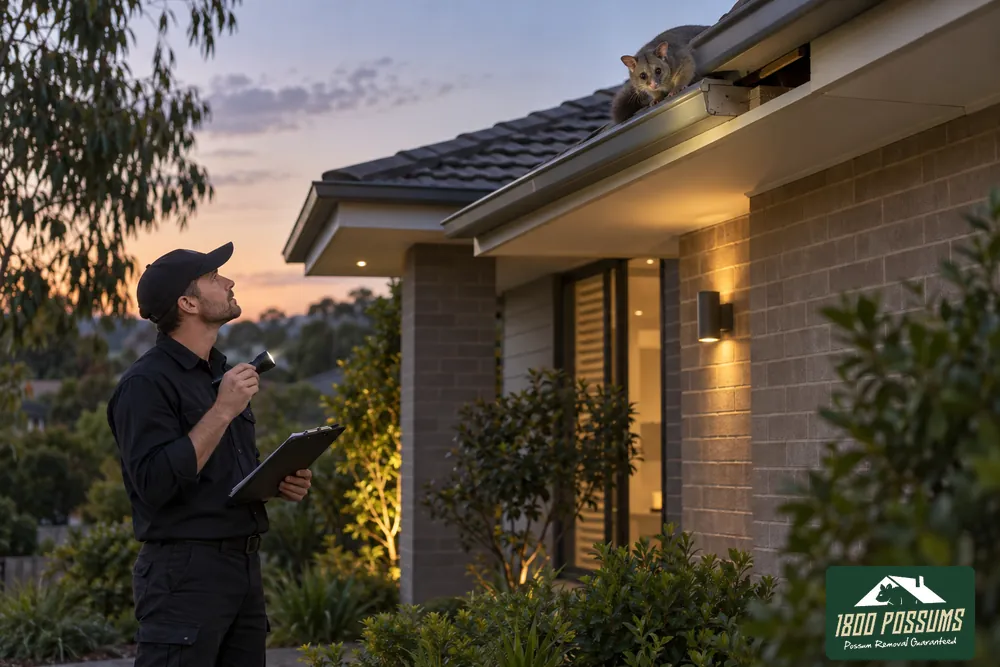
Why Humane Possum Removal Is Essential for Legal Wildlife Protection
Today, we will explain why possum removal the only legal and ethical way is to handle an infestation. We’ll cover what the law says about possum removal, why relocation is harmful, and how removal methods can keep your home possum-free without breaking the law.
If you’re dealing with a possum problem, you don’t have to choose between protecting your home and following the law. Keep reading to learn how to handle the situation the right way.
Possums: The Unexpected House Guests You Can’t Evict Unlawfully
For most of us, the first thought is, How do we get rid of it? Maybe a quick DIY trap? Call someone to take it away. But nobody tells you that removing a possum incorrectly can get you in serious legal trouble. Under Australian legislation, possums are protected animals, unlike pests like rats or cockroaches. You cannot trap, relocate, or harm them without appropriate permission.
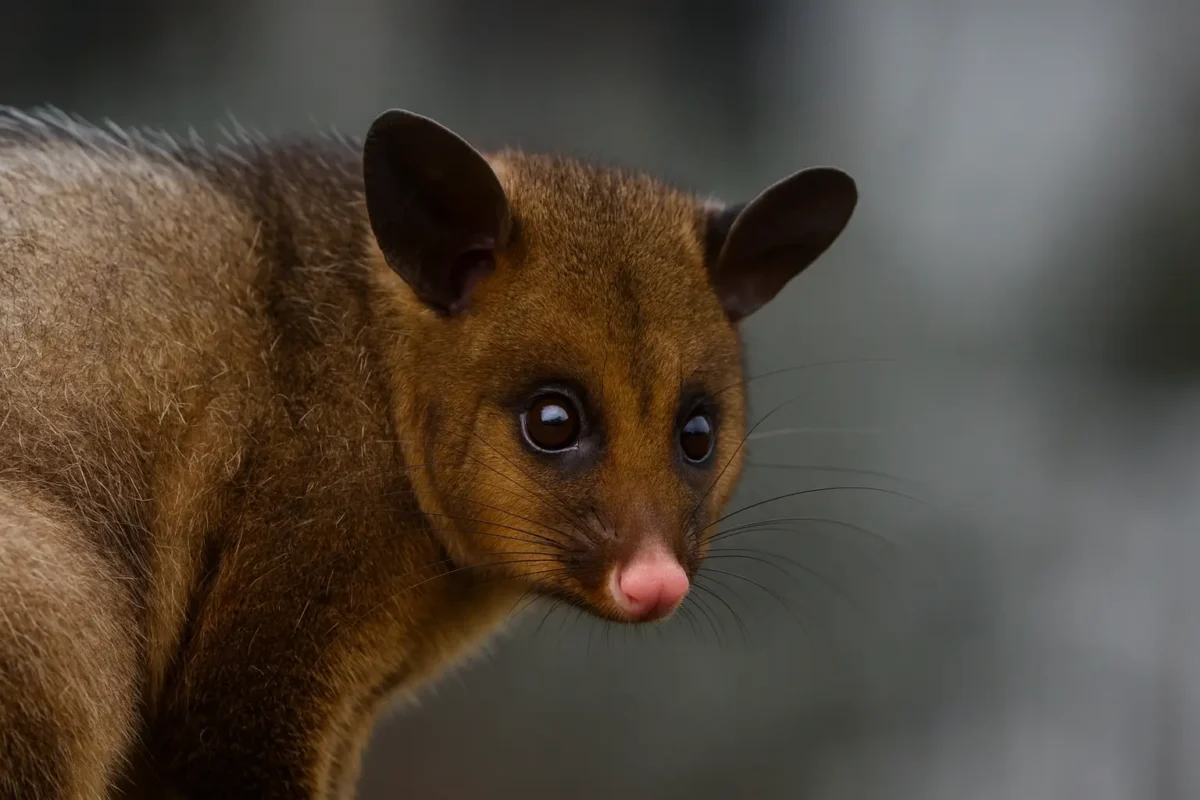
Yet, every year, people make the same mistakes:
- They set illegal traps, thinking they could “move” the possum somewhere far away.
- They block off entry points while the possum is still inside, trapping it without food or water.
- They assume any pest control service will handle it—but not all companies follow the law.
These errors can cost you fines and penalties, affecting possums and yourself. For instance, the Wildlife Act 1975 makes it illegal in Victoria to injure, catch, or move possums without a permit. And those credentials? Only licensed professionals can obtain them.
So, what happens if you break the law?
- You could face hefty fines (sometimes thousands of dollars).
- The possum could die—meaning you’re responsible for harming a protected species.
- The problem doesn’t disappear because another possum will move in to take its place.
Possums are territorial. Removing one doesn’t mean the end of your troubles—it just means you’ve left an open vacancy for the next one to take over. That’s why quick-fix removals don’t work, and legal, humane methods are the only real solution.
The law is clear, and making the wrong move could cost you. The only way to protect your home and stay on the right side of the law is to do it the right way.
What You Need to Know Before Removing a Possum
Australian legislation defines possum protection. Hence, it is not simply a recommendation but also legal. The Wildlife Act 1975 ( Victoria) and similar laws in other states include possums. This suggests:
- You cannot trap, kill, or relocate them without government-granted permission.
- You must follow legal removal techniques even if a possum invades your house.
- Not to mention criminal accusations for animal cruelty, breaking these rules might land fines of up to thousands of dollars.
Why Is It Illegal to Relocate a Possum?
At first, it seemed like the kind of thing to do. Catch the possum, take it to a quiet park, and let it go. Problem solved, right? Wrong. Here’s why:
- Possums are fiercely territorial. If you dump one in a new location, it’s instantly in enemy territory. Other possums will chase it out, attack it, or leave it struggling to find food.
- Most relocated possums don’t survive. They either get killed by predators, starve, or die from stress.
- The dilemma does not go away. If a possum exists on your roof, it is there for a purpose; if you remove one, another will replace it.
If you have been considering managing the matter yourself, think twice. Removing possums is lawfully, ethically, and in a way that makes sense rather than only about getting them out.
What Happens If You Break the Law?
Still thinking about setting a trap or calling someone to “get rid of it”? Here’s what could happen:
- You could be fined thousands of dollars. Yes, even if you didn’t mean to do anything wrong. The law doesn’t care if you were trying to “help.”
- You might unknowingly hire someone who’s breaking the law. Not all pest control services are legally allowed to handle possums. If they get caught, you could also be held responsible.
- You could be charged with animal cruelty. Relocating a possum might seem harmless, but if it suffers or dies because of your actions, you could face serious legal consequences.
Possum removal isn’t a DIY job. The law has spoken, and the penalties are real. But don’t worry—there’s a legal, humane way to fix the problem.
Why Traditional Removal Methods Do More Harm Than Good
Let’s be brutally honest—most people don’t think twice about how they get rid of a possum. They want it gone. Fast. No more scratching, no more mess, no more late-night scurrying. So, they do what seems logical:
✔ Set a trap.
✔ Catch the possum.
✔ Drive it a few kilometres away and let it loose.
Problem solved? Not even close. You’ve just made things worse—for the possum and yourself.
The Harsh Reality of Trapping and Relocation
Most people think they’re doing the possum a favour by setting it free in a park or bushland. But what happens next?
- It’s instantly in danger. Possums are highly territorial. The moment it steps into an unfamiliar area, other possums attack it, chase it off, or leave it without access to food or shelter.
- It doesn’t know where to find food or safety. Relocated possums don’t have time to figure out a new home. They starve, get hit by cars, or fall prey to bigger animals.
- It likely won’t survive. Studies show that most possums die within days or weeks after being relocated. What felt like a kind solution was a death sentence.
And here’s the kicker—relocation is illegal. If caught trapping and moving a possum without a permit, you look at fines and potential legal trouble.
The DIY Disaster: Why Quick Fixes Backfire
Let’s say you don’t relocate it. Instead, you try other “quick” removal tricks. Maybe you:
✔ Block off the hole it’s using to get into your roof.
✔ Use deterrent sprays or bright lights.
✔ Set out store-bought traps.
What happens?
- If you seal off entry points while the possum is still inside, you’ve trapped it without food or water. That’s not just cruel—it’s illegal. If it dies up there, now you’ve got a much bigger problem (and a disgusting smell).
- Possums are stubborn. They’ll claw, chew, and push back in if one finds a way into your roof; another will, too.
- Deterrents rarely work for long. Possums are smart. Sprays and noises might scare them off for a night or two, but they always come back.
So now you’re back to square one. Possum still on your roof. Damage is getting worse. You are frustrated as hell.
Why Doing It the Wrong Way Creates More Problems
We wouldn’t have this conversation if possum removal were as simple as setting a trap. But the reality is:
- Relocation is a death sentence.
- Trapping without a permit is illegal.
- DIY methods often fail—and make things worse.
If we truly want to fix the problem, we need a smarter, legal, and humane solution.
The Humane Approach: Removing Possums the Right Way
There’s only one way to remove a possum legally and effectively—do it humanely. Anything else is either illegal, cruel or just plain useless.
We know what you’re thinking: Humane removal sounds complicated, expensive, and time-consuming.
Wrong. Humane removal is the only long-term method. There are no fines, no unnecessary suffering, and no possums coming back through a new hole in your roof a week later.
How Does Humane Possum Removal Work?
It’s not about kicking the possum out—it’s about making sure it leaves on its own and doesn’t return. Here’s how the process works when done properly:
1. Find Out How It Got In
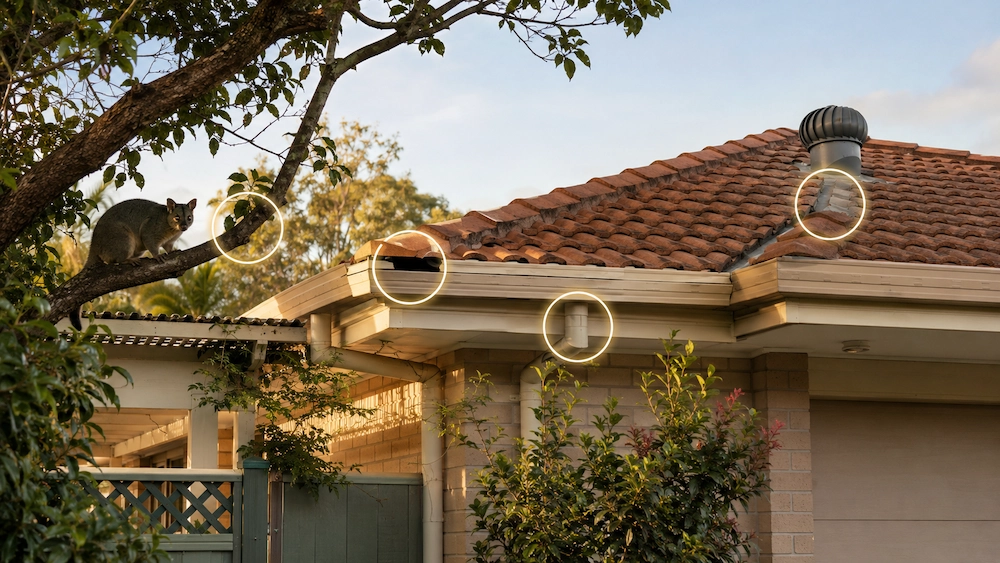
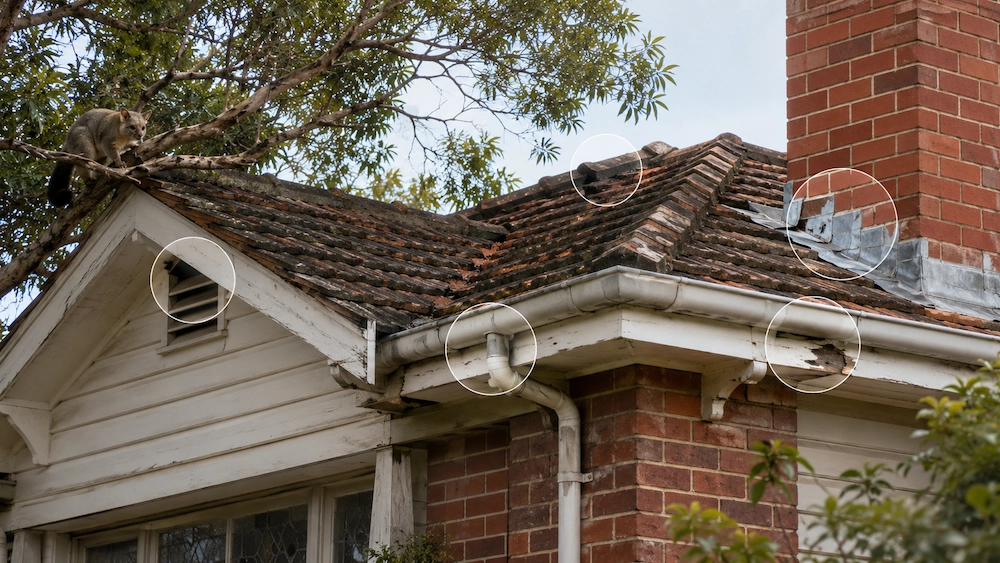
Possums don’t teleport into your roof. There’s always an entry point, and it’s usually easy to spot if you know what to look for. Gaps in the roof, broken vents, and loose tiles are welcome signs for possums looking for a warm place to crash.
2. Install a One-Way Exit
This is where the magic happens. A one-way door is set up at the possum’s main entry point. It lets them leave safely—but stops them from getting back in. They climb out, go about their business, and suddenly, their home is gone. No stress, no harm, no need to relocate them.
3. Seal Every Possible Entry Point
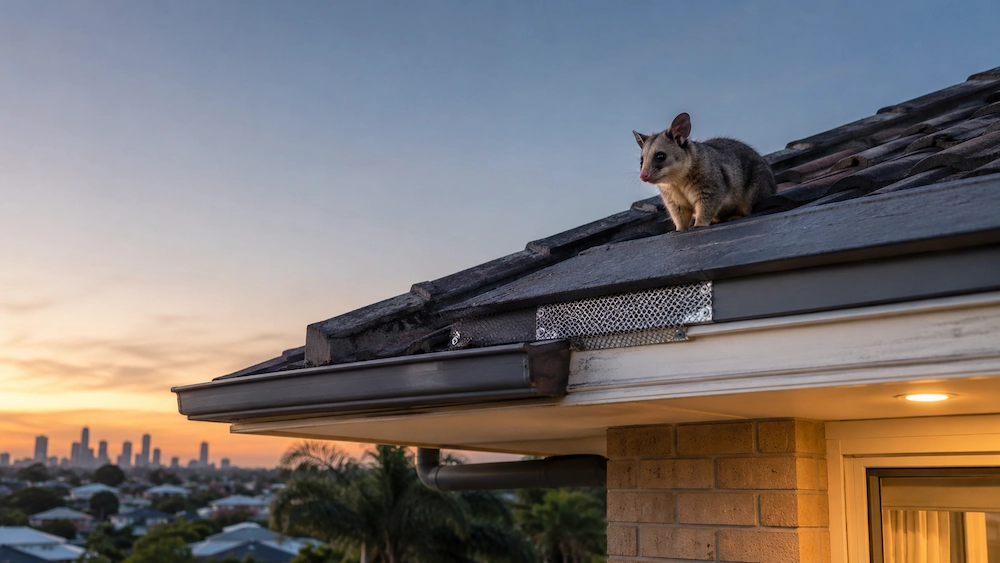
This is the part most people skip—and why they end up with possums again. Once the possum is out, every gap and crack must be sealed. If you leave even a tiny opening, another possum will move in. Possum-proofing is the difference between solving the problem and hitting repeat.
4. Provide an Alternative Home
Here’s the thing—possums live on your roof because they don’t have anywhere else to go. Installing a possum box in a nearby tree gives them a safe spot to nest that isn’t inside your home. It’s a simple step that stops them from trying to break back in.
Why This Works Better Than Anything Else
- It’s 100% legal. No risk of fines or breaking wildlife protection laws.
- It doesn’t harm the possum. They get to leave on their own, in their own time.
- It stops new possums from taking over. No open roof no new guests.
- It’s permanent. Unlike traps or deterrents, once a home is sealed, it stays possum-free.
Quick fixes don’t work. DIY tricks fail. But humane removal? That’s how you take care of the problem once and for all.
Why Humane Removal Is the Only Long-Term Solution
Possums are smart, stubborn, and survivors. If one finds its way into your home, another will, too—unless you ensure they can’t. That’s why humane removal isn’t just the right choice—it’s the only choice that works in the long run.
Why Relocation Doesn’t Solve the Problem
A lot of people think trapping and moving a possum fixes everything. It doesn’t. It usually makes things worse:
- A new possum takes its place. You might remove one but didn’t fix why it came in. Another will move in within days.
- The relocated possum struggles to survive. Without food, shelter, or familiar surroundings, most possums die after being moved.
- It’s illegal. The law is clear—you can’t relocate a possum without a permit. If you get caught, you could be facing fines or legal trouble.
Why DIY Fixes Don’t Work Either
Let’s say you don’t relocate it. Instead, you try:
- Sprays, lights, or noise machines
- Blocking the hole while the possum is still inside
- Setting up store-bought traps
Here’s what happens:
- Possums get used to deterrents fast. A little spray or noise might make them leave for a night, but they’ll return when they realise nothing bad happens.
- Blocking a hole while the possum is inside is cruel and illegal. It’s now stuck, starving, and desperate—which means it will claw, bite, and chew through whatever it can to escape.
- Traps won’t solve the issue. Even if you get rid of one possum, others are waiting to take its place.
The Only Solution That Works
If we want to keep possums out for good, we need to fix the root of the problem: why they got in, how to get them out legally, and how to stop new ones from moving in.

- One-way doors let them leave without letting them back in.
- Sealing every single entry point stops new possums from taking over.
- Providing an outdoor possum box keeps them in the trees where they belong.
This isn’t guesswork. It’s proven. It’s legal. And it’s the only way to ensure your possum problem doesn’t return repeatedly.
Possum Problem? Let’s Fix It the Right Way.
You’ve read the facts. You know the law. You understand why traps, relocation, and DIY fixes waste time. Now, it’s time to make the right call—literally.
✔ Don’t risk fines.
✔ Don’t let the problem drag on.
✔ Don’t make a mistake that could harm the possum or your home.
We know how to legally remove possums, stop them from returning, and do it all without breaking the law or causing unnecessary stress.
Have possums on your roof? Sort it out now—before it gets worse. Call 1800 Possums, and let’s fix this properly.
Latest Articles