
TL;DR: Possums are protected wildlife, so DIY trapping and relocating can get you fined and often doesn’t solve the real problem anyway. The safer path is to confirm what’s in your roof, follow your state rules on trapping and release, and focus on proofing entry points so another possum can’t move straight back in.
Key Takeaways:
You hear scratching in the roof, you spot a possum on the fence, and your brain jumps straight to one idea: trap it and drive it “somewhere nice”. That’s the moment a lot of well-meaning homeowners stumble into possum trapping mistakes that can cost real money.
Possums are protected native wildlife, so the rules are strict and the penalties can be ugly. If you want the noise to stop without risking a fine, check your state rules before you trap, handle, or release any possum.
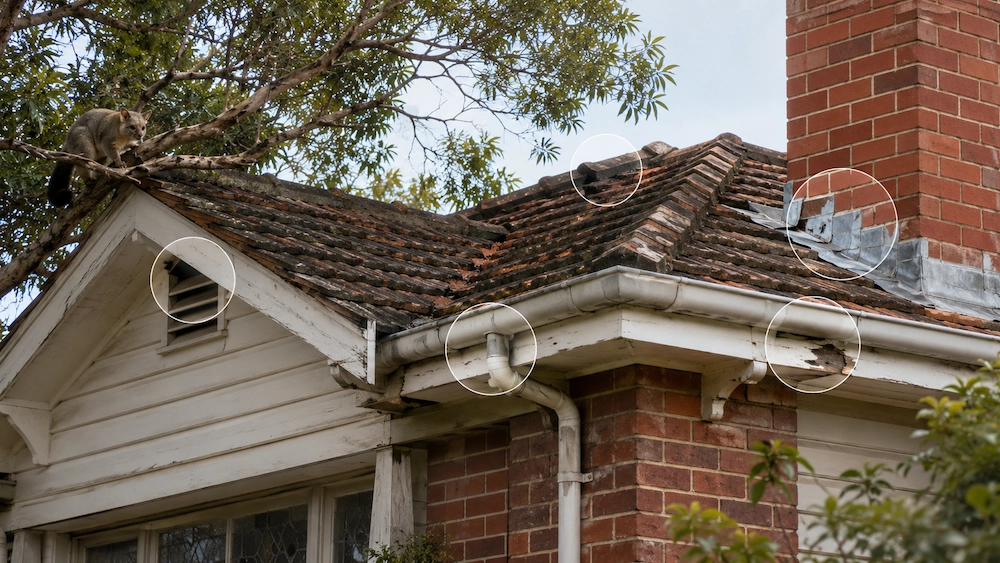
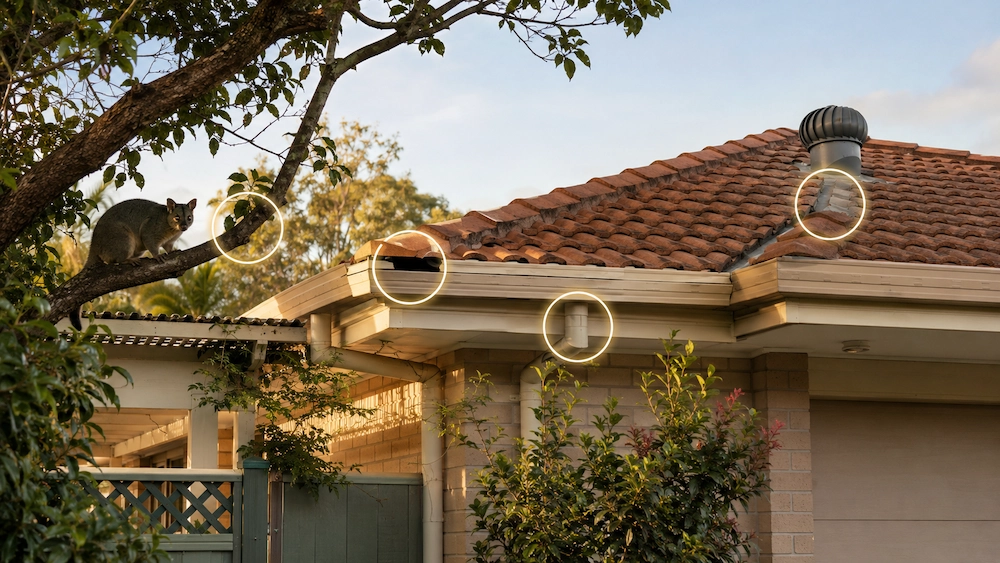
Most possum problems start with access, not attitude. A loose tile, a gap near a vent, or a branch over the roof gives them an easy way in.
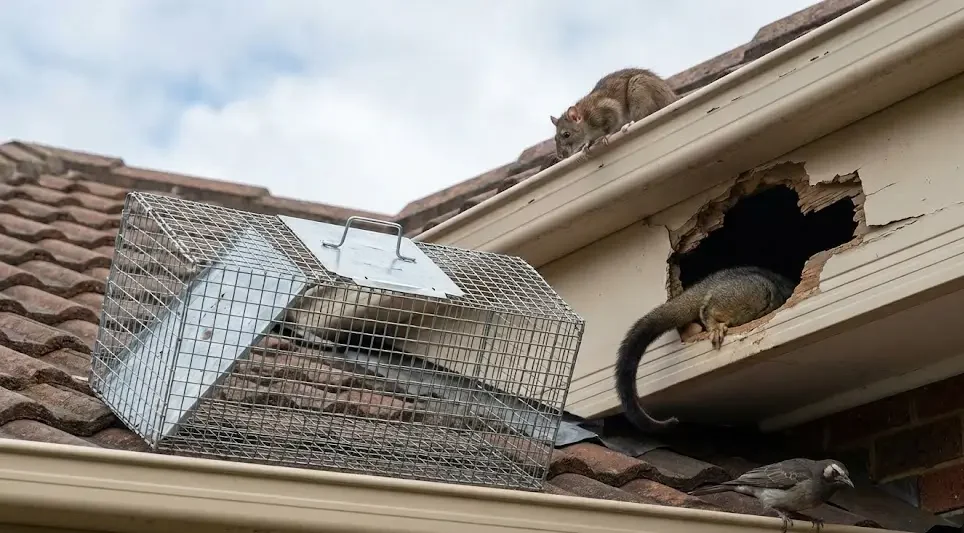
Trapping can remove one animal, but it doesn’t remove the invitation. If you don’t fix the entry points, another possum can move straight into the same roof space.
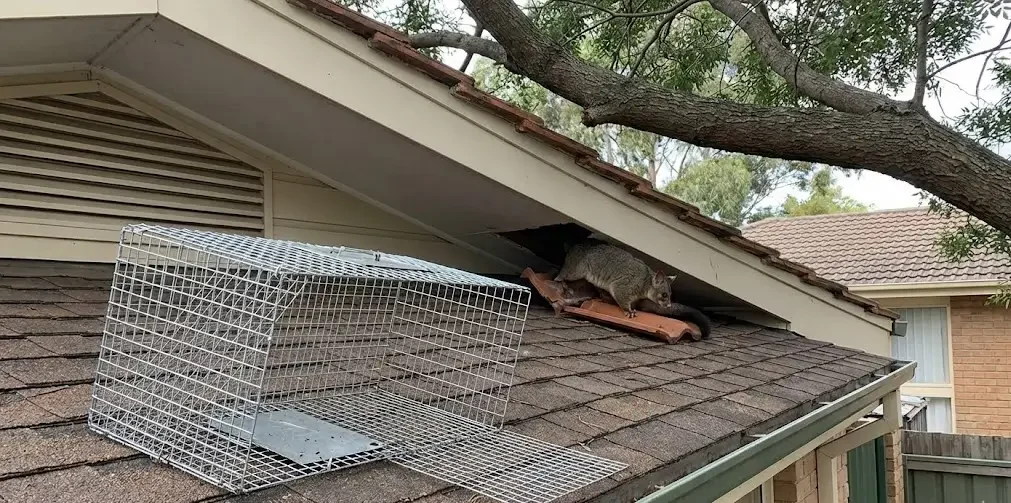
It’s easy to spot a possum in the yard and assume it’s the one thumping around upstairs, but that’s often not the case. In places like Victoria, you can only trap a common brushtail possum if it’s actually inside the building, so trapping one out in the garden can still put you in breach.
Before you do anything, get clear on what’s actually going on.
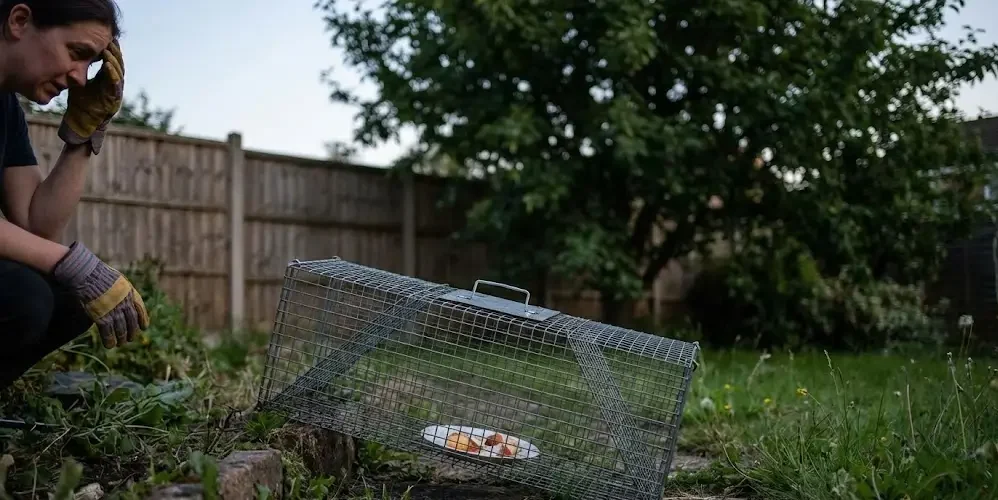
A “cheap cage” can look harmless, but plenty of traps aren’t humane. Sharp edges, poor airflow, or a door that snaps shut can hurt the possum, and a sloppy setup can also catch the wrong animal, including pets or other native wildlife.
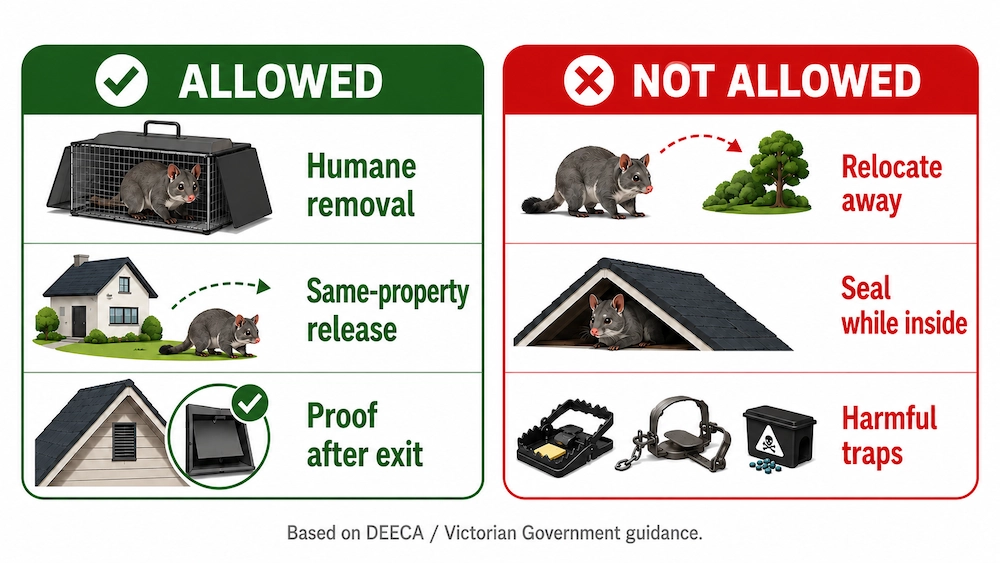
If trapping is legal where you live, use a humane cage trap in a stable, sheltered spot and avoid anything designed to harm. If you’re unsure, start with our possum trapping guide so you’re following a safer, legal approach.
A trapped possum gets stressed fast, and that’s when things can go wrong in a hurry. In Victoria, you’re generally expected to check traps early (often no later than two hours after sunrise), because leaving one too long can lead to heat, dehydration, or injury and land you in trouble.
Plan the trap check before the trap goes down. If you cannot check it properly, you should not be trapping. If a possum is trapped, keep it calm by covering the cage and placing it somewhere quiet and shaded until the legal release time. Keep pets and people away, because crowding makes the animal panic.
Relocation sounds like the kind thing to do, but in many states it’s illegal and it usually goes badly for the possum anyway. In Victoria, it must be released on the same property within 50 metres after sunset on the same day, so driving it to a park or another suburb can attract heavy fines, and you should assume it’s not allowed unless a licensed professional says otherwise.
Possums are territorial. Relocated possums can be attacked by resident possums, fail to find food, or bolt across roads trying to get back. So the law isn’t just red tape. It’s there to reduce harm and stop neighbourhood “pass-the-possum” problems.
Even when people mean well, they often release a possum at the wrong time or in the wrong spot. Daylight release can leave it exposed to dogs, cats, and aggressive birds, and releasing it too far from where it was caught can break the rules and send it straight back toward your roof.
If your state requires after-sunset release, stick to it. If same-day release is required, you need to be organised, because leaving a possum overnight is not the humane option. Before any release, deal with the reason it got inside. If the entry hole is still open, you’re basically inviting a return visit.
People patch holes during the day while the possum is asleep in the roof space, and that can trap it inside your building. That’s when you end up with damaged plaster, nasty smells, and in the worst case a possum dying in a wall cavity, which turns a simple job into an expensive repair.
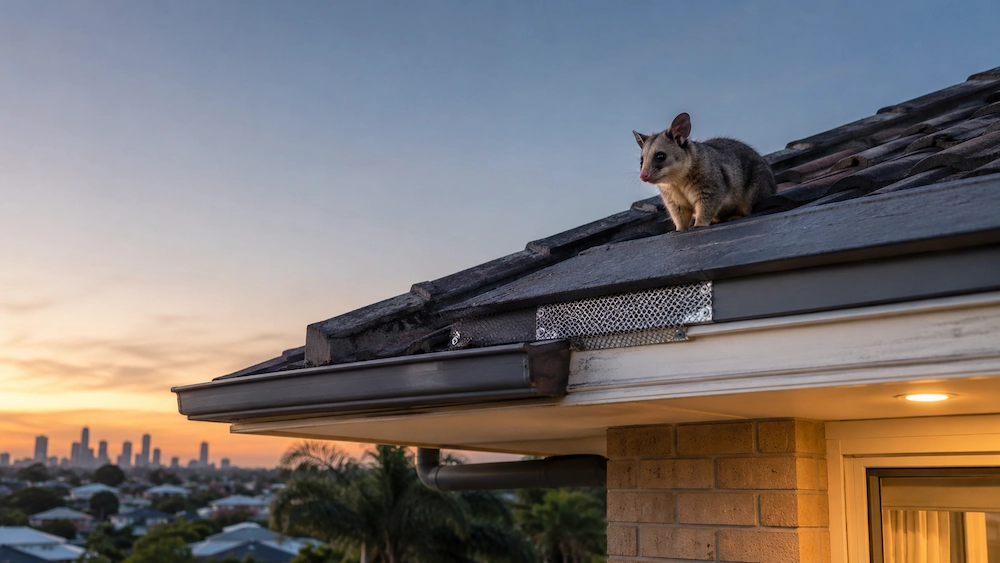
Work with the possum’s schedule, because they usually head out at night. The safer order is let it leave, stop it getting back in, then seal up properly, and a one-way door makes that whole process simple.
Trapping feels like action, which is why people love it, but it’s easy to get pulled into DIY advice that sounds simple and backfires. If you’re tempted by shortcuts, this article on DIY possum traps is worth a quick read before you try anything.
Removing one possum without fixing access points only solves half the problem. Another possum can move in, and rats and birds can follow.
Think in terms of exclusion and proofing. Long-term results come from making your roof boring and inaccessible. Look for the easy highways, like overhanging branches, broken tiles, loose flashing, gaps around vents, and open eaves. Then repair and seal using durable materials that don’t get chewed or pulled out.
At 1800 Possums, we get the possum out legally, then proof the building so it doesn’t come back. Our standard possum removal and proofing service is $495 inc GST and includes a whole-building inspection plus repairs to entry points, and if the job is bigger than the standard scope we’ll quote onsite before any extra work starts.
We use one-way doors so possums can exit safely, then we seal and lock down access points properly. The work is backed by a 2-year money-back guarantee across the whole building for possum re-entry, delivered by a family-owned team with 15+ years’ experience, licensed pest managers, and height-safety training for homes, body corporates, and real estate-managed sites.
If you suspect a possum is in your roof, don’t roll the dice with DIY trapping and relocation.
A quick chat can save you from possum trapping mistakes that cost people money, sleep, and a nasty legal headache.