

TL;DR: Trapping is catching a possum and releasing it under local rules, which often means it stays close and can try the same roof again. Proper removal is the full fix: get it out safely, seal the access points, and set things up so it stays outside.
Key Takeaways:
.
You hear scratching in the roof at 2am and Google hands you two options: possum removal vs possum trapping. They sound similar, but the difference is what decides whether you sleep next week or start the whole drama again.
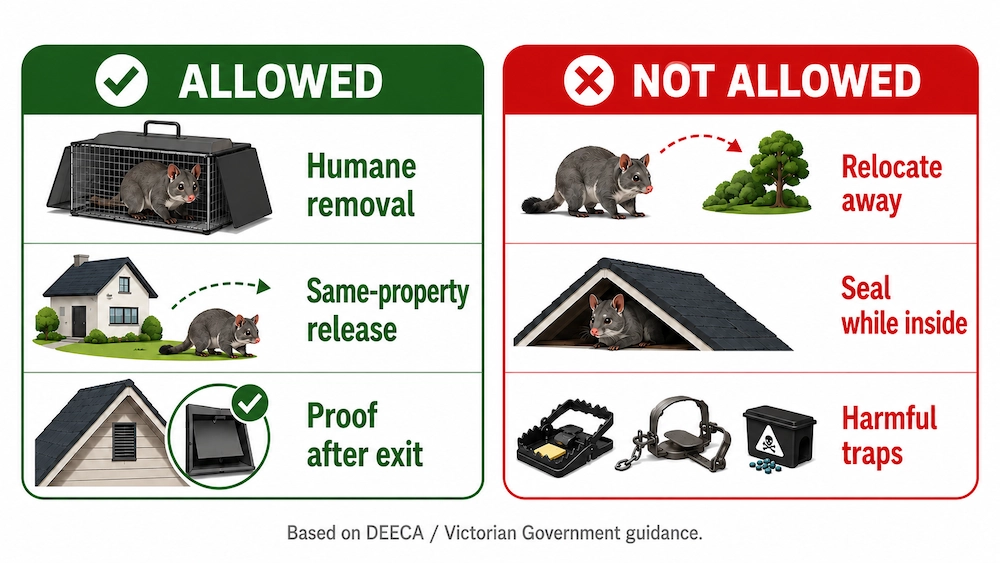
Most people say “remove” when they really mean “get it out of my roof”. Most people say “trap” because it feels simple, like catching a mouse and moving on. Possums are protected wildlife in many parts of Australia, and relocation rules are strict. That legal reality changes what “removal” can actually mean.
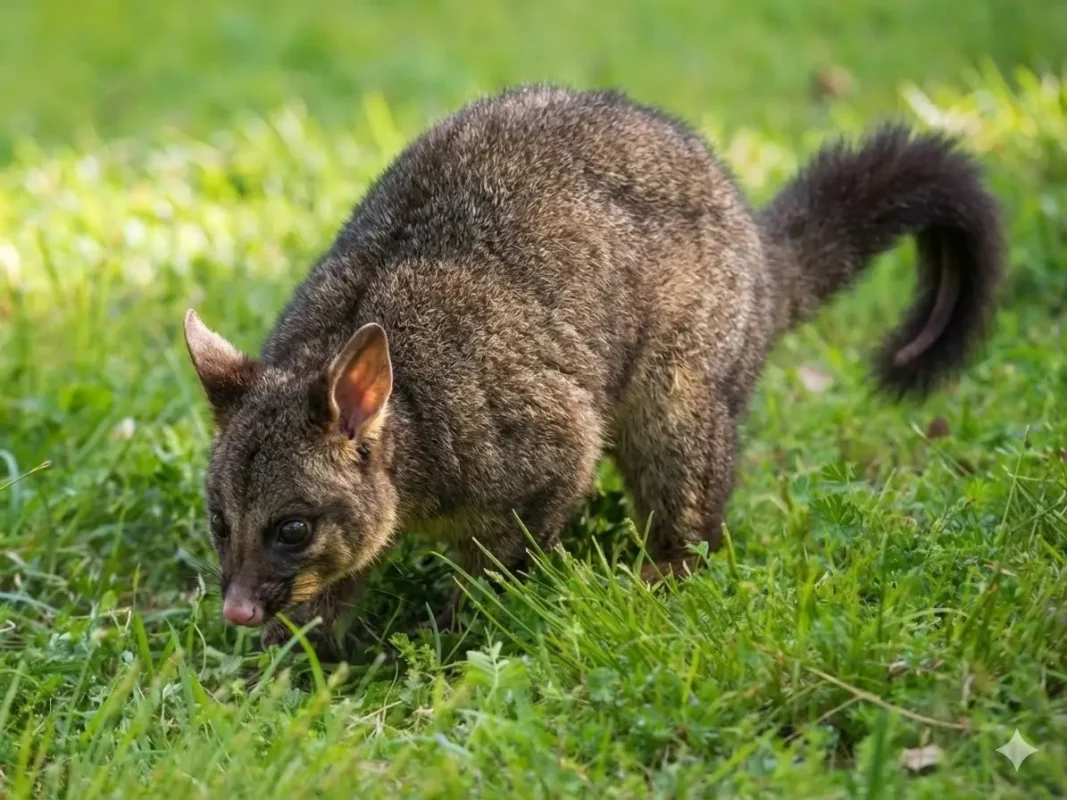
Trapping usually means setting a humane cage trap, baiting it, and checking it early so the possum stays safe. You also need a release plan that follows local rules about where and when it can be let go.
If you’re tempted to DIY, read this first because a lot of the “quick fixes” are cruel and still leave you with an open roof: DIY possum traps in the suburbs. In Victoria, a common brushtail possum generally must be released on the same property within about 50 metres after sunset, so an open entry hole can mean it’s back that night.
Trapping can make sense in a few specific situations, especially when it’s paired with fixing the entry point.
Here are the common ones:
The main thing to remember is simple: trapping can be a helpful step, but it’s rarely the finish line on its own. If you want a deeper rundown of how trapping works and when it’s used, see possum trapping.
Good possum removal is not about trying to grab an animal in a ceiling cavity. It is about getting the possum out safely, then making sure your building is no longer an easy option.
Most of the time, the cleanest fix is letting the possum leave at night like it normally would, then stopping the return trip. That’s where a one-way door comes in.
If you only seal one obvious hole, you usually just move the problem to a new spot. Possums know the routes and they’ll keep testing the roof until it’s genuinely shut out.
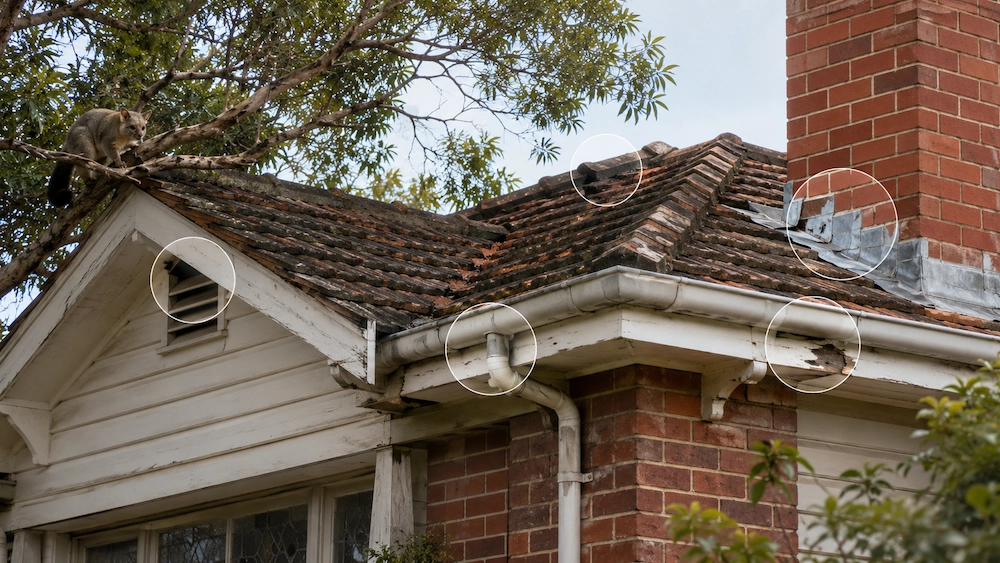
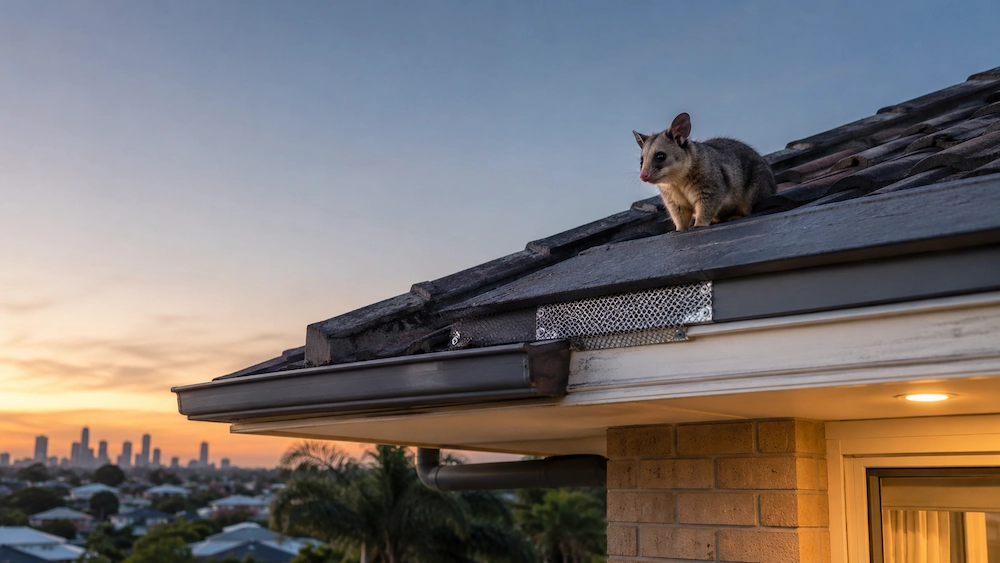
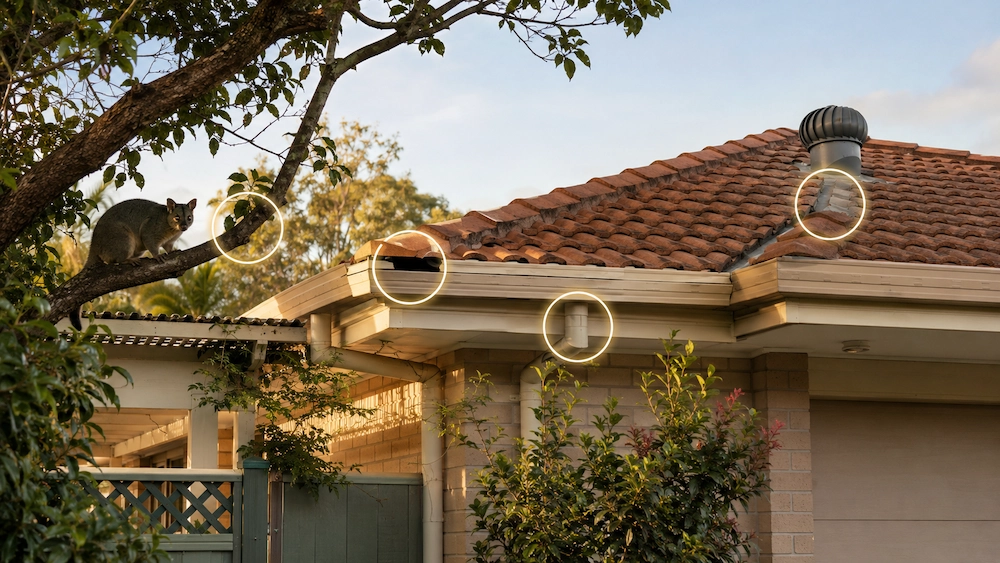
Good proofing is a full roofline check, then tidy sealing where it counts, like broken or slipped tiles, fascia gaps and eaves, gable ends, roof plumbing penetrations, and old vents or worn covers.
If the possum is released on the same property, trapping usually just hits pause because the roof is still the easiest place to go back to. And even if you catch one, another can be using the same gap, especially in suburbs with lots of roof access and during breeding season when warm roof spaces are in high demand.
A humane fix keeps the possum out of your roof without dumping it somewhere else to struggle. That usually means sealing the entry properly and giving it a decent outside option, like a well-placed possum box, after checking there are no young inside.
It’s not a perfect science, but the clues are usually pretty clear once you know what to listen and look for.
A good operator starts with questions, not pressure, because the plan depends on where the noise is and how the building is built. They should also explain the legal side in plain language, because “catch and dump” is not a real service.
You should be told what will be sealed, what materials will be used, and whether a return visit is included. You should also get a written warranty, because proofing is the part that makes the result stick.
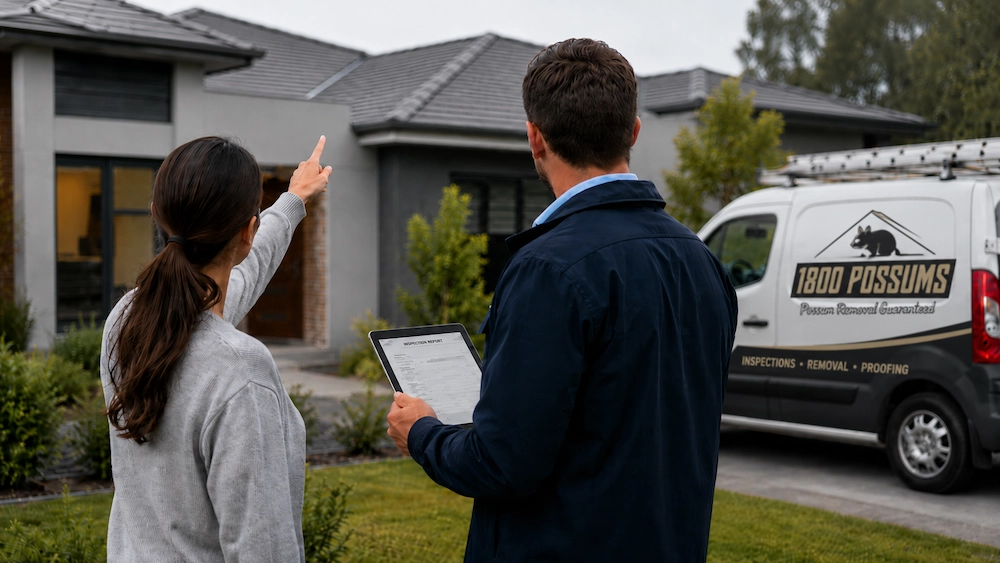
A proper first visit is an inspection, not a guess, and you should be shown the likely entry points rather than just told they exist. This is where roof edges, broken tiles, vents, and tree access are checked, because the loudest spot inside is not always the entry.
First, a one-way exit is installed so the possum can leave at night in its normal routine. Second, the surrounding gaps are sealed so the animal cannot circle back in through a “backup” hole you did not know you had.
1800 Possums is focused on stopping the repeat visits, not just “getting a possum out” for the night. The usual process is a proper inspection, a one-way door so the possum can exit safely, full sealing, then a follow-up visit to close the last gaps.
For many homes, the possum removal and proofing service starts at $495 inc GST, and they’ll quote onsite if the job is bigger than the standard scope. They’re licensed pest managers and back their proofing with a two-year money-back guarantee, which is what you want if you’re over paying for call-outs that don’t stick.
If you want a legal, humane fix that actually sticks, book a free phone consultation with 1800 Possums. You’ll get a clear plan and a straight answer on whether the issue is possums, rats, or just a gap that needs sealing.