Think You Can Remove a Possum Yourself? You Might Be Breaking the Law
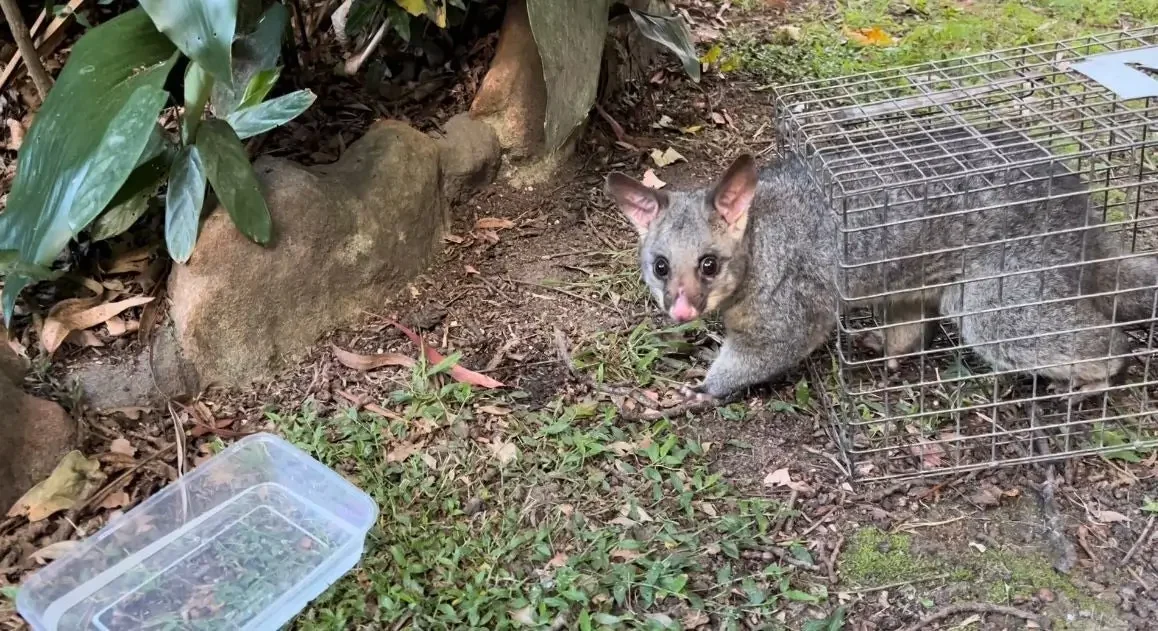
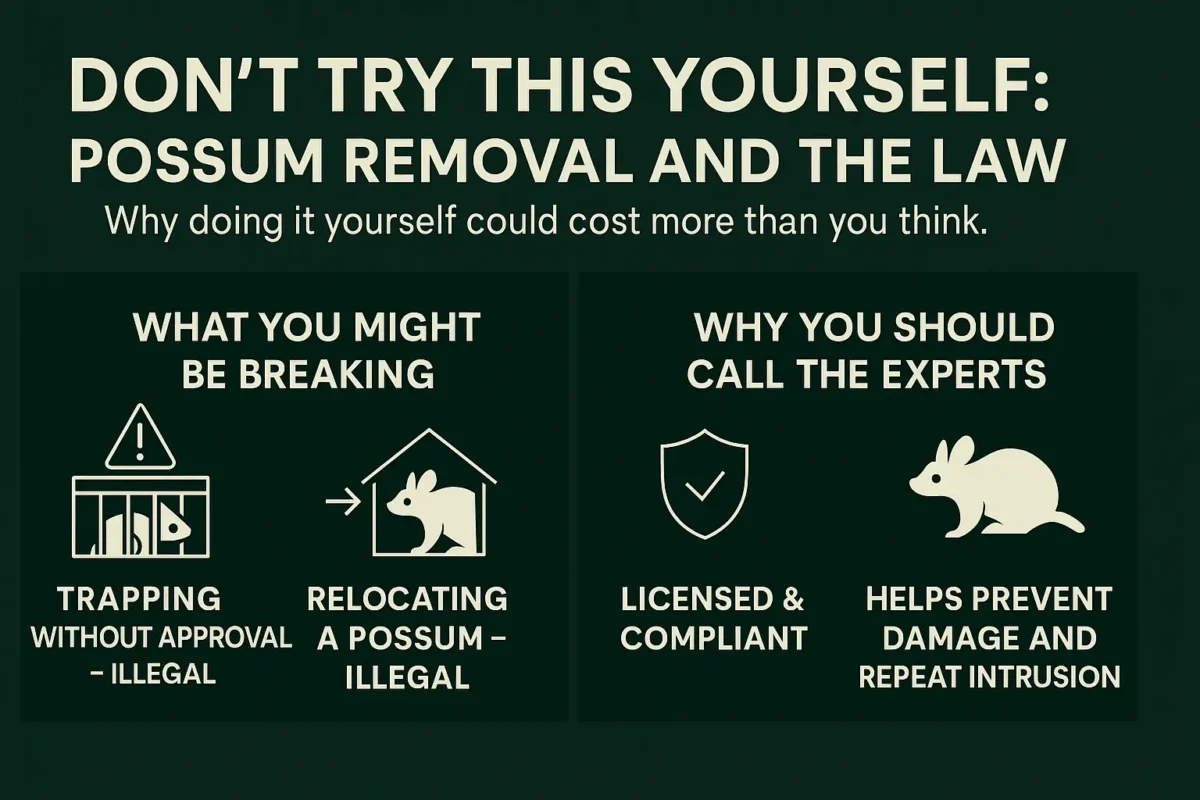
TL;DR: Possums are protected wildlife in Australia. Trying to remove them yourself can lead to legal trouble, health risks, and property damage. The safest option is to call a licensed expert.
Key Takeaways:
- Possums are protected native wildlife, and unauthorised removal is illegal across all Australian states.
- DIY removal can lead to health risks, property damage, and legal penalties.
- Proper identification and humane deterrents are essential before taking any action.
- Licensed wildlife handlers ensure compliance with the law and offer long-term solutions.
Think Before You Touch That Possum
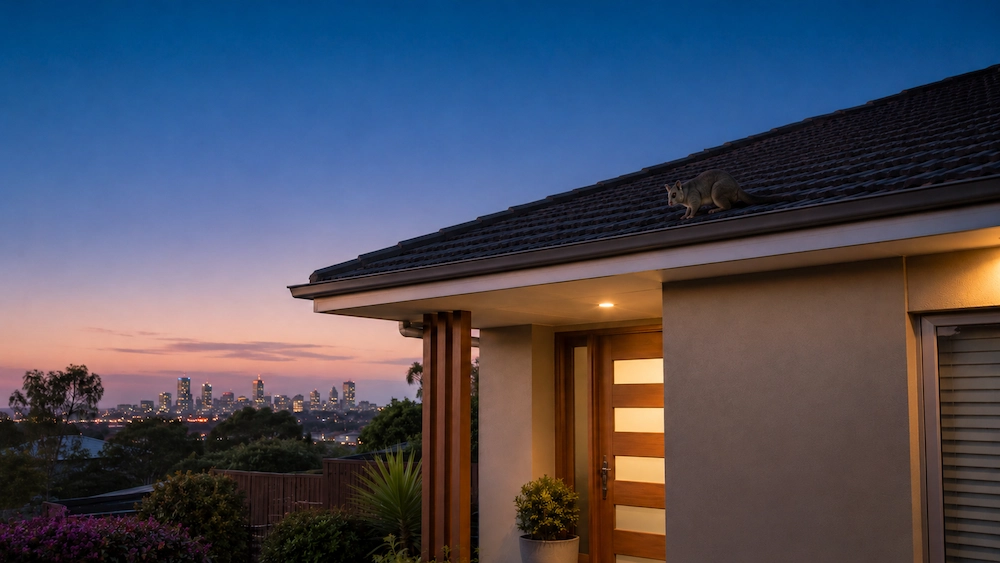
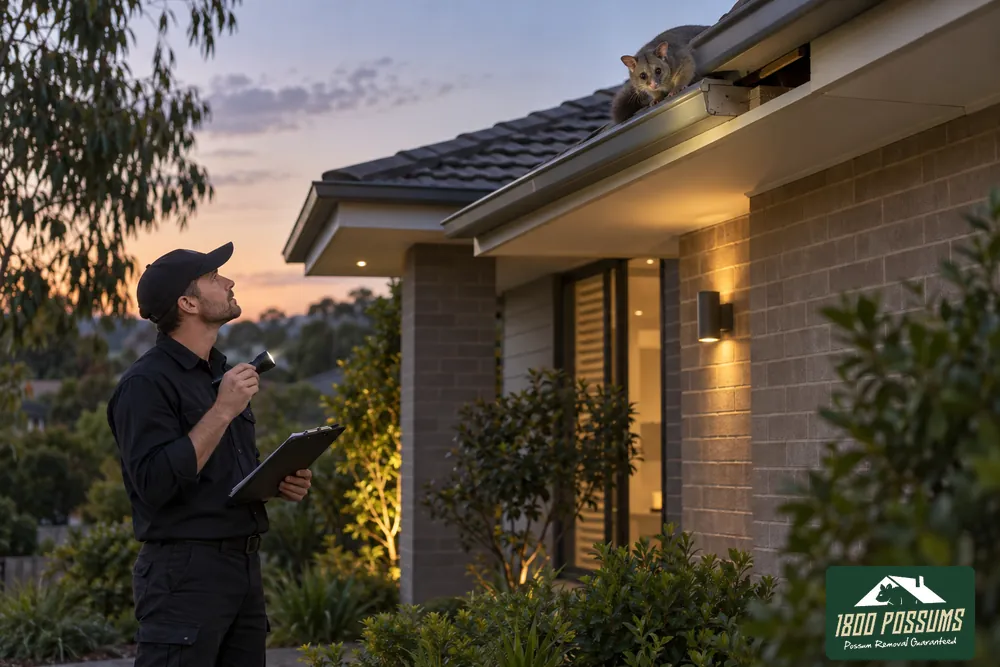
Hearing thumps or scratches in your ceiling at night? You’re probably sharing your roof with a possum. While the urge to take matters into your own hands is understandable, there’s one crucial question you should ask first: Is it legal?
Possums might seem like pests, but in Australia, they’re protected wildlife. You can’t simply trap or relocate them like you would a stray animal. Trying to handle it yourself can lead to fines and often makes the situation worse for both you and the possum.
Possums Are Protected Under Australian Law
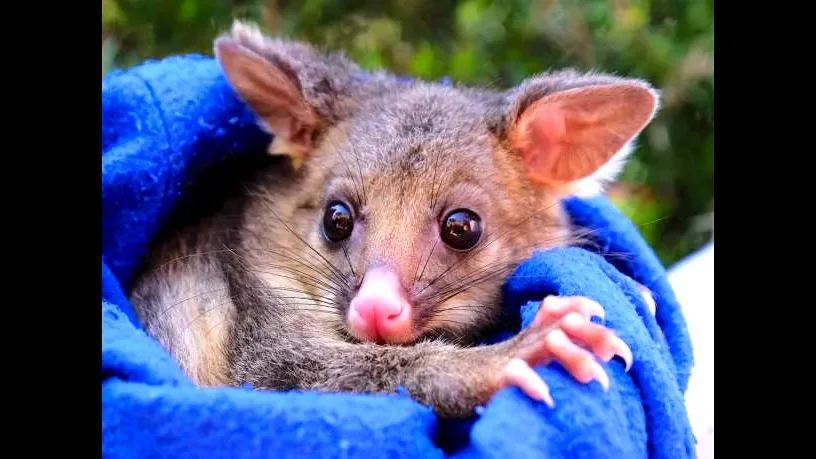
Across Australia, possums are classified as protected native wildlife and are covered by strict environmental legislation. Unlike common pests, they are subject to different legal standards. Interfering with them without the correct permits or licensing can lead to serious consequences, including fines or prosecution.
Legal Requirements by State
Each state and territory sets its own rules for handling possums:
- New South Wales: A license from the NSW National Parks and Wildlife Service is required to trap a possum. Even then, it must be released within 150 metres of where it was caught. Relocating it elsewhere is illegal.
- Victoria: Only licensed wildlife controllers are allowed to remove possums. DIY removal is against the law and can result in penalties.
- Queensland: A damage mitigation permit is required for legal removal. Strict protocols must be followed.
- South Australia: You must adhere to the state’s Code of Practice, which governs trap type, timing, and release conditions.
- Western Australia and Tasmania: Similar rules apply, requiring permits and humane removal methods.
Legal Issues Aren’t the Only Risk
Aside from the legal consequences, attempting to remove a possum yourself can pose several real-world risks. There’s a chance of personal injury, as possums can bite or scratch if they feel threatened, and some may carry diseases such as leptospirosis.
Improper handling may also cause significant property damage, especially if the possum manages to return or forces its way back in. Even if you succeed in removing one, you’re likely addressing only a symptom rather than the root cause, particularly if the entry points into your home remain accessible.
From a health standpoint, possum infestations can lead to hygiene concerns and contamination risks.
For a deeper look at the health issues connected to possum presence, you can read our detailed article on The Hidden Dangers & Health Risks of Possum Infestations in Homes.
Dealing With a Possum in Your Roof
If you’ve discovered a possum living in your roof, it’s important to approach the situation calmly and lawfully. There are a few practical steps you can take to deal with the issue effectively while respecting wildlife regulations.
Step 1: Confirm the Culprit
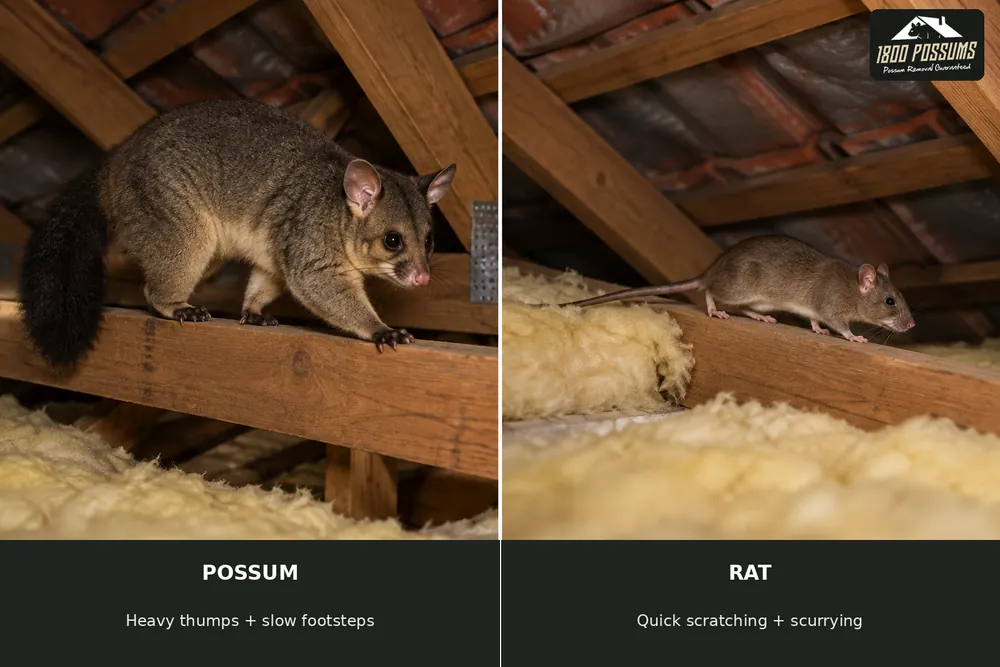
Don’t jump to conclusions. Noises in the ceiling at night can be misleading, as rats and mice often create similar sounds. To determine if you’re dealing with a possum, check for the following signs:
- Droppings roughly the size and shape of a jellybean, often found near entry points or in roof spaces
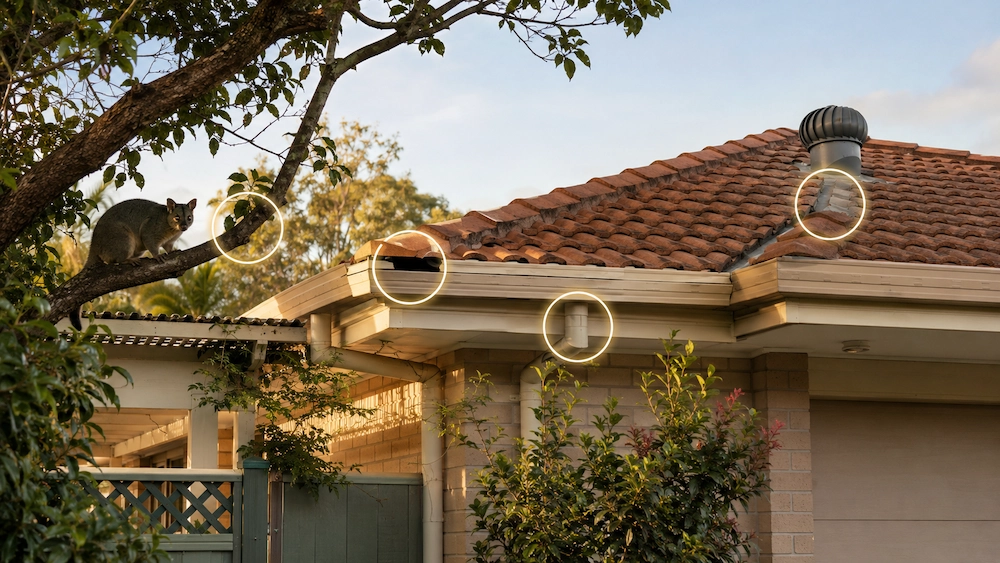
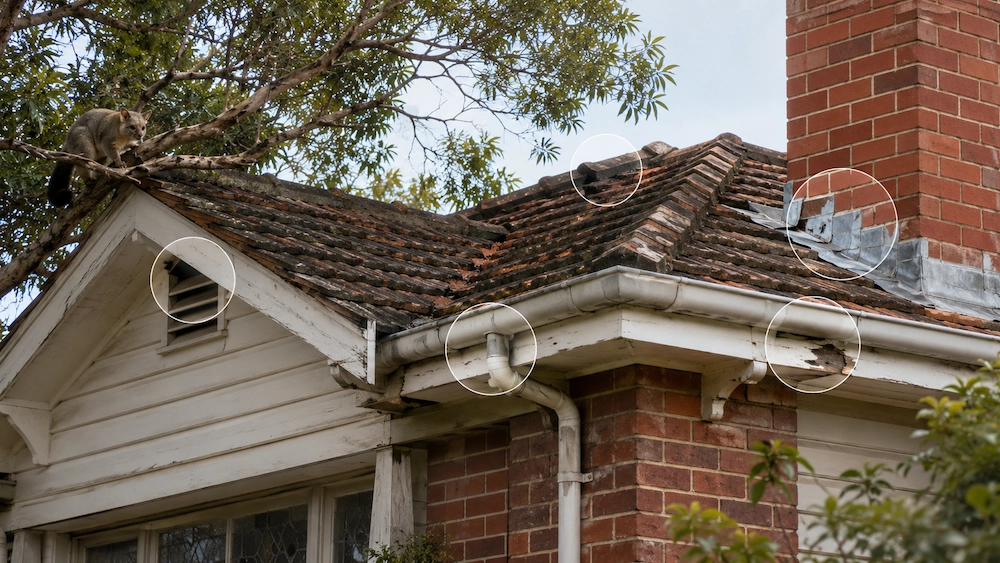
- Visible damage to or small gaps in the roofline that may serve as access points
- Scratches or claw marks on nearby fences, trees, or vertical surfaces where possums may climb
- Regular sightings of a possum walking along the roof or nearby structures during the evening or early morning hours
Step 2: Wait for Removal Before Blocking Access
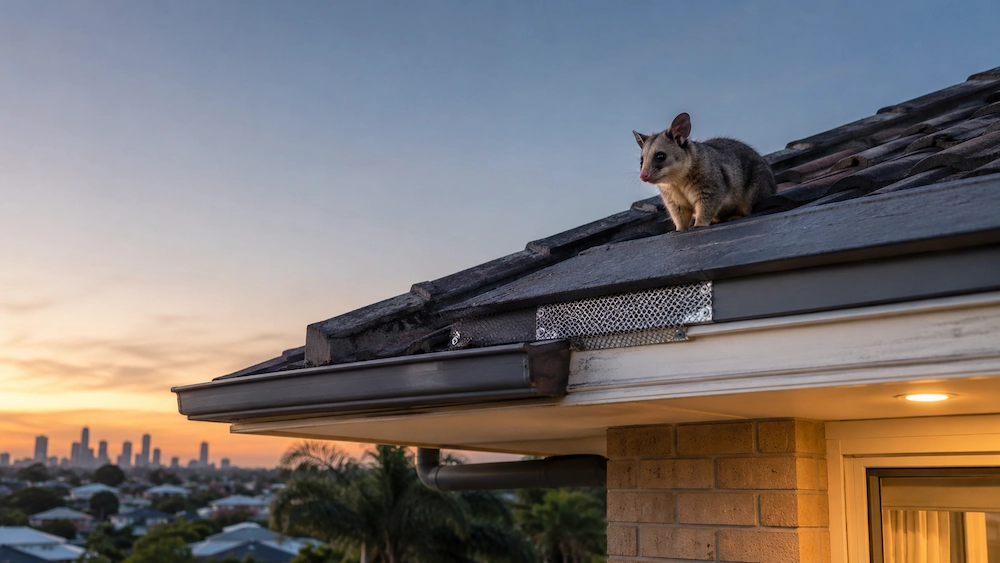
Possums are known to be territorial, and once they’ve settled into a space, they’ll attempt to return if possible. Licensed professionals address this by installing one-way doors that let the possum leave but prevent it from re-entering.
Attempting to block access before the animal has safely exited is not only ineffective but also unsafe and against legal guidelines.
Step 3: Call a Licensed Wildlife Handler
The best move is to call someone who’s trained and licensed to handle possums the right way. These professionals have the proper training and legal authority to remove possums in a humane way.
They can also help identify how the possum got in and provide advice on keeping your home secure from future intrusions.
What About Garden Possums?
Approved Deterrents for Garden Visitors:
- Motion-activated lights or sprinklers can discourage possums by surprising them with sudden movement or bursts of water when they enter the area.
- Wildlife-safe netting offers a physical barrier to protect fruit trees, vegetable gardens, and flowering plants without causing harm to the animals.
- Commercial possum repellents available at garden centres use scent or taste to deter possums from feeding on your plants.
- Possum rollers or spikes installed on fences make it difficult for possums to gain a foothold, reducing their ability to climb and access your garden.
They’re legal, kind to wildlife, and actually work to keep your garden safe.
Consequences of Breaking the Law
Possum laws are in place to safeguard native wildlife and maintain ecological balance. Violating these regulations can result in serious penalties, including large fines, compulsory court appearances, and in cases where the animal is harmed, potential charges of animal cruelty.
A lot of people don’t realise how serious the penalties can be until they’re already in trouble. Taking time to understand the rules and relying on qualified possum laws Australia professionals is a much safer and more responsible approach.
For specific examples of what can happen when these rules are ignored, visit our article on Penalties for Illegal Possum Relocation in Australia.
Lesser-Known Possum Facts
Understanding possum behaviour helps with prevention and control. Here’s what many people don’t know:
- Possums are nocturnal and most active after dark
- They are highly territorial and often return to the same nesting area
- Urban-dwelling brushtail possums can live up to 13 years
- They can squeeze through small openings, making them difficult to block without proper sealing
- Their climbing ability is exceptional due to their claws and strong tails
These traits explain why simple DIY deterrents are often ineffective.
Why Choose 1800Possums?
At 1800Possums, we understand how frustrating and stressful possum problems can be. You want peace of mind, not ongoing noise or damage. We’re fully licensed, highly experienced, and know the laws and procedures inside and out. Our team takes care of everything from safe removal to sealing entry points and advising you on long-term solutions.
We pride ourselves on being professional and respectful, both to you and the wildlife. That’s why we’re trusted by homeowners, councils, and businesses all over Australia.
Our services go beyond removal. We also help you possum-proof your home and educate you on how to avoid future issues. From inspections to tailored prevention strategies, we’ve got your back. You can learn more about our services by visiting our possum removal service.
Need Help Now?
Don’t take the risk. Handling possums the wrong way can cost you time, money, and peace of mind.
Call 1800Possums today or book an inspection online. We’ll handle the issue safely, legally, and effectively so you can get back to enjoying your home.
Latest Articles