Possums Are Getting In; How They Enter Homes and How to Shut Them Out
TL;DR: Possums often sneak into homes through tiny gaps around roofs, eaves, skylights and service penetrations; they prefer dry, warm spaces and will use gutters or overhanging branches as bridges. Professional proofing such as sealing gaps with durable materials, replacing rotten timber, fitting gutter guards and managing trees prevents repeat visits.
Key Takeaways:
- Possums commonly enter via roof vents, soffits, fascia gaps, gutters and service openings.
- Short-term DIY patches usually fail; trade-grade repairs and stainless mesh give lasting protection.
- Trim branches and keep gutters clear to remove simple access routes.
- Use licensed, humane exclusion methods and never seal an entry while animals may be inside.
Why Possums Pick Houses Over Trees
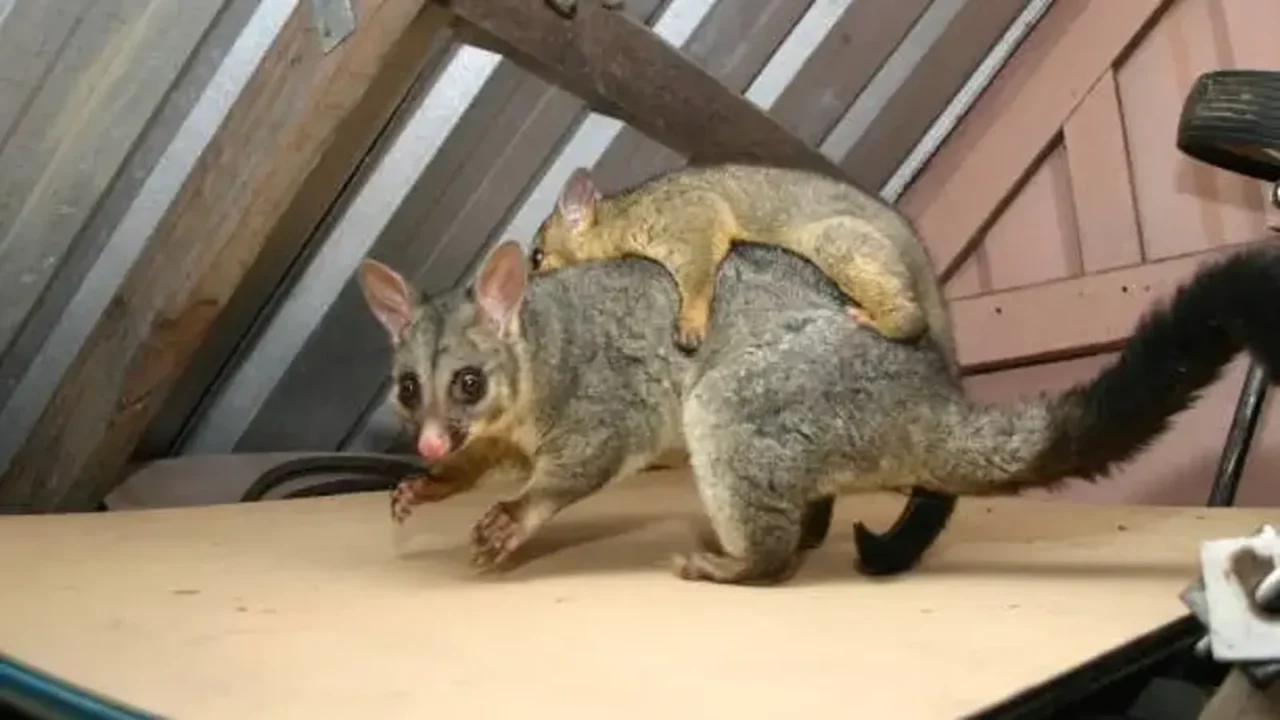
Possums favour dry, warm spots to raise joeys and sleep during the day. Roof cavities and ceiling voids are especially attractive because they stay drier and quieter than tree hollows, giving possums a safe, sheltered place to nest.
They are tougher and more nimble than most people expect, able to squeeze through narrow gaps and test weak points with their paws.
Because possums are protected across most Australian states, licensed specialists follow legal, humane exclusion methods and thorough proofing to remove them and stop repeat visits.
For a clear explanation of why possums often choose houses over the bush, read why possums love your house more than the bush.
Common Possum Entry Points
1. Roof Vents and Ridge Caps
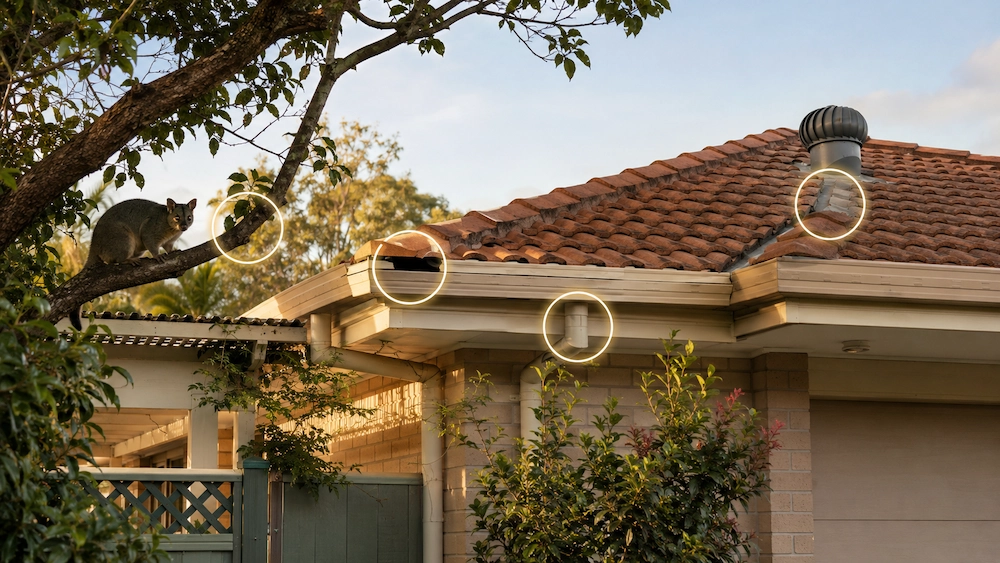
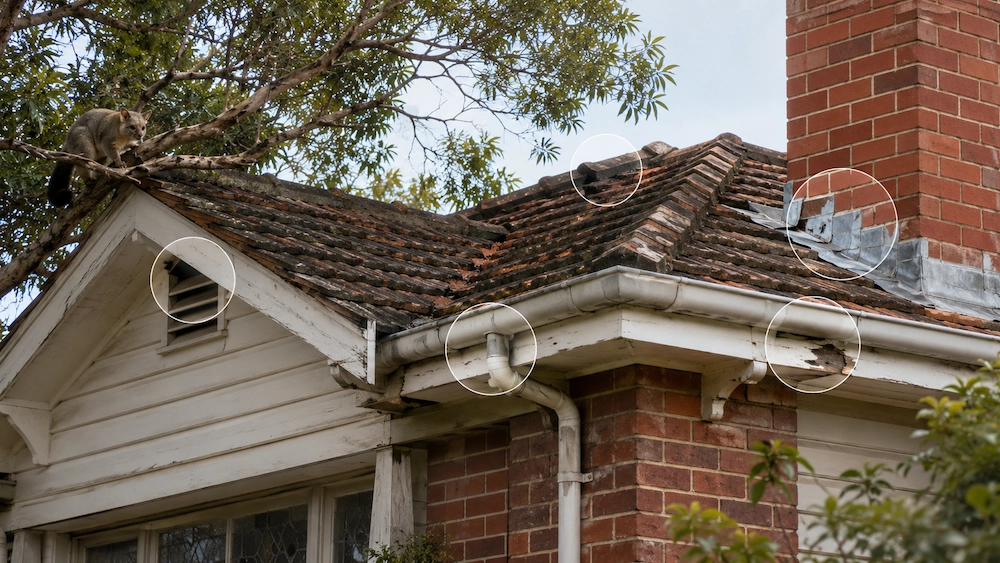
Roof vents and ridge capping are common weak spots because even a tiny gap gives a possum a way into your roof. They will nudge up loose capping or slip through spaces left by rusted screws, then settle into the cavity.
2. Roof Sheet Gaps
When roof sheets overlap, rusted nails and worn joins can leave tiny gaps a possum will slip through without hesitation. This often happens on older corrugated roofs or after quick repairs where the joins were not properly sealed.
3. Fascia Gaps
Small gaps under fascia or barge boards are easy for possums to find and use as a quick entry into the roof. These gaps often hide behind gutters or layers of paint, so they can be missed during a quick check until the noises start.
4. Soffits and Leave Gaps
Damaged or loose soffits create a low, sheltered gap that is easy to miss during a quick check. Possums will probe soft spots and push through rotten timber or cracked fibre cement to reach the roof cavity and make a nest.
5. Gutters & Downpipes
Gutters that hang away from the roof or have loose joins give possums a handhold and an easy route into the roof cavity. When gutters clog with leaves or sag, possums will walk along them to reach the eaves and find a weak spot to climb through.
6. Overhanging Branches
Even a single branch touching the roof becomes a bridge that makes it easy for possums to get onto your home. They will hop across trees, fences, pergolas and sometimes even power lines to reach roofs and look for shelter.
7. Chimneys and Flues Without Caps
An open chimney or uncapped flue is basically an open door for a possum to reach your roof space. Once inside, they can become trapped or settle in the void and start nesting.
8. Service Penetration Gaps
Gaps around service penetrations like cables and pipes often look tidy from the outside but leave a messy opening inside the roof. Possums can squeeze through those hidden gaps and treat them like doors into your ceiling space.
9. Old Vents and Skylights with Worn Seals
A worn skylight seal or displaced flashing is an easy slip-in for a possum; they will test those weak spots and push under loose flashing to get inside. Skylights also trap warmth, which makes them an attractive spot for an animal looking for a cosy place to rest.
10. DIY Repair Gaps
Quick patch jobs that were not done to trade standard often leave uneven joins and soft closures that possums can pry open. Leftover traps or makeshift one-way devices can damage the area and create fresh entry points that invite repeat visits.
For a step-by-step walkthrough of every access point and what to look for, see our guide: where do possums enter the house? Identifying entry points.
Long-Term Sealing
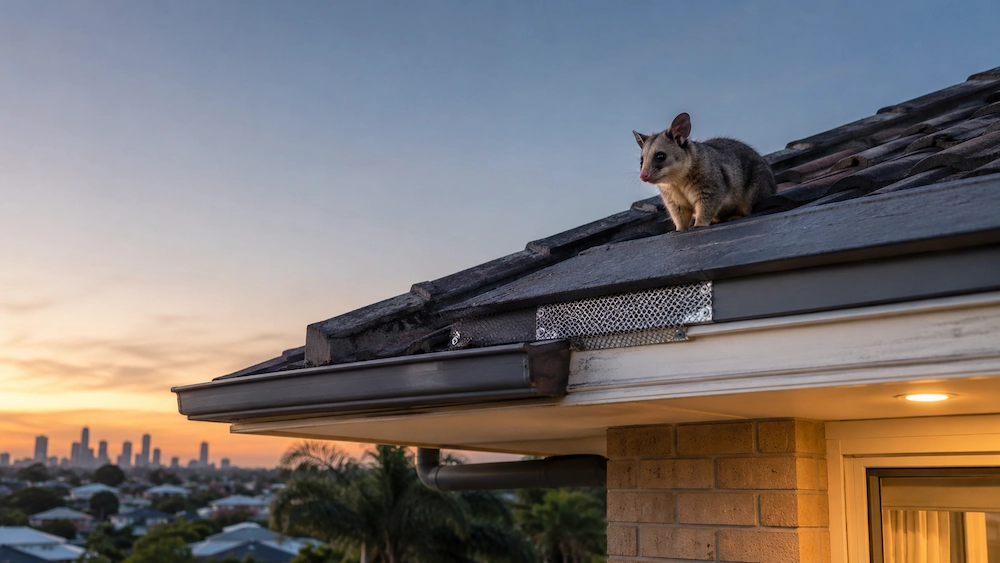
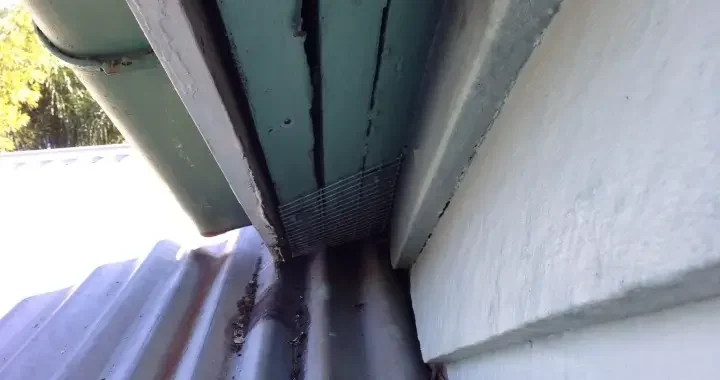
Stainless Mesh & Flashings
Thin or soft fixings wear out quickly under possum claws and Aussie weather, so they are only a short term fix.
- Built to last: stainless mesh resists rust and cannot be clawed through.
- Neat, secure finish: custom flashings sit flush so there are no gaps for animals to lever.
One-way Devices
One-way devices are only used when it is legal and safe, and never while dependent joeys are present. They allow adult possums to leave the roof on their own without blocking escape routes for young.
- Licensed use: we fit these devices only after a site check and always follow local rules.
- Humane by design: they reduce stress for animals and minimise the chance of harm to joeys.
Replace Rotten Sections
Most access starts with rotten timber or loose fixings that slowly give way. Replacing worn boards and fitting trade-grade screws with durable sealant restores strength and stops gaps from coming back.
- Long-life repairs: new timber and stainless fixings hold firm.
- Weather-proof sealing: quality sealants block water, rot and prying claws.
Gutter Guards
Good gutter guards remove the walking route possums use and cut down on leaf build-up, which means fewer places for animals to hide.
- Stops access: tight guards remove the roof-to-gutter bridge.
- Low maintenance: designed to shed leaves and reduce blockages.
Tree Management
Trimming or removing branches that touch the roof is often the simplest and most effective way to keep possums off your house.
- Clear the gap: aim for at least one metre between branches and the roof line.
- Permits and safety: we can help arrange an arborist and check permit needs before work starts.
Signs You Have Possums
Noisy Nights
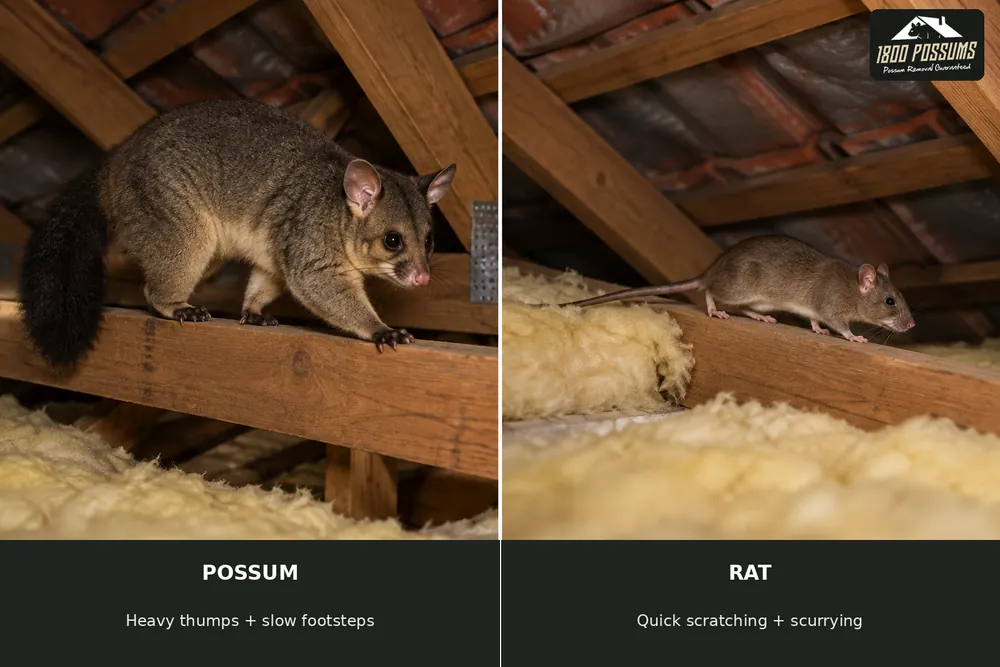
If you hear scratching, thumping or rustling at night, it is often possums moving around in the roof space. They are most active after dark and the sounds tend to carry into bedrooms and living areas, which makes them hard to ignore.
Droppings and Rub Marks
Small, dark droppings around vents or inside ceiling spaces are a clear sign possums have been using your roof. You may also spot greasy rub marks, fur smears or little trails of nesting material along beams where they run repeatedly.
Nesting and Damage
Insulation pushed aside, nesting material or chewed timber shows a possum has settled in and is nesting. A musty or ammonia smell inside the roof is another clear sign to check.
Quick Checklist you Can Run Through
- Look for branches within one metre of your roof line.
- Check for loose fascia, soffit or flashing.
- Inspect gutters for gaps and sagging.
- Verify chimney caps and vent covers are in place.
- If you find a gap do not block it until a pro has checked for animals inside.
For quick, safe steps you can try tonight to keep possums away, read our practical guide: simple possum deterrents — what works and what to avoid. It covers easy DIY options and the methods you should never use.

Why Choose 1800 Possums
1800 Possums is a local team serving Melbourne and Brisbane that specialises in humane possum removal and building-grade proofing. We combine wildlife care with trade skills to secure your home while treating animals with respect.
We are licensed, fully insured and back our work with clear quotes, photo reports and a written warranty. With hundreds of jobs under our belt we fix problems others miss and provide a plain-language plan you can trust.
Ready to stop possums for good?
If you have possum noises or signs of entry we can inspect and give a clear plan today. Call 1800 POSSUMS or book online for a fast inspection and a no fuss quote.
Book now for a free site estimate and a two year workmanship warranty on proofing work.
Latest Articles